






 Portuguese
  Spanish
  4 min of reading
  0 comments


1T-TaS₂ Material Alternates Between Insulator And Conductor With Simple Thermal Control, Promising A Thousandfold Increase In Computer Speed.
Researchers from Northeastern University and Brown University have achieved an unprecedented breakthrough by manipulating a quantum material called 1T-TaS₂. With a simple technique of rapid heating and cooling, they were able to control the electrical properties of the material, alternating between conductive and insulating states.
The discovery, published in Nature Physics, could represent a leap of a thousand times in the speed of current computers.
Enabling Change With Heat
The method used is known as thermal quenching.
-
Apple and Tesla on Alert After Cyberattack on Indian Supplier Exposes Over 200,000 Confidential Files, Industrial Projects, Employee Data, and Potential Trade Secrets on the Dark Web

-
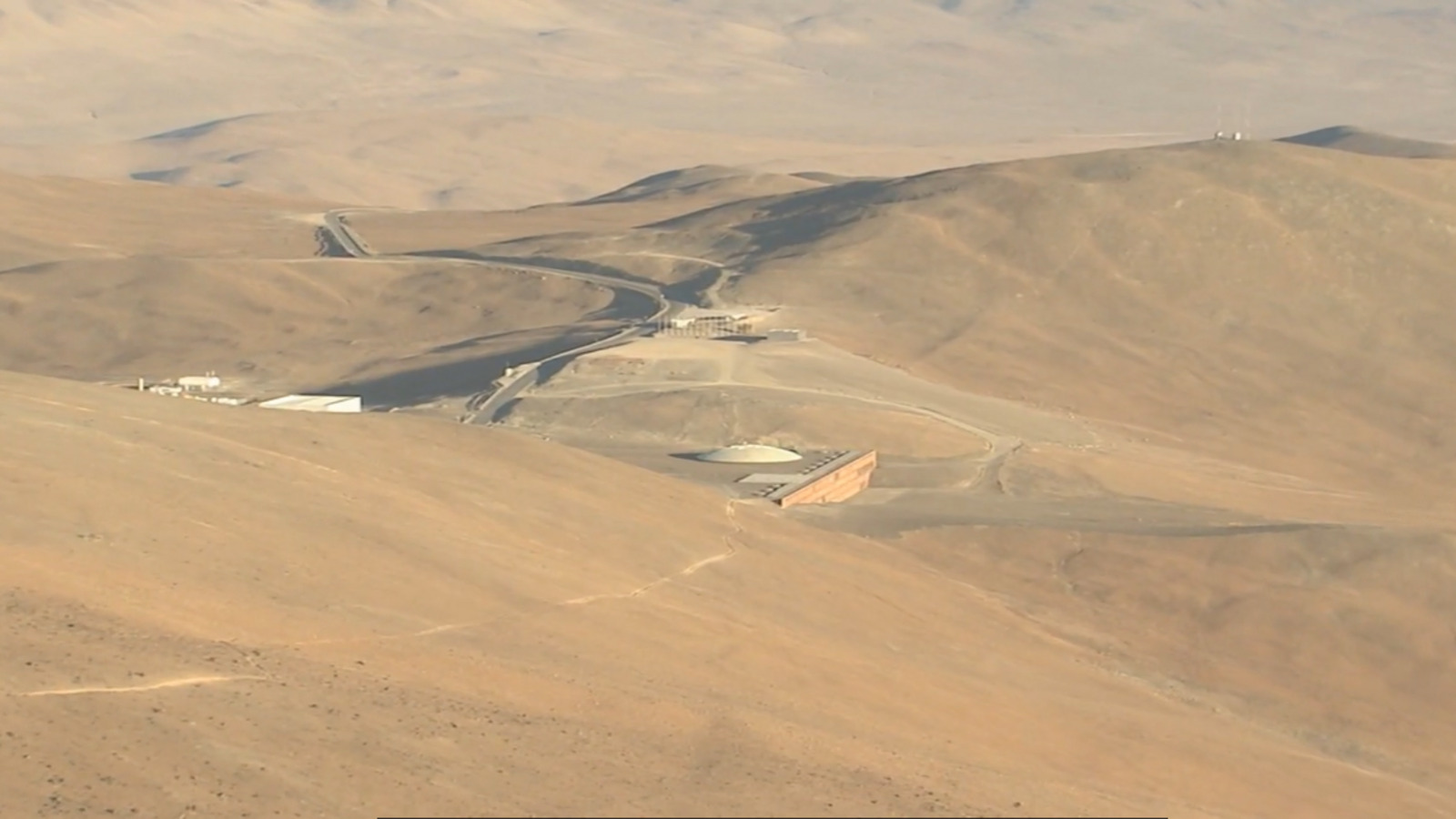
In the Atacama Desert, a Tropical Oasis with Pool and Palm Trees Hosts Astronomers Studying the Universe

-
São Paulo Unveils 500 Electric Buses with $1.3 Billion Investment, Aiming to Cut 20 Million Liters of Diesel Annually and Showcase Clean Mobility

-
Robot Works 900 Hours to Build World’s Tallest 3D-Printed Concrete Tower, 30 Meters High, in Swiss Village of 12 Residents



In it, the material is rapidly heated and cooled, much like hot glass plunged into cold water. This process stabilizes a new phase of matter, which has been difficult to maintain until now.
This phase combines two opposing characteristics of 1T-TaS₂: a hidden metallic state and its insulating counterpart.
This combination creates a hybrid material, where conductivity and insulation coexist.
What is most surprising is that this new state remains stable for months, even after cooling, without requiring laser pulses or electric shocks.
Conductor And Insulator At The Same Time
1T-TaS₂ is known for its ordered electronic phases, called charge density waves (CDW). Depending on the temperature, these phases cause the material to behave as a metal or insulator.
For years, scientists have been trying to understand and control a “hidden” metallic state that briefly appears when the material is hit by a very fast laser pulse.
This state lasted only microseconds and required extremely low temperatures. Now, for the first time, it has been stabilized with a simple thermal adjustment.
The Rapid Cooling Technique
The thermal quenching process consisted of cooling the material at a rate of 120 kelvins per second.
If the cooling was slower, the material remained in its common insulating state. However, when it reached this optimal speed, it transitioned to the desired mixed phase.
This new phase was confirmed through a high-resolution X-ray diffraction technique at the Cornell High Energy Synchrotron Source.
The results showed distinct patterns of atomic arrangements and electrical behavior, reinforcing the presence of both states simultaneously.
More Practical Temperature For Applications
The mixed phase was able to remain stable up to -73 °C (or 210 kelvins). Although still a low temperature, it is much more accessible than those required by previous methods. This opens up real possibilities for future technological applications.
Transistors, which are the foundation of modern computers, depend on materials that alternate between conductor and insulator. Silicon, currently used, is already reaching its physical limits. Materials like 1T-TaS₂ could represent the next step.
Faster Than Anything — Even Silicon
“Processors currently operate in gigahertz. The speed of change that this would allow would take us to terahertz,” said Alberto de la Torre, a physicist at Northeastern and the study’s lead author.
This scale shift represents a thousand times more speed than silicon can offer.
Moreover, the state change can be triggered by light — the fastest messenger known. “There is nothing faster than light,” said Fiete, one of the co-authors.
“And we are using light to control the properties of materials essentially at the fastest speed possible allowed by physics.”
Where Could This Take Us?
With the stabilization of this mixed phase, a new field of possibilities opens up. The researchers intend to explore even more precise techniques to manipulate the domains of 1T-TaS₂.
This includes designing circuits and devices with this new material that operates between the two extremes: conduction and isolation.
“We are at a point where, to achieve remarkable improvements in information storage or operating speed, we need a new paradigm,” declared Fiete.
The study suggests that this paradigm could be in the thermal control of quantum materials — a promising path, without the need for expensive and unstable tools like ultrafast lasers.
Future Computers Start Here
The most important aspect of the research is that, with a simple temperature change, it was possible to reconfigure the “landscape of free energy” of the material.
This means altering the fundamental behavior of 1T-TaS₂ without using invasive or complex techniques.
Previously, the hidden metallic state was just a scientific curiosity, visible for moments in extreme environments.
Now, it can be maintained indefinitely and under less stringent conditions. This opens doors for electronics based on this material to become viable, perhaps even commonplace.
The research showed that it is possible to make significant strides in electronics using something as simple as heat and cold.
The mixed phase of 1T-TaS₂, now stabilized for months, represents a step towards faster, smaller, and much more efficient computers.
The state once considered unattainable can now be observed and controlled. And, in the future, it may be the foundation of new technologies that will replace silicon.


Be the first to react!