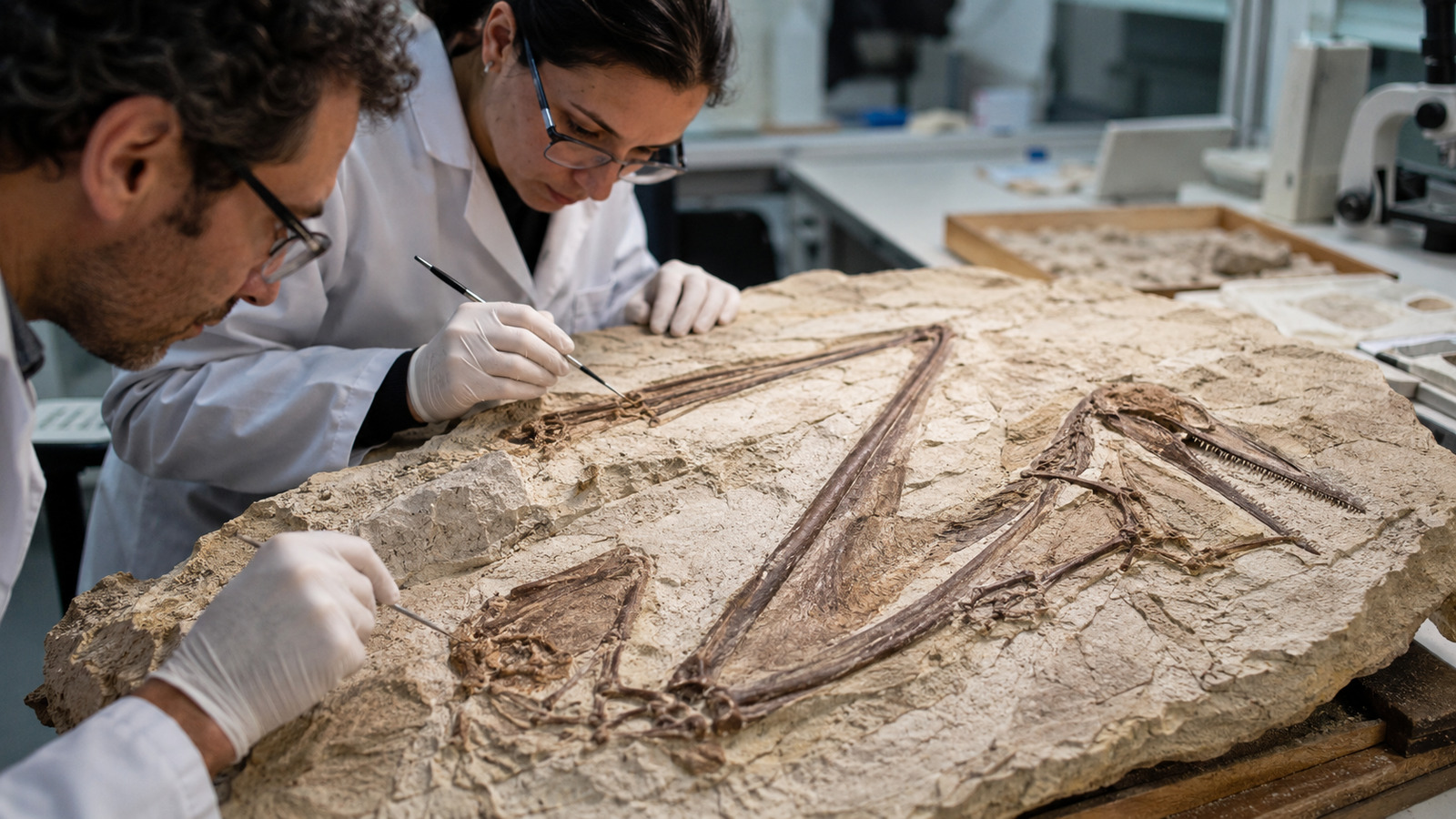

Study led by Curtin University found preserved steroids in a fossil from northeastern Brazil, indicating possible diet of fish or squid and revealing how ancient microorganisms helped in exceptional preservation
A pterosaur fossil found in northeastern Brazil preserved chemical traces from 113 million years ago and brought the first molecular evidence ever identified in one of these extinct flying reptiles. The study, led by Curtin University and published in iScience, found rare steroids that may indicate a diet based on fish or squid.


Pterosaur fossil preserved molecules for 113 million years
The discovery was made from the analysis of a fossilized wing phalanx, already considered remarkable for its three-dimensional preservation. The international team identified chemical traces surviving from the early Cretaceous.
According to Curtin University, this is the first time molecules have been recovered from a pterosaur fossil.
-
Indian Inventor, 58, Develops Steering Wheel-Free Agricultural Machine Operated by Levers, Offering Cost-Effective Alternative to Expensive Tractors

-
Scientific Breakthrough: Bacteria Found in a Rio de Janeiro Lagoon Guide Mars Research After Scientists Identify Similarities to Extreme Environments, Expanding Understanding of Extraterrestrial Life Possibilities

-
Brazilian Mechanic Wins Indian Presidential Award for Inventing Fuel-Efficient Agricultural Machine

-
Brazilian Polilaminin Reaches 100 Spinal Cord Injury Patients Through Compassionate Use, Shows Progress After 6 Months, Highlighting UFRJ’s Role in Experimental Regeneration Research




The finding expands the use of molecular paleontology to investigate extinct animals beyond the direct observation of bones.
The lead author of the study, Professor Kliti Grice, John Curtin Distinguished Professor and founding director of the Western Australian Organic and Isotope Geochemistry Centre, described the sample as “a true time capsule”.

Rare steroids may indicate diet of fish or squid
Among the identified compounds, researchers found preserved steroids, something described as exceptionally rare in fossils of this age. These traces help provide evidence about the animal’s diet.
According to Grice, the fossil was not only impressively preserved but also revealed, for the first time, traces of steroids in a pterosaur.
For the researcher, this provides more evidence that these creatures probably fed on fish or squids.
The data is important because it shows that ancient molecules can hold biological information that does not appear only in the physical form of the fossil. In this case, the preserved chemistry complements the structural details of the specimen.
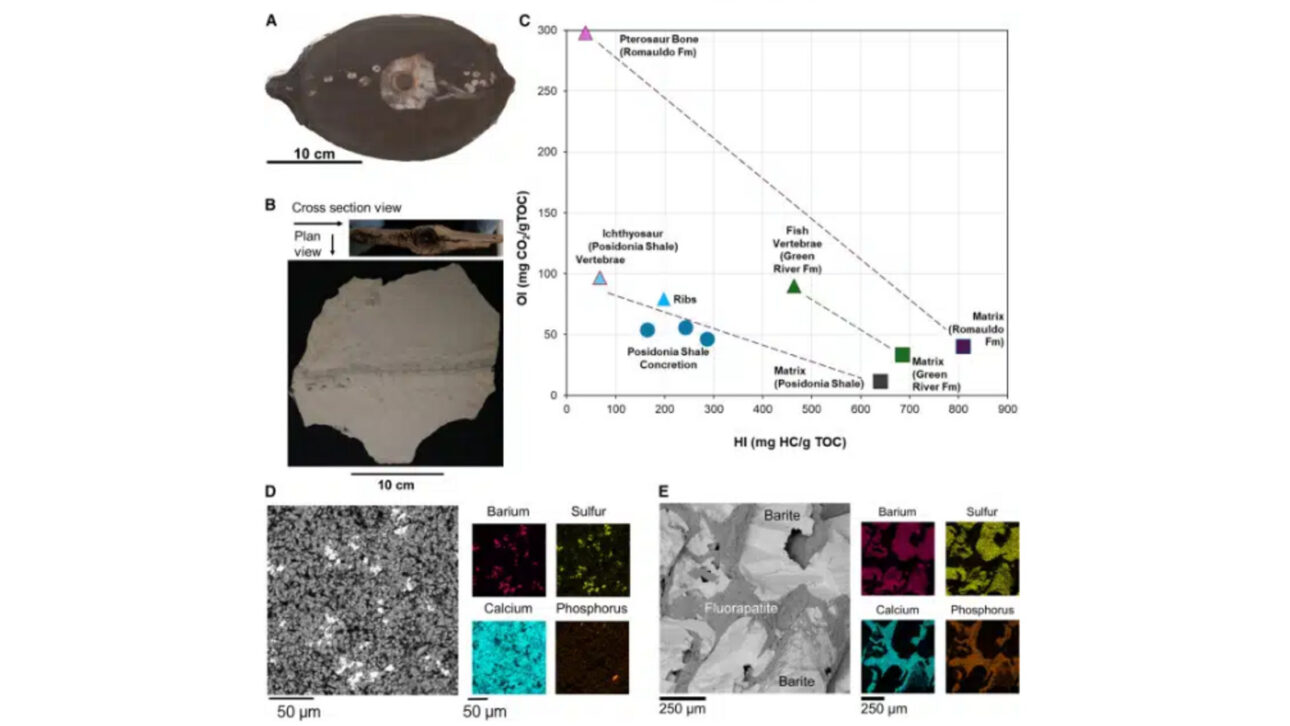
Ancient microorganisms may have helped in preservation
The study also investigated how the fossil maintained such exceptional preservation for over 100 million years.
After the pterosaur’s death and its settling on the sea floor, microbes began to decompose soft tissues and fats.
Among these microorganisms were sulfur-oxidizing bacteria. Their activity would have triggered mineralization around the body, gradually sealing the remains and helping to preserve details of the specimen.
This interpretation challenges the old idea that oxygen mainly acts as a destructive factor of organic matter.
According to Grice, some fossils may be preserved thanks to oxidative processes carried out by ancient microbiomes.
Discovery helps explain exceptionally preserved fossils
Pterosaurs were the first known vertebrates to achieve powered flight and lived alongside dinosaurs. Some species reached wingspans of up to 12 meters.
The study suggests that the combination of microbial activity, local chemistry, and marine environment helped preserve both the structure of the fossil and its molecular signatures.
The researchers state that this preservation pathway may help explain similar findings in other locations.
The process may also represent a new global mechanism linked to Lagerstätten, special conditions that form exceptionally preserved fossils.
This article was prepared based on information from Curtin University and the study published in iScience, with data, numbers, and statements preserved as per the consulted material.