






 Portuguese
  Spanish


Archaeological find in northern England reveals how hygiene, comfort, and climate adaptation were part of the Roman military routine.
An archaeological discovery at Vindolanda, an ancient Roman fort in Northumberland, northern England, revealed a curious detail of daily life around 1,800 years ago.
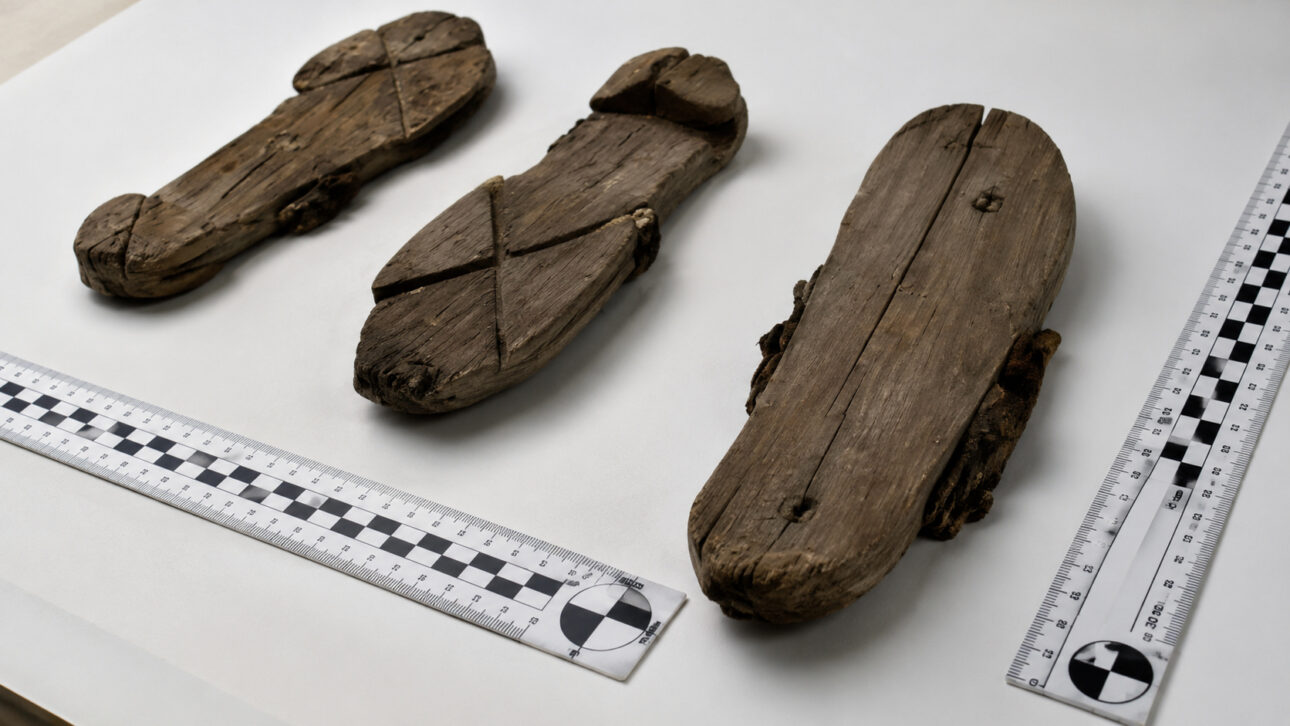
Archaeologists recovered 44 Roman wooden clogs, complete or fragmented, used in environments such as baths, wet areas, and heated floors.
The find is noteworthy because it shows a lesser-known side of the Roman Empire. Instead of battles, walls, and emperors, the objects reveal habits related to hygiene, comfort, and foot protection.
-
Bahrain sank a 70-meter Boeing 747 to a depth of 22 meters, transformed aircraft scrap into a 100,000 m² underwater park, and created an attraction where divers enter a plane at the bottom of the sea as if it were a movie set.

-
11-year-old girl ran barefoot with her feet covered in adhesive tape because she didn’t have sneakers, won three athletics events, and received help after moving the world

-
Engineer Transforms Coconut Farm in Brazil into Sustainable Business, Processing 1,000 Coconuts Daily and Innovating with Dragon Fruit-Flavored Ice
-
From TV Host to TikTok Real Estate Mogul: Brazilian Sells Luxury Homes Worth Up to $22 Million to 1.8 Million Followers





According to the Vindolanda Trust, the materials were preserved due to the region’s moist and low-oxygen soil. As a result, wood, leather, and fabrics managed to endure for centuries.
Rare preservation reveals details of Roman life
Vindolanda was located near Hadrian’s Wall, one of the main Roman frontiers in Britannia.
The fort preserved an exceptional set of organic objects, something rare in archaeological sites from the Roman period.
According to the Vindolanda Trust, this condition allowed the recovery of footwear, leather pieces, fabrics, and other materials related to military daily life.
Among these items, the wooden clogs stand out for their quantity and variety.
The collection includes complete pieces, soles, heels, platforms, and fastening fragments.
This allows archaeologists to better understand how these shoes were assembled and used.
Clogs protected feet in Roman baths
The clogs are associated with the Latin term sculponae, used to designate wooden footwear.
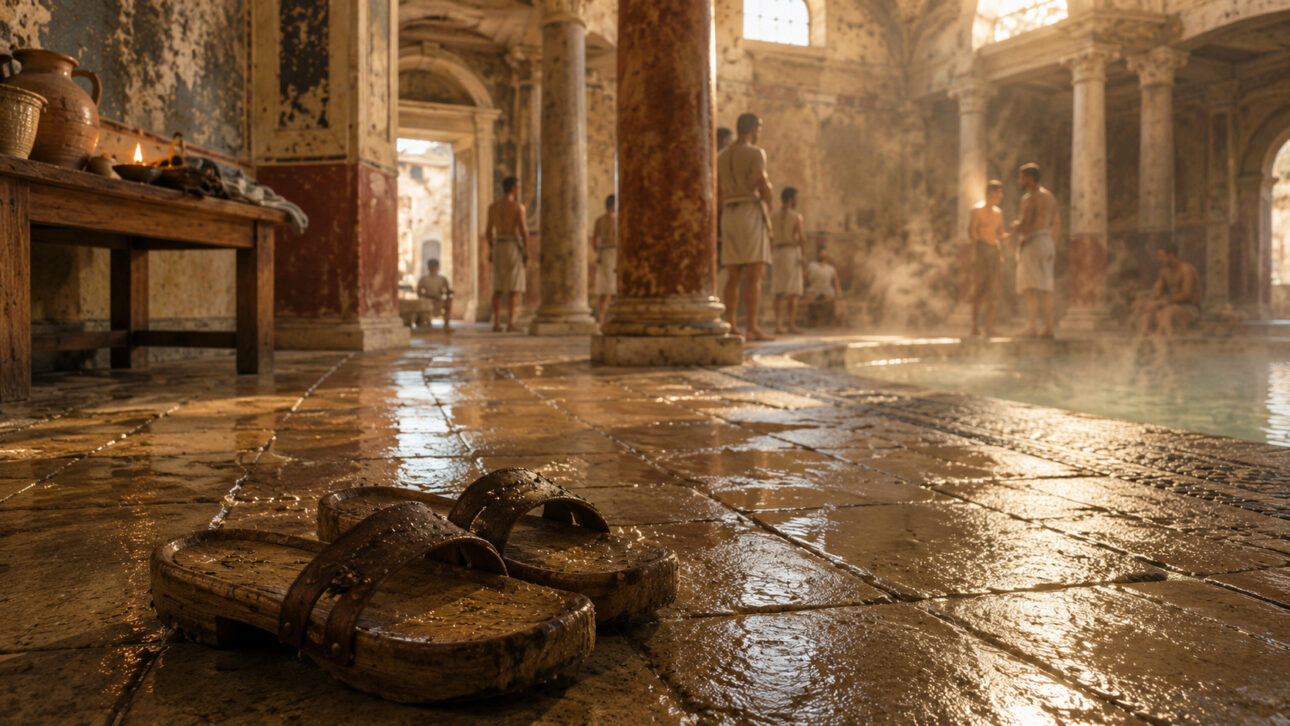
In Roman baths, they had a practical function.
The floors could become hot, wet, and slippery. Thus, the clogs helped prevent burns, discomfort, and falls.
Vindolanda had thermal complexes linked to different phases of Roman occupation.
One of them is associated with the end of the 1st century. Another belongs to the 3rd century.
Therefore, the footwear helps to understand how the Romans maintained their bathing habits even in a cold and damp region of Britannia.
Different models indicate varied uses
Despite the similar function, the clogs were not all the same.
Some specimens preserve the wooden base and leather uppers.
Others retain only fastening elements, such as straps and fittings.
There are also pieces with decorative details, incised marks, and distinct shapes.
Among the elements observed by researchers are:
- wooden platforms with different shapes;
- studs on the sole that altered the step;
- simple or multiple straps;
- possible heel supports;
- decorative incisions on the upper part;
- geometric patterns and marks resembling toes.
These differences suggest varied functions.
They may also indicate different levels of finish, price, and users.

Use may have gone beyond baths
Although the baths are the most direct explanation, researchers are also considering other possibilities.
This occurs because wooden clogs were used, in other historical periods, to protect feet from mud and moisture.
Therefore, some models of Vindolanda may have been used in passage areas, internal roads, or external spaces of the fort.
The main hypotheses are:
- use in Roman baths;
- protection against hot and wet floors;
- circulation in internal areas of the fort;
- protection against mud and moisture;
- different models for distinct functions and users.
Thus, the clogs reveal not just a bathing habit.
They also show how the soldiers and residents of the fort adapted to the Roman frontier environment.
Find changes the way we look at the Roman Empire
The discovery in Vindolanda reinforces that simple objects can tell complex stories.
A wooden clog, for example, reveals practical choices, body care, and solutions to daily problems.
Roman life was not only made of great constructions and military campaigns.
It also involved bathing, circulation, rest, protection against the cold, and adaptation to space.
According to the Bata Shoe Museum, footwear found in Vindolanda helps to better understand life on the Roman frontier.
Finally, the collection shows how wood, leather, wear, and decoration can reconstruct common gestures of people who lived centuries ago.
And you, did you imagine that a simple wooden clog could reveal so many details about the routine of the Romans? Leave your opinion!


