






 Portuguese
  Spanish


Project in Bahrain placed a 70-meter Boeing 747 as the central piece of an underwater park of about 100 thousand m², at approximately 20 meters depth. The attraction gathers artificial reefs, ecological sculptures, and a replica of a traditional pearl merchant house for tourist diving and marine research.
A 70-meter Boeing 747 was prepared to sink in the waters of Bahrain and become the main attraction of an underwater park created for divers. The project was announced in 2019, near the Amwaj Islands, north of the country, as a unique tourist and environmental structure in the region.
According to Divernet, in a publication on June 11, 2019, the operation was part of an underwater park of about 100 thousand square meters, at approximately 20 meters depth. The project involved the Bahrain Tourism and Exhibitions Authority, the Supreme Council for Environment, government bodies, and private companies.
Boeing 747 became central piece on the sea floor
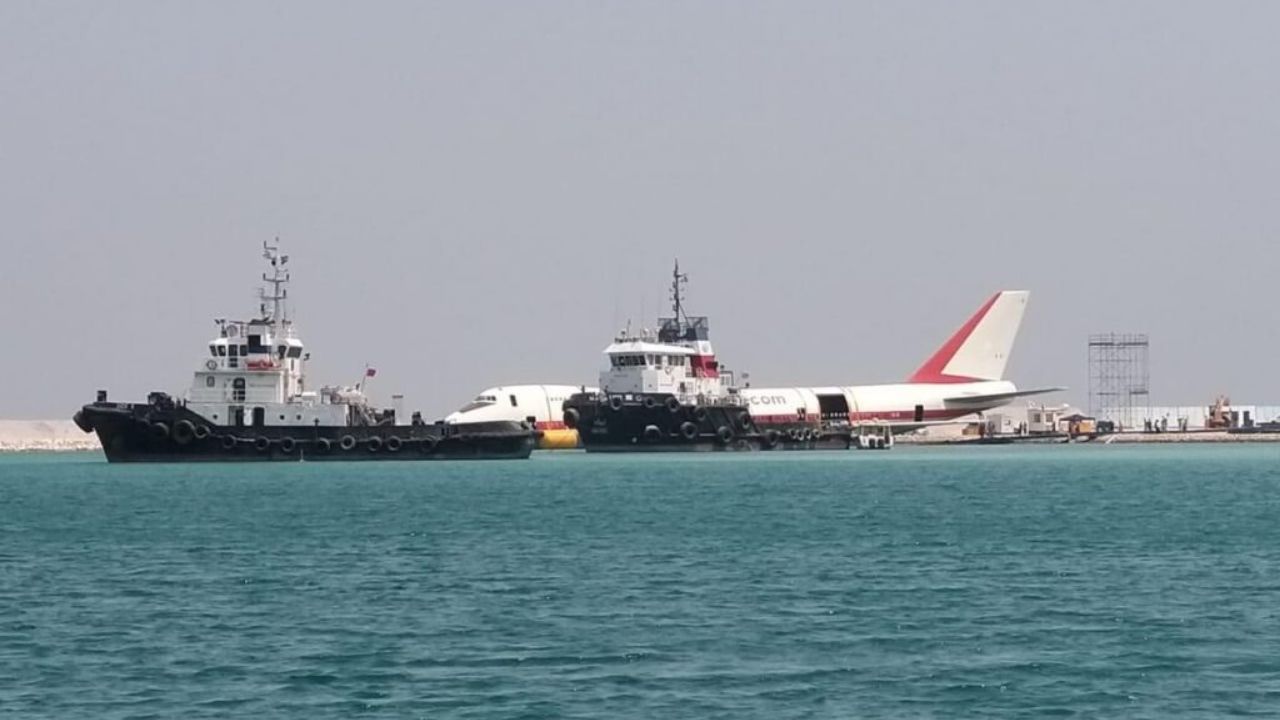
The Boeing 747 was chosen as the element with the greatest visual impact in the park. Due to its scale, the passenger aircraft became a kind of submerged landmark, creating an unusual exploration point for divers visiting Bahrain.
-
11-year-old girl ran barefoot with her feet covered in adhesive tape because she didn’t have sneakers, won three athletics events, and received help after moving the world

-
Engineer Transforms Coconut Farm in Brazil into Sustainable Business, Processing 1,000 Coconuts Daily and Innovating with Dragon Fruit-Flavored Ice

-
From TV Host to TikTok Real Estate Mogul: Brazilian Sells Luxury Homes Worth Up to $22 Million to 1.8 Million Followers

-
14-Year-Old Student Wins Gold at Brazil’s Largest Math Olympiad After Six Months Without a Math Teacher, Becomes Sole Medalist from His City




The proposal transforms an aerial structure into a diving scene, completely shifting the original function of the plane. Instead of crossing continents, the 747 becomes part of an underwater route, where the curiosity lies in finding a giant aircraft on the sea floor.
Underwater park has about 100 thousand m²
Besides the Boeing 747, the park was planned to occupy an area of approximately 100,000 square meters. The structure includes artificial coral reefs, sculptures made with eco-friendly materials, and a replica of a traditional Bahraini pearl merchant’s house.
This ensemble helps explain why the project was presented as more than just a simple artificial wreck. The idea was to create a diving attraction with tourist, cultural, and environmental appeal, mixing local memory, marine biodiversity, and an unusual visual experience.
Attraction is near the Amwaj Islands
The underwater park was located just over 30 kilometers from the Amwaj Islands, north of the mainland. The choice places the attraction in a region with the potential to receive visitors interested in diving, nautical tourism, and out-of-the-ordinary experiences.
The forecast at the time was for an opening in the summer of 2019. The focus was to attract tourists but also to create a useful space for marine biologists, environmentalists, university students, and researchers interested in observing submerged structures and artificial reefs.
Project follows the trend of sunken planes for diving
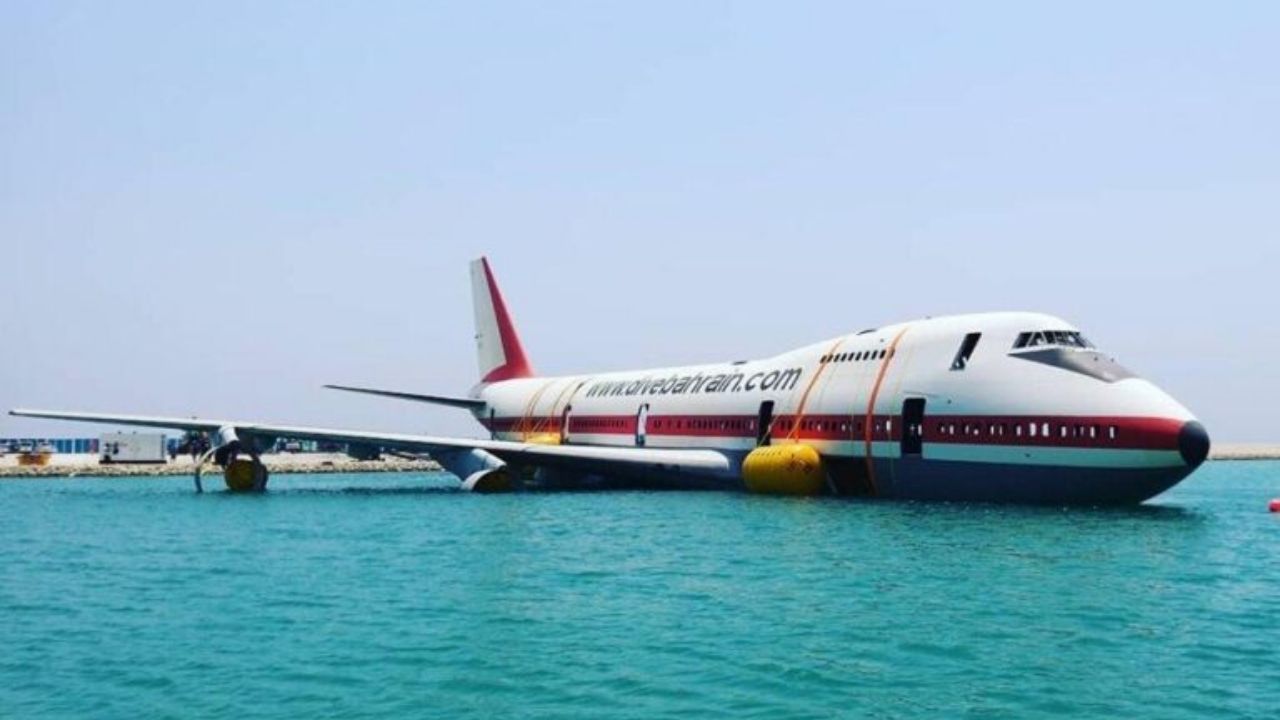
Divernet highlighted that Bahrain’s 747 followed a trend already seen in other countries, such as Jordan and Turkey, where aircraft were also sunk to form diving attractions. This type of structure usually attracts attention because it combines scale, mystery, and controlled access.
In the case of Bahrain, the difference was in the size of the Boeing 747 and the ambition to transform it into the center of an underwater theme park. An aircraft of this size at the sea bottom creates an image hard to ignore, especially for those seeking dives with unusual settings.
Artificial reefs can attract marine life
Besides tourism, submerged structures can serve as a base for artificial reefs, depending on environmental conditions, material preparation, and site management. In Bahrain’s project, the presence of planned reefs and eco-friendly sculptures indicates this concern.
Even so, it is important to separate potential from proven results. The source indicates that the space would also be used by researchers and environmentalists, but does not claim that the Boeing 747, by itself, has already produced measurable ecological impact. The credibility lies in treating the project as a planned attraction and possible laboratory, not as a guaranteed environmental solution.
Replica of Pearl Merchant’s House Connects Diving and Local Culture
The replica of a traditional Bahraini pearl merchant’s house adds a cultural layer to the park. The detail brings the attraction closer to the country’s maritime history, marked by its relationship with the sea and the pearl tradition.
This choice prevents the park from being just a collection of submerged objects. By uniting Boeing 747, artificial reefs, and references to pearls, the project attempts to create a visual narrative for divers: aerial technology, coastal memory, and marine environment in the same itinerary.
What This Idea Puts Up for Debate
The case of Bahrain shows how discarded structures can gain a second life in tourism and diving projects. An out-of-operation Boeing 747, when prepared and installed in a controlled location, becomes a point of interest for visitors and also for scientific observation.
Do you think sinking large structures like airplanes to create underwater parks is an intelligent form of tourist repurposing or do such projects require much more environmental caution? Leave your opinion in the comments and join the discussion.


