Portuguese
  Spanish


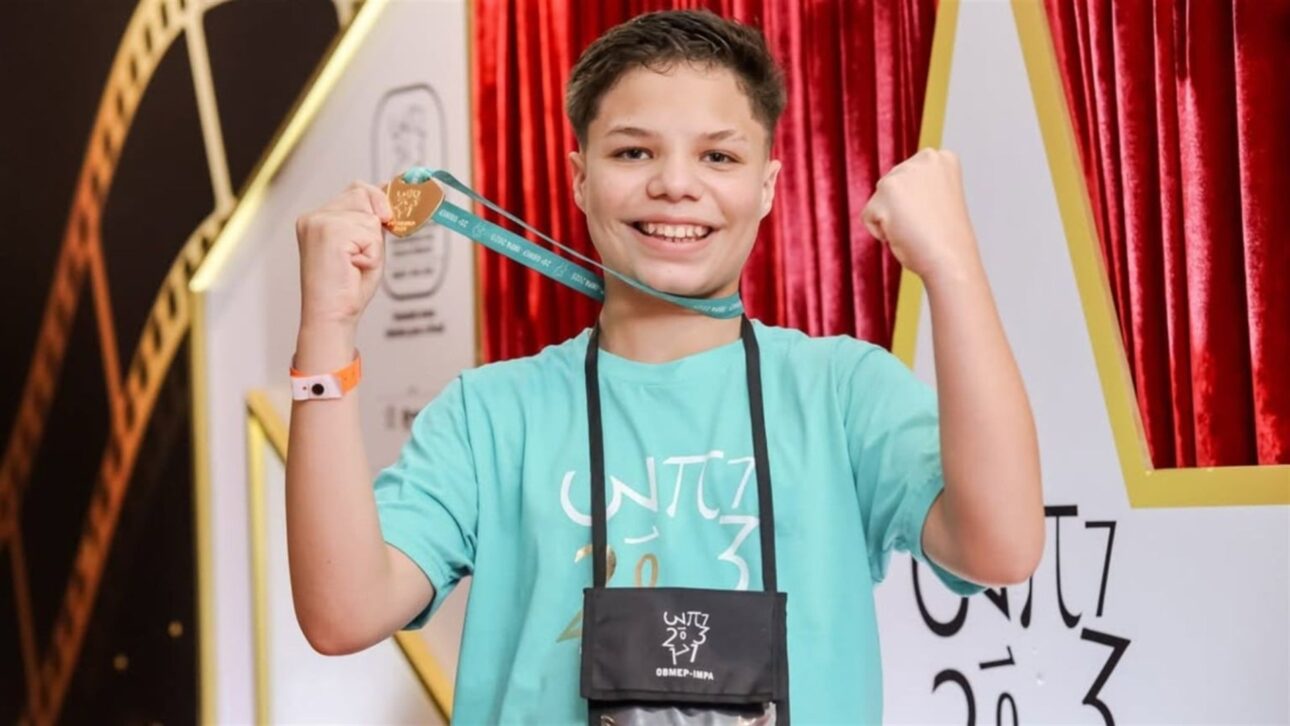
At 14 years old, Giovani Alves won the national gold medal of the 20th OBMEP and, on June 22, 2026, took the stage in Rio de Janeiro as the only student from the entire city of Jundiaí, in the interior of São Paulo, to achieve this feat in this edition.
According to Tribuna de Jundiaí, the teenager from Escola Estadual Getúlio Nogueira de Sá, in the Caxambu neighborhood, spent about six months without math classes and still kept up his preparation routine for the largest math olympiad in Brazil. According to a report published by Tribuna de Jundiaí on July 6, 2026, he was the only student in the city, including both public and private schools, to take the national gold of the OBMEP, surpassing the bronze medal he had already won in 2024.
The student who became the pride of the public school in Jundiaí
Son of Grace Mara Bernabe Alves and Wagner Augusto Alves, Giovani Alves grew up as a typical teenager from Jundiaí, in the interior of São Paulo. At 14, he studies at Escola Estadual Getúlio Nogueira de Sá, in the Caxambu neighborhood, a state school like so many others spread across the country. It was there, in a neighborhood public school, that the story began which would end with the young man at the top of the OBMEP podium.
The OBMEP, short for Brazilian Mathematics Olympiad of Public Schools, is the largest competition of its kind in Brazil and mobilizes millions of students every year. Achieving the national gold medal means being among the best results in the entire country, a tiny fraction of the multitude of participants. For a public school student who faced months without a teacher for the subject, the magnitude of the achievement becomes even more evident.
-
Brazilian YouTube Sensation “Galinha Pintadinha” Celebrates 20 Years, Amassing 65 Million Subscribers and $700 Million in Annual Revenue

-
Fifth-grader’s Project Turns Used Cooking Oil into Over 160,000 Gallons of Biodiesel, Cuts CO₂ Emissions, and Inspires Law in Rhode Island

-
Started with $80 at 17 Selling Used Clothes, Now Aiming for $18 Million with a Network of 50 Thrift Stores

-
17-Year-Old Develops Free App to Prevent Hot Car Deaths, Launches National Campaign in the U.S.



The young man’s name began to circulate in Jundiaí as a symbol that talent and dedication can flourish even in adverse conditions. The gold did not fall from the sky: it came from years of study, from recurring participation in every math olympiad within his reach, and from a healthy stubbornness in not giving up on his own goal.
Six months without a math teacher
The detail that turns this story into something extraordinary is in the classroom. For about six months, Giovani’s class was without a math teacher, precisely the subject that would lead him to the top of OBMEP. The lack of a permanent teacher is a well-known portrait of Brazilian public education, which suffers from a shortage of professionals in the exact sciences.
Without the teacher to guide the content, many people would have simply stopped. Giovani did the opposite. He continued his preparation on his own, studied with supplementary materials, and kept practicing the typical math olympiad problems, those that require reasoning, creativity, and persistence far beyond what usually appears on a common test.
This solitary study routine reveals the extent of the teenager’s discipline. While the absence of the math teacher could have served as an excuse, it became fuel. The gold medal won months later proved that the preparation did not stop, even when the public school’s structure failed to provide the basics.
From bronze in 2024 to the promise of returning for gold
The achievement of 2026 was not the young man’s first encounter with the podium. In 2024, Giovani had already won the national bronze medal at OBMEP, a result that many would consider the end point of a victorious journey. For him, it was just the beginning.
Upon receiving the bronze, the student made a promise: he would return to seek the gold. He kept the goal and turned the next competition into a personal mission. Every exercise solved during the period without a math teacher carried this target, the desire to change the color of the medal and climb one more step in the olympiad he already knew from the inside.
The promise was fulfilled in the next edition. From bronze to gold, Giovani traveled the most challenging path of the competition during the time when the state network faced the lack of a teacher for the subject. The national gold medal confirmed that the goal set two years earlier was not an adolescent’s exaggeration, but a plan taken seriously.
The only gold medalist in the entire city
Among all the students in Jundiaí, from public and private schools, only one took the national gold from OBMEP in this edition, and that name was Giovani Alves. The fact is impressive because it places a student from the state network above peers from private institutions, often with more resources, laboratories, and support.
Being the only gold medalist in the entire city gives another dimension to the achievement. It is not about being one among many, but rather the only name from Jundiaí to reach the highest step of the largest mathematics olympiad in Brazil that year. The isolated victory highlights the contrast between the student’s humble origins and the national reach of the result.
For the family, the significance was even greater. “It was a moment of great joy for the whole family, especially because he was the only student from Jundiaí,” summarized the parents, Grace Mara Bernabe Alves and Wagner Augusto Alves. The phrase conveys the pride of seeing a public school student shine where so few reach.
The Award Ceremony in Rio de Janeiro
The official recognition came on June 22, 2026, when the medalists of the 20th OBMEP were celebrated in a ceremony in Rio de Janeiro. In front of students from all corners of the country, Giovani received the gold medal he had been pursuing since the bronze in 2024.
The award ceremony in Rio marked the end of a cycle that began in a classroom without a math teacher and ended on a national stage. Climbing up to receive the OBMEP gold, among Brazil’s best, gave the teenager from Jundiaí concrete proof that the effort had been worth every hour of study.
More than just a trip, the ceremony represented the moment when the public school of Caxambu gained national visibility through the talent of a single student. The gold medal hanging around Giovani’s neck became the portrait of an overcoming that started far from the spotlight.
Beyond OBMEP: OMASP and Kangaroo Math Olympiad
The student’s journey is not limited to a single exam. Besides OBMEP, Giovani achieves good results in other competitions, such as OMASP, the Mathematics Olympiad of the State of São Paulo, and the Kangaroo Math Olympiad, an international tournament that brings together young people from dozens of countries.
This constant presence in every available math olympiad shows that the national gold was not a stroke of luck. It is the result of a habit of facing challenges, testing reasoning in different formats, and accumulating experience test after test. The more competitions, the sharper the repertoire of someone who takes mathematics seriously becomes.
For a public school student, participating in these olympiads also opens doors. Each medal and each good placement build a resume that can lead to scholarships, courses, and future opportunities. Giovani has been transforming his passion for numbers into a collection of achievements that go beyond the walls of the state school in Jundiaí.
The PIC Scholarship and What Comes After the Gold
Winning the gold medal at OBMEP brings more than just prestige. The medalists become part of the PIC, a scientific initiation program linked to CNPq, and receive a monthly scholarship of 300 reais. The amount, although modest, serves as an incentive for young talents to continue studying and delving deeper into the subject.
More important than the amount is the recognition that comes with it. The PIC scholarship places Giovani among the students that the system itself starts to monitor as promising in mathematics, a reinforcement for someone who reached gold against so many obstacles. For him, it is the chance to continue advancing in the mathematics olympiad with an encouragement that the classroom alone could not provide.
This type of encouragement can be decisive in the life of a teenager. The scholarship and the program recognize the merit of those who stood out and signal that the country, despite all its flaws, still finds ways to value its most dedicated public school students.
The portrait of a public school that resists
The story of Giovani Alves fits into a simple and harsh sentence at the same time: a 14-year-old boy won the largest mathematics olympiad in the country studying part of the time without a teacher for the subject. It is the synthesis of a system that fails and a talent that insists on winning despite the failure.
The case exposes the paradox of Brazilian education. On one side, the rundown public school, lacking teachers and with a fragile structure. On the other, students who, through merit and overcoming, achieve national-level results even without the minimum guaranteed. Giovani’s gold is both a reason for celebration and a silent denunciation.
While the country celebrates the gold in OBMEP, there is an unease that is hard to ignore. If a single public school student, without a teacher for half a year, managed to reach the top of the largest mathematics olympiad in Brazil, how many other talents like Giovani Alves does the country let slip by every year for not providing even the basics in the classroom?