Portuguese
  Spanish


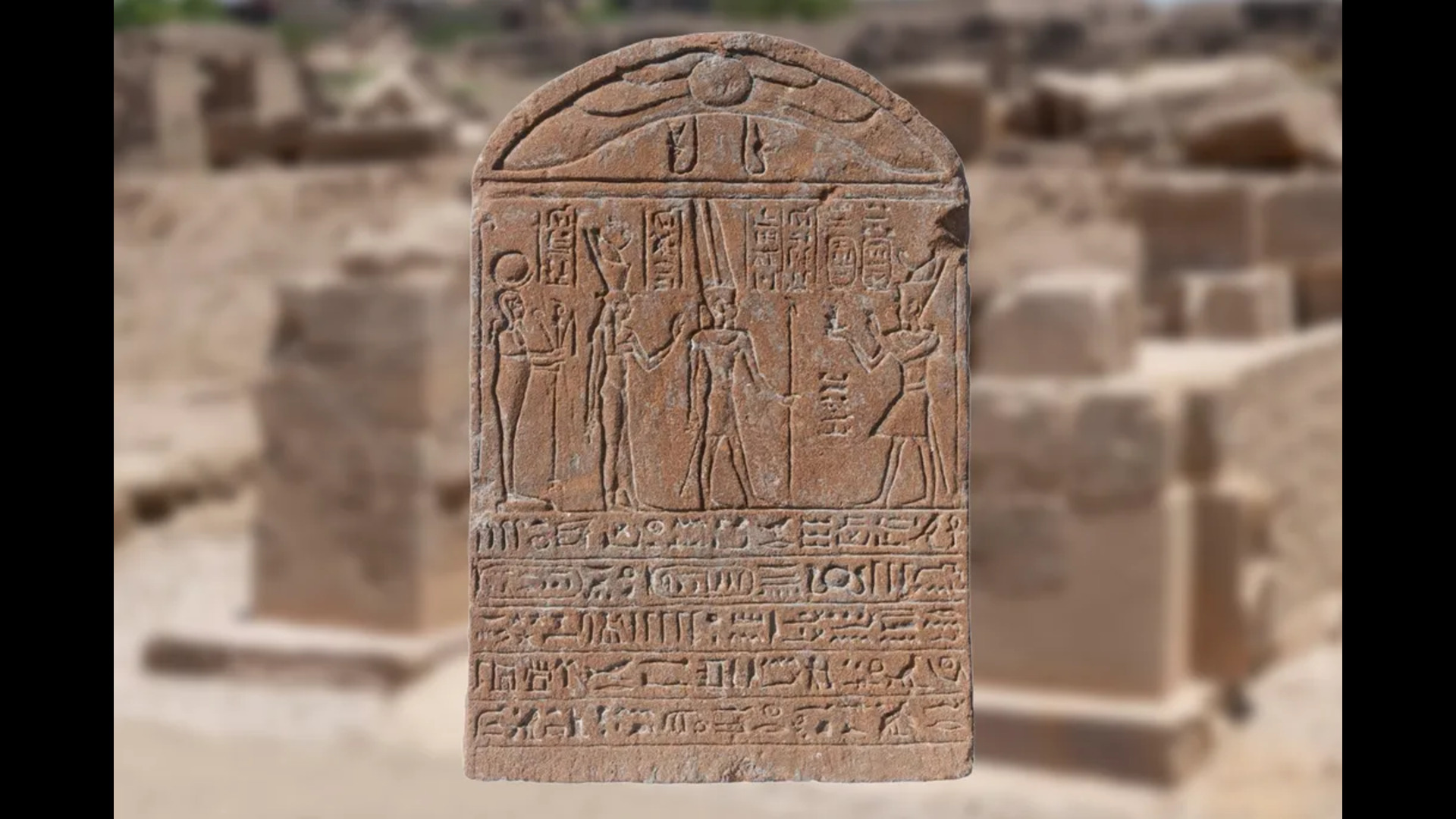

The discovery of a plate engraved during the reign of Claudius demonstrates how foreign rulers used Egyptian religious iconography to legitimize their political power.
Archaeologists discovered a 2,000-year-old limestone plate at the Temple of Kom Ombo in Upper Egypt, depicting a Roman emperor as an Egyptian pharaoh.
The piece, dating back to the reign of Emperor Claudius, shows the Roman ruler participating in traditional rituals and wearing the ceremonial attire typical of pharaonic monarchy. This find provides new evidence of how the Romans adopted local customs to consolidate their authority over the Egyptian population after conquering the region.
Religious symbolism and political legitimation
The detailed engraving on the stone block depicts Claudius offering gifts to Egyptian deities, specifically to the crocodile god Sobek and the falcon god Horus.
-
New York removed the tracks from over 2,500 subway cars and dumped everything at the bottom of the Atlantic, and what seemed like trash turned into an artificial reef teeming with fish and divers.

-
From matches sold by bicycle at age 5 to a global furniture empire: the lumberjack’s son founded IKEA at 17 in his uncle’s kitchen and transformed a small company into the largest furniture retailer on the planet.
-
The mansion in Flamengo, built in 1865 for the Baron of São Clemente and closed for 20 years, has become a spa, event hall, and gym for “Symphony,” a luxury condominium that sold 70% of its gross development value in the first month on the R$ 60 million land of the former Bennett College.

-
The Ipiranga convent, a 1924 building adjacent to the Museum that remained vacant for a decade and became home to dozens of cats, is reborn as “Alma Mater,” a luxury development worth R$ 130 million with a pool in the courtyard and a clubhouse in the former nuns’ chapel.





The representation of a Roman emperor as an Egyptian pharaoh was a common strategic tool to demonstrate that the new ruler respected and maintained the cosmic order established by the local religion. In the accompanying hieroglyphic inscriptions, Claudius’s name is written in a cartouche, a symbol traditionally reserved for the kings of ancient Egypt.
Experts indicate that, although Roman emperors rarely visited Egypt in person, they funded the construction and expansion of temples to ensure the loyalty of powerful priests.
By being depicted as a Roman emperor as an Egyptian pharaoh, Claudius ensured that his image was integrated into the divine pantheon and accepted by the religious bureaucracy. The discovery at the Temple of Kom Ombo reinforces the complexity of diplomatic and cultural relations between Rome and its wealthiest provinces.
The artistic technique and historical context
The stone block presents an artistic style that blends classical influences with the characteristic rigidity of monumental Egyptian art.
The carvings reveal the precision of the artisans of the time, who adapted the features of the foreign ruler to the millennia-old aesthetic standards of the Nile Valley. This visual fusion of a Roman emperor as an Egyptian pharaoh allowed imperial propaganda to be understood by different strata of society, regardless of the spoken language.
The Temple of Kom Ombo, where the piece was found, is a unique site as it is dedicated to two distinct deities, requiring symmetrical decoration and constant ritual representations. The presence of Claudius on these walls indicates that the temple continued to be a vital center of religious and political activity long after the end of the Ptolemaic dynasty.
Through the figure of a Roman emperor as an Egyptian pharaoh, the rulers maintained the social stability necessary for the export of grain and taxes to Rome.
Preservation and New Archaeological Studies
The limestone slab was found in good condition, allowing for a clear reading of the royal titles and the offering scenes. The Egyptian Ministry of Tourism and Antiquities plans to conduct further studies to determine whether the block was part of an outer wall or an inner sanctuary of the temple.
The analysis of the inscription of the Roman emperor as an Egyptian pharaoh will help to more accurately date other construction phases carried out during the Roman period in the Egypt.
This discovery highlights the ongoing importance of Kom Ombo for modern archaeology, revealing layers of history that connect Mediterranean civilizations. The block will be cataloged and may eventually be displayed in national museums to illustrate the cultural syncretism of the time.
By documenting the image of a Roman emperor as an Egyptian pharaoh, science gains a key piece to understand the long legacy of Egyptian influence over its conquerors.
With information from Smithsonian Magazine