Portuguese
  Spanish


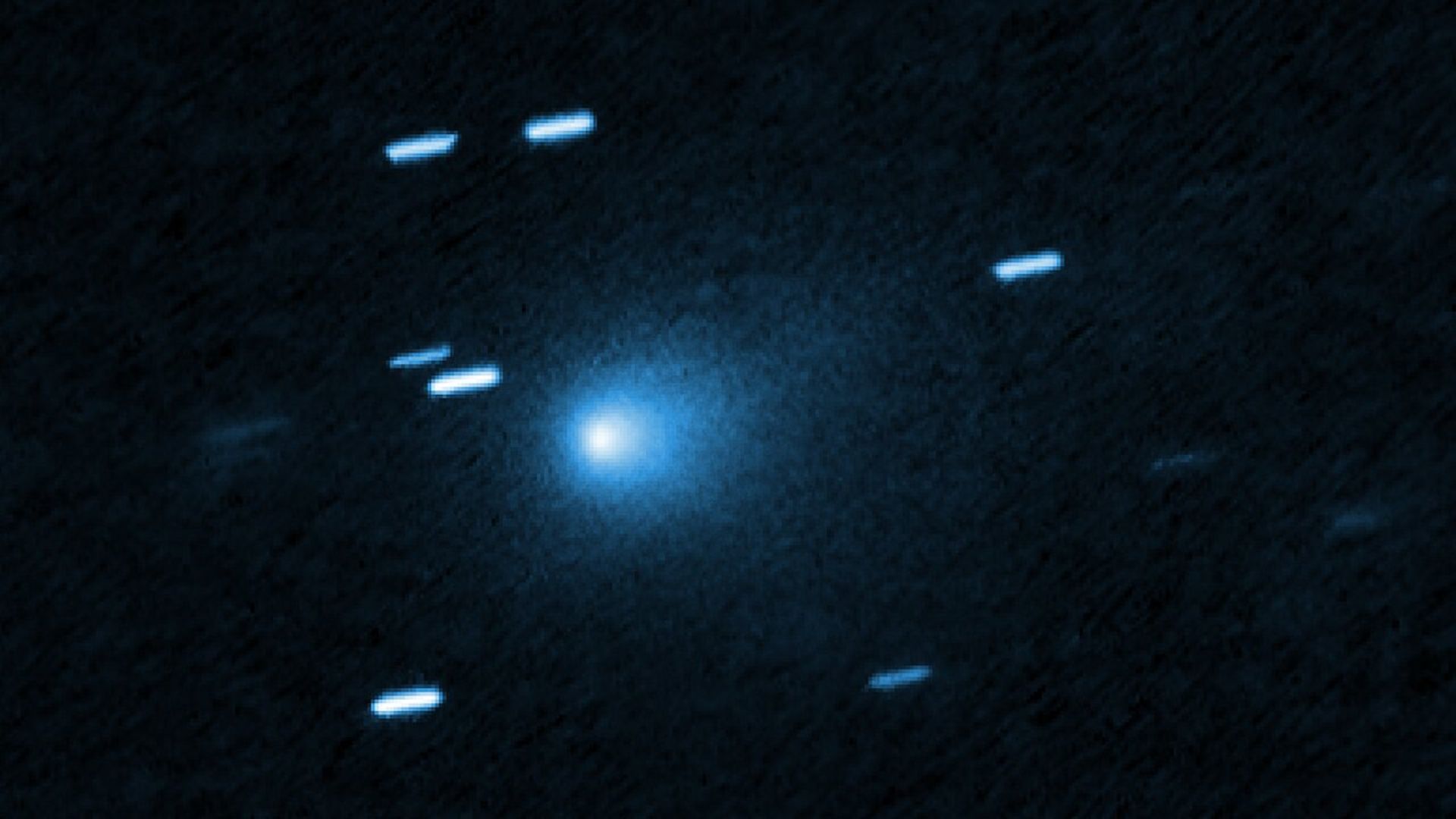


The Interstellar Comet 3I/ATLAS Has Been Detected Again Following Its Conjunction with the Sun, Showing an Unexpected Increase in Brightness and Unusual Blue Coloration. Data from Solar Observatories Indicate Variations in Photometric Brightness Outside of the Pattern Registered in Previous Comets.
The interstellar comet 3I/ATLAS has been detected again following its conjunction with the Sun, displaying an increase in brightness above what was expected and a bluer color than sunlight.
Data obtained from coronagraphs and solar imagers between September and October indicate a brightness jump as it approaches perihelion on October 29, followed now by the object’s reappearance in the morning sky throughout November and December.
Ground-based telescopes are expected to resume detailed measurements during this period.
-
She spent 73 years breathing inside an iron lung, survived the aftereffects of polio, and became the last woman in the United States dependent on the equipment before dying at 78 years old.

-
Brazilian students created a $1 filter using pine bark, cotton, and 3D-printed parts to clean cassava wastewater, reduce the toxicity of a hazardous waste, and transform contaminated water into biofertilizer.

-
Astronaut from Artemis II steps down after mission to the Moon and decision surprises after a record of 406,771 km, a historic 10-day journey, and an unprecedented achievement for Canada.

-
A fossil kept for years in a small museum in Montreal concealed 450-million-year-old soft tissue, a discovery that has only happened once before in history.


Records from Solar Probes
The most comprehensive analysis so far has been published by researchers Qicheng Zhang and Karl Battams, gathering data from four cameras aboard three platforms: HI1 and COR2 from the STEREO-A probe; the coronagraph LASCO C3 from SOHO; and CCOR-1 aboard GOES-19.
According to the authors, the brightness of 3I/ATLAS increased in a manner consistent with a r^−7.5 curve (r is the heliocentric distance), a behavior more pronounced than that recorded in many comets of the inner solar system.
CCOR-1 also recorded the comet as an extended source, with an apparent coma of about 4 arc minutes, a parameter that provides a direct estimate of the gas and dust envelope during its passage through the instrument’s field.
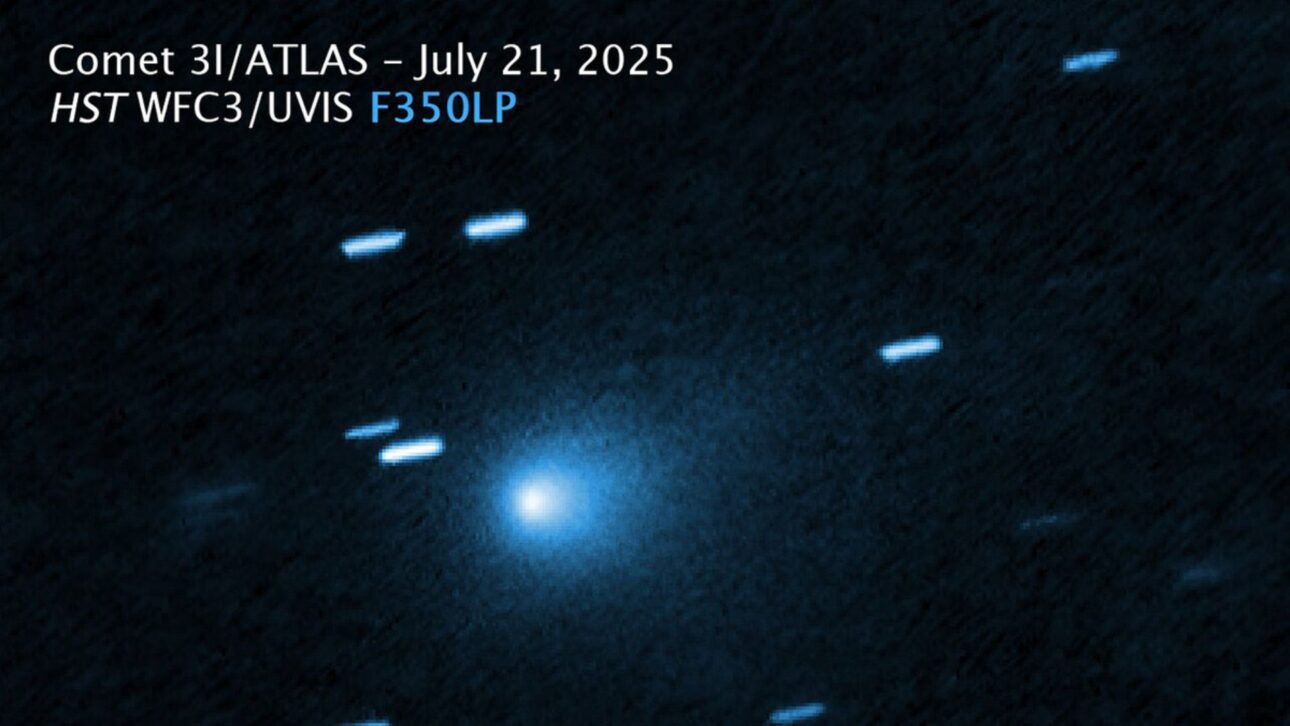
Blue Color and Origin of Brightness
Measurements in different filters from LASCO and the spectral response of CCOR-1 indicate that, near perihelion, 3I/ATLAS exhibited a bluer tone than the solar reference used in calibration.
According to the technical analysis, the color deviation suggests gaseous emissions as the main source of visible light, and not just solar reflection off dust grains, as occurs in most observed comets.
This conclusion is supported by comparisons between photometric bands and by calibrated measurements with reference stars in each field.
Experts assert that the observed pattern is consistent with the presence of excited molecules near the comet’s nucleus.
Observations During the Solar Conjunction
The perihelion phase coincided with the comet’s conjunction with the Sun, which made optical observation from Earth impossible.
During this period, space coronagraphs — which block the solar disk — continued monitoring the object.
The series obtained by STEREO-A, SOHO, and GOES-19, between mid-September and the end of October, showed consistent light curves, confirming the rapid and continuous increase in brightness up to perihelion.
Return to the Morning Sky
As the Sun moves away, 3I/ATLAS becomes visible in the morning twilight.
Projections released by observation guides indicate that the comet should become accessible to telescopes from mid-November, initially with brightness around magnitude 11, gradually decreasing in the following weeks.
According to astronomers, the phenomenon will not be visible to the naked eye, but can be observed by those with medium-sized optical equipment and cameras capable of photometric and spectroscopic measurements.
The scientific community awaits the comet’s return to dark skies to confirm the data collected by space probes and to monitor the coloration and cometary activity evolution following perihelion.
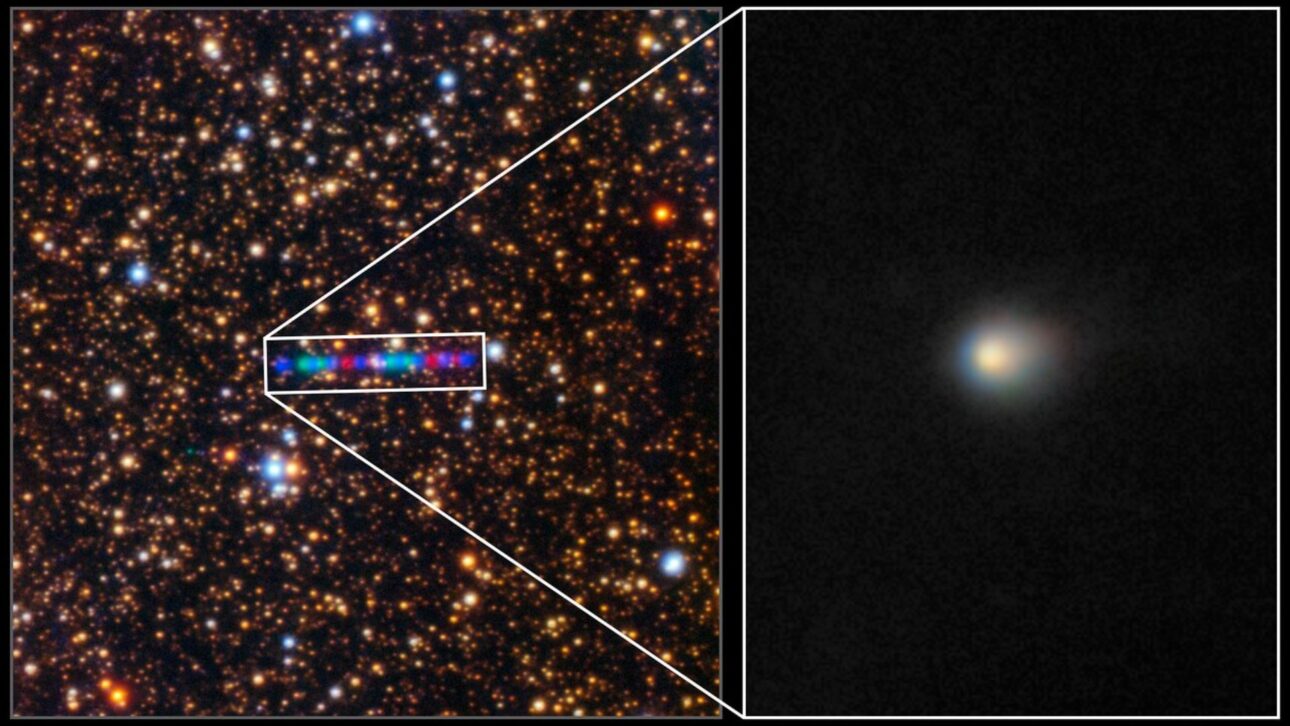
Maximum Brightness and Open Questions
Independent studies based on the same data sets indicate that the brightness peak occurred close to magnitude 9.
This estimate is consistent with the r^−7.5 curve described by the researchers.
According to practical astronomy publications, the authors of the spatial analyses predict that 3I/ATLAS “should emerge from the conjunction brighter than when it entered”.
This expectation is based on the measured values before and after the maximum solar approach.
So far, the exact cause of the accelerated increase in brightness has not been determined.
Researchers assert that new post-perihelion observations will be essential to evaluate whether the gaseous component continues to dominate, if dUST emission increases as the comet moves away from the Sun, and how the coma evolves in size and density.
CCOR-1 and Instrumental Contribution
CCOR-1, the first operational coronagraph in geostationary orbit, was developed by the U.S. Navy in collaboration with NOAA and is onboard the GOES-19 satellite.
The instrument operates in the visible (470–740 nm), with a typical cadence of 15 minutes, and captures continuous images of the solar corona and of objects crossing its field of view.
According to information from NOAA, the equipment was designed to assist in space weather prediction, complementing the work of scientific coronagraphs like LASCO from SOHO and the cameras from STEREO.
The combination of these instruments allowed continuous monitoring of 3I/ATLAS during the time it was invisible to ground observatories, providing a complete data set on the comet’s photometric behavior.
Discovery and Trajectory
The 3I/ATLAS was discovered on July 1, 2025 by the telescope of the ATLAS project in Chile.
Its interstellar nature was confirmed by the Minor Planet Center the following day.
The perihelion occurred on October 29, and the closest approach to Earth is expected in December, with no risk to the planet.
The designation “3I” indicates the third known interstellar object, after 1I/ʻOumuamua and 2I/Borisov.
According to astronomers, the fact that the comet displays unusual brightness and coloration characteristics justifies the interest in new observation campaigns.
Next Observation Steps
For Brazilian research groups and observatories, the reappearance of 3I/ATLAS represents an opportunity to gather light curves in multiple bands and low and medium-resolution spectra, allowing direct comparison with data from STEREO-A, SOHO, and GOES-19.
Experts emphasize that monitoring should focus on verifying whether the “bluer” pattern remains in the coming weeks and how the brightness stabilizes or decays after the solar passage.
According to international circulars, teams plan coordinated observations as the comet gains height on the eastern horizon before dawn, facilitating continuous measurements and data crossover between ground-based and space observatories.