Portuguese
  Spanish


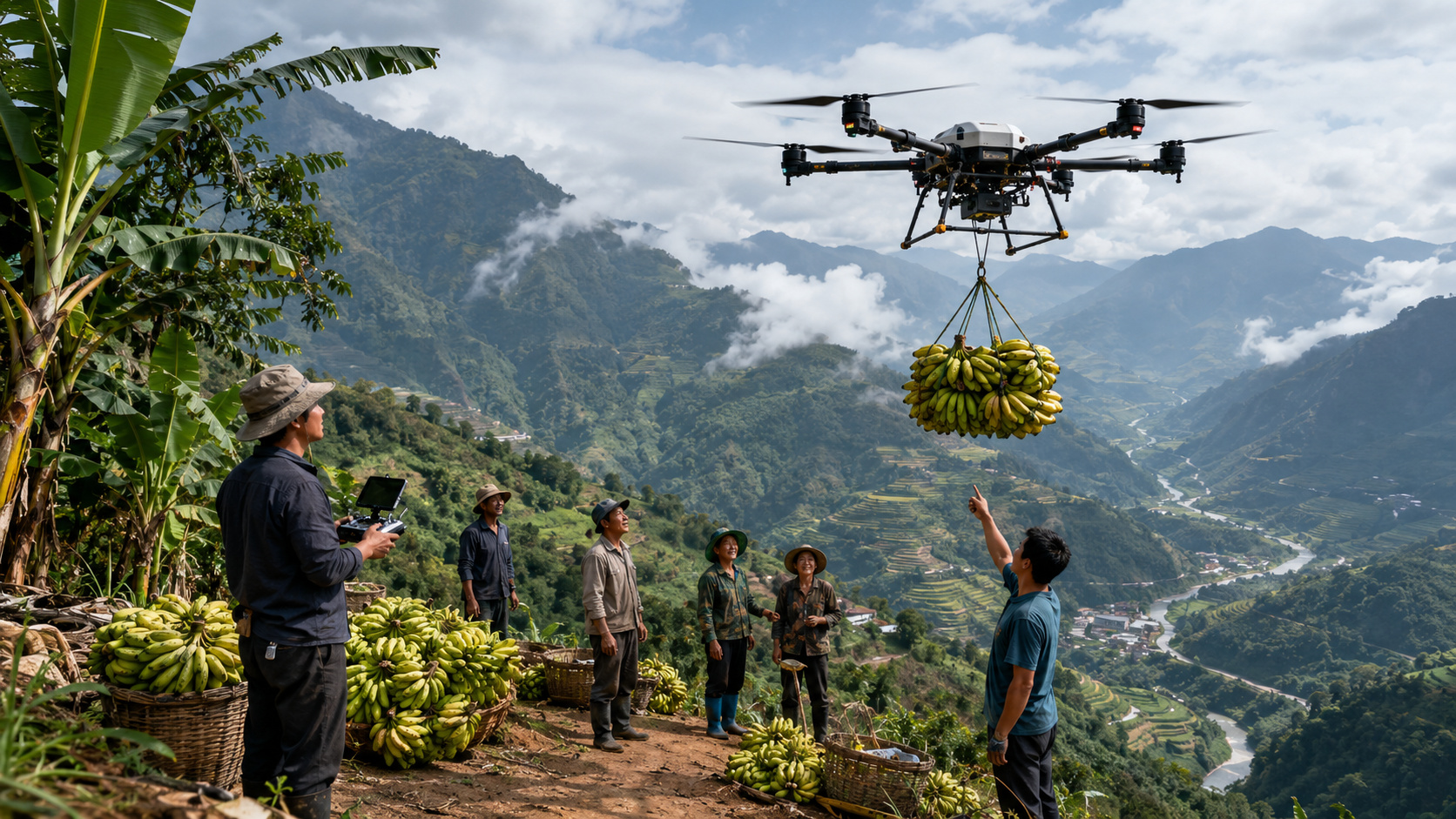

Drones start transporting bananas in China’s mountains, reduce harvest losses and create a new rural profession.
In the mountains of Yunnan province, in southwest China, a scene that once seemed futuristic began to become routine between 2024 and 2025: cargo drones lifting 40 kg banana bunches directly from steep slopes and crossing valleys to collection points. According to Xinhua, in a report from January 22, 2025, the case gained traction in areas where even walking is difficult, as more than 94% of Yunnan’s territory is inclined and almost 46% of arable land is on slopes with a gradient greater than 15 degrees.
The practical impact is seen in transportation. In regions where roads are limited, tractors can hardly operate, and workers still carried fruits manually along trails, drones have started to reduce travel time and damage to the bunches, a problem that affected the quality of the bananas before reaching the trucks.
Xinhua itself had already shown, on December 19, 2024, drones being used to transport bananas in the mountains of Yunnan, while agricultural sector reports recorded operations capable of moving about 24 tons per day with three aircraft.
-
New Smart Radar Begins Issuing Fines to Solo Drivers in Carpool Lanes, Uses Cameras to Count Occupants, Changing Traffic Enforcement Rules on Busy European Roads

-
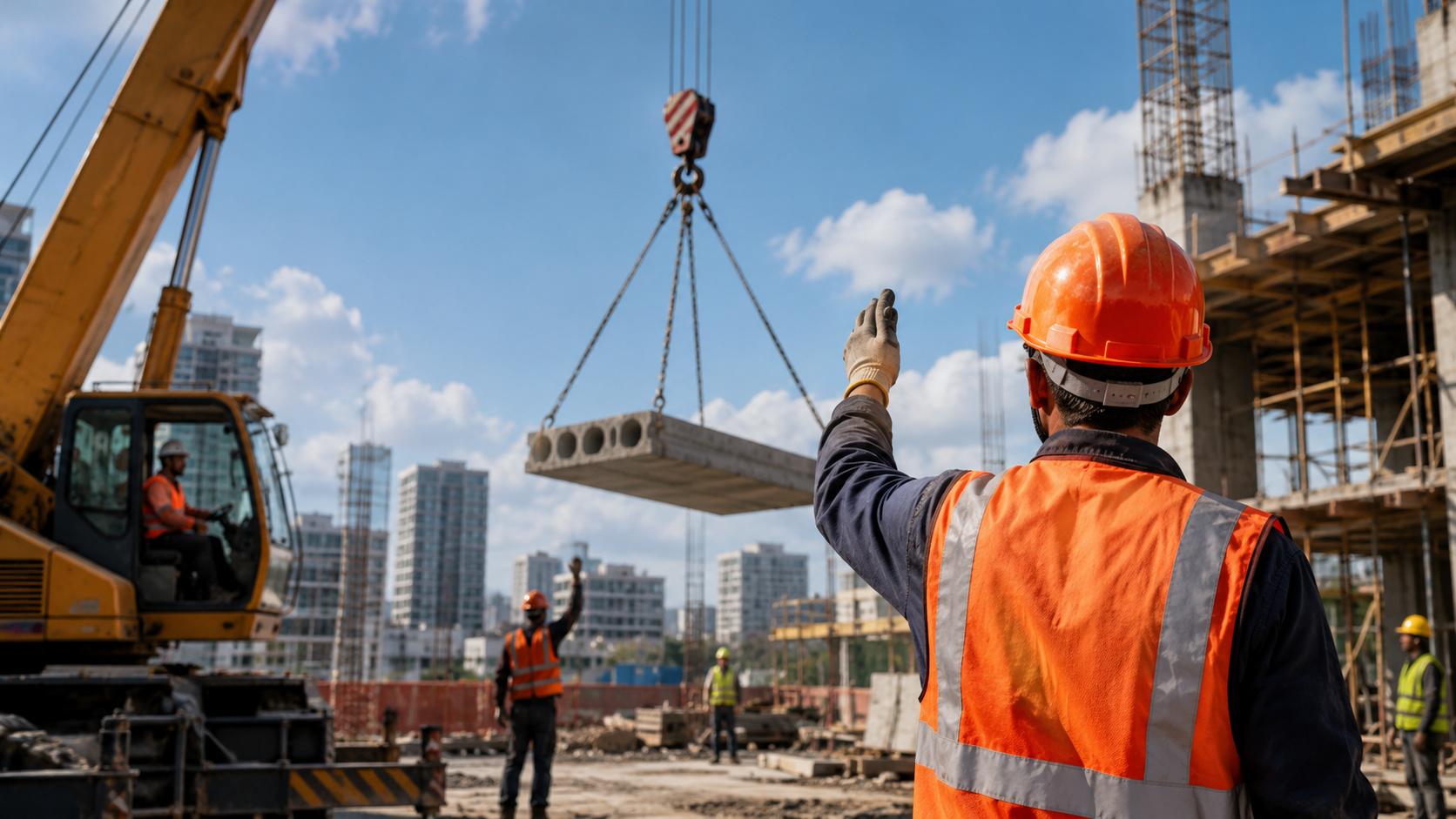
Why can the crane operator only obey the correct signalman on the construction site: among dozens of workers, a hand raised by the wrong person can confuse the maneuver and turn a load of tons into an immediate risk.
-
What changes with the new public transportation rules that can reduce pressure on fares and pave the way for zero fare in Brazil?
-
Argentina confirms Belgian giant to lead strategic Paraná River waterway and promises to reduce logistical costs on one of South America’s most important routes


Mountains of Yunnan have turned banana transportation into one of the most difficult jobs in the Chinese countryside
A large part of Yunnan’s territory is made up of mountainous areas and steep slopes. According to data cited by Xinhua, more than 94% of the province has inclined terrain, and almost half of the agricultural areas are on land with an inclination greater than 15 degrees.


This has turned agricultural logistics into one of the biggest bottlenecks in local production. Even when plantations showed high productivity, removing the fruits from the mountains remained an extremely slow and physically demanding task.
Bananas needed to be carried manually by workers or transported on animals along narrow and uneven trails. In many cases, the journey took longer than the harvest itself.
Drones began to replace workers carrying banana bunches along the slopes
The change began when farmers started testing drones originally used for agricultural spraying.

According to reports published by the Chinese press, producer Li Xianquan noticed that the pesticide tanks used in drones had a capacity very close to the weight of a bunch of bananas. From there, he began testing aerial transport of the fruits in the mountains of Yuxi, in Yunnan.
The result ended up working better than expected. The drones began to pick bananas directly from the planting areas and quickly take them to packaging and loading points.
Three drones began to move about 24 tons of bananas per day
The operation’s numbers quickly began to draw attention. According to reports published by Bastille Post and Xinhua, three drones operating simultaneously were able to transport approximately 700 bunches of bananas per day, equivalent to about 24 tons daily.
The system created a kind of “agricultural air bridge” in regions where trucks and tractors faced enormous geographical limitations. One of the biggest problems with manual logistics was the physical damage caused to the fruits.
According to local producers, transporting on the workers’ backs caused the bananas to suffer frequent impacts and crushing during the descent from the mountains. This decreased the visual quality of the fruit and reduced competitiveness against imported bananas.
With the drones, the situation changed significantly. Li Xianquan stated that the number of bruised bananas fell by about two-thirds after adopting the aerial system.
Bananas cultivated at higher altitudes became economically viable
The new logistics also allowed for the expansion of cultivation in higher regions of the mountains. According to local farmers, bananas produced in areas with greater thermal differences tend to be sweeter. The problem was precisely the extremely difficult transport from these elevated regions to the sales points.
With the drones, producers began to consider it economically viable to cultivate on land previously seen as unviable due to cost and logistical difficulty. Piloting agricultural drones in mountainous regions proved not to be simple.
According to Xinhua, Li Xianquan needed 37 days of practice to fully master the aerial transport of bananas.
The operators had to learn precise load control, stability in mountainous regions, navigation between slopes, and visual coordination during operations.
A new rural profession begins to emerge with the expansion of agricultural drones
The growth of air logistics in the countryside has begun to create demand for specialized pilots. According to Xinhua, China had about 1.875 million registered drones by June 2024, but only about 225,000 licensed pilots, revealing a deficit of over 1 million qualified operators.

This has transformed the sector into a new source of rural employment. One of the most unexpected effects of the technology was the return of young people to the countryside.
Chinese reports mention cases of workers who left jobs in factories, construction, and urban salons to work as agricultural drone pilots in their hometowns. The activity has started to offer relatively high income during harvest periods.
Pilots can earn amounts well above the rural average during the harvest
According to Xinhua, agricultural drone operators can achieve very high earnings during intense harvest seasons.
Pilot Wang Jiaxin stated he could earn up to 30,000 yuan in a single peak harvest month, a value much higher than the salary he previously received as a hairdresser in Shenzhen. During non-harvest periods, many operators supplement their income with aerial agricultural spraying.
Drones reduced logistical costs in fruit-producing regions
In addition to speed, drones have also begun to alter the costs of agricultural operations.
According to data cited by Xinhua, manual transport cost about 0.8 to 1 yuan per kilo, while drones operated in the range of approximately 0.4 yuan per kilo in some producing regions.
This reduction helped make the system economically attractive to local producers. The advancement of technology led local governments to expand drone-oriented infrastructure.
According to Xinhua, authorities in Zigui began installing landing platforms, removing aerial obstacles, and building recharge stations to expand the operation of agricultural aircraft. This shows that drones have begun to be treated as a permanent part of Chinese rural logistics.
Low-altitude economy became a strategic priority in China
The expansion of agricultural drones is part of a larger national strategy. The so-called “low-altitude economy” was officially incorporated into the Chinese government’s work report in 2024. The concept involves activities carried out below one thousand meters of altitude, including cargo drones, air taxis, autonomous aircraft, and regional air logistics.
The sector has begun receiving increasing investments and regulatory support. The most impressive aspect may perhaps be the contrast between tradition and technology.
For decades, workers had to descend mountains carrying bananas manually on difficult trails. Now, small electric drones cross valleys transporting fruit through the air in just a few minutes.
The change has not only altered the speed of logistics. It has begun to transform the very social and economic structure of these rural regions.
China transforms agricultural drones into a logistical tool for regions where roads are still the biggest obstacle in the countryside
The case of Yunnan shows that drones have ceased to be merely spraying equipment or technological gadgets.
They have begun to occupy a real logistical role in regions where geography makes land transport slow, expensive, and physically exhausting.
In the end, bananas flying over the Chinese mountains help to illustrate a much larger transformation: the attempt to convert small electric aircraft into everyday infrastructure for agriculture, logistics, and job creation in the interior of China.