Portuguese
  Spanish


On the “Amazonas Lung” expedition, Wilber Honório Muñoz crosses the Amazon River sleeping in riverside communities, has already passed through Manaus, Parintins, Juruti, and Óbidos, and continues from Pará towards Belém against plastic pollution
Imagine waking up every day knowing you need to swim 40 kilometers of water, with the current of the largest river on the planet pushing against you. This is the routine of a man who has become an environmental symbol in the Amazon. The Colombian activist Wilber Honório Muñoz, known as the “Fish Man”, swims across the Amazon River to raise awareness among the population about pollution caused by plastic waste in the rivers, according to g1, in a report from July 7, 2026, from the Santarém and Region editorial.
The mark of the crossing is impressive in itself. Muñoz swims an average of 40 kilometers per day, with overnight stops in riverside communities to rest, reports g1. It is not a sporting event, it is a protest in the form of strokes.
Who is the “Fish Man” and what does he do in the Amazon River
The nickname matches the mission, and the origin of the crossing shows its magnitude. The expedition, named “Amazonas Lung”, began at the source of the Amazon River, in Cusco, Peru, and the activist entered Brazil through the Tabatinga region, in Amazonas, details g1.
-
Brazil opens a pizzeria every 2 hours and devours 2.78 million pizzas per day: there are already more than 40 thousand establishments in the sector, iFood has reached 50 million orders, and calabresa reigns supreme.

-
After the earthquake in Venezuela that killed more than 3,000 people, a couple turned the rescue dog Tsunami into a toy and has already delivered 1,000 “therapeutic” games to children in shelters in Caracas.
-
Why is seawater salty and where does this salt come from? The answer involves billions of years, rivers, underwater volcanoes, and a surprising fact: each liter of ocean water contains about 35 grams of dissolved salts.
-
Walking with hands in pockets is not just shyness, says psychology: the gesture can hide signals that almost no one notices, involve at least 6 silent behaviors, and completely change your interpretation of those who do it.


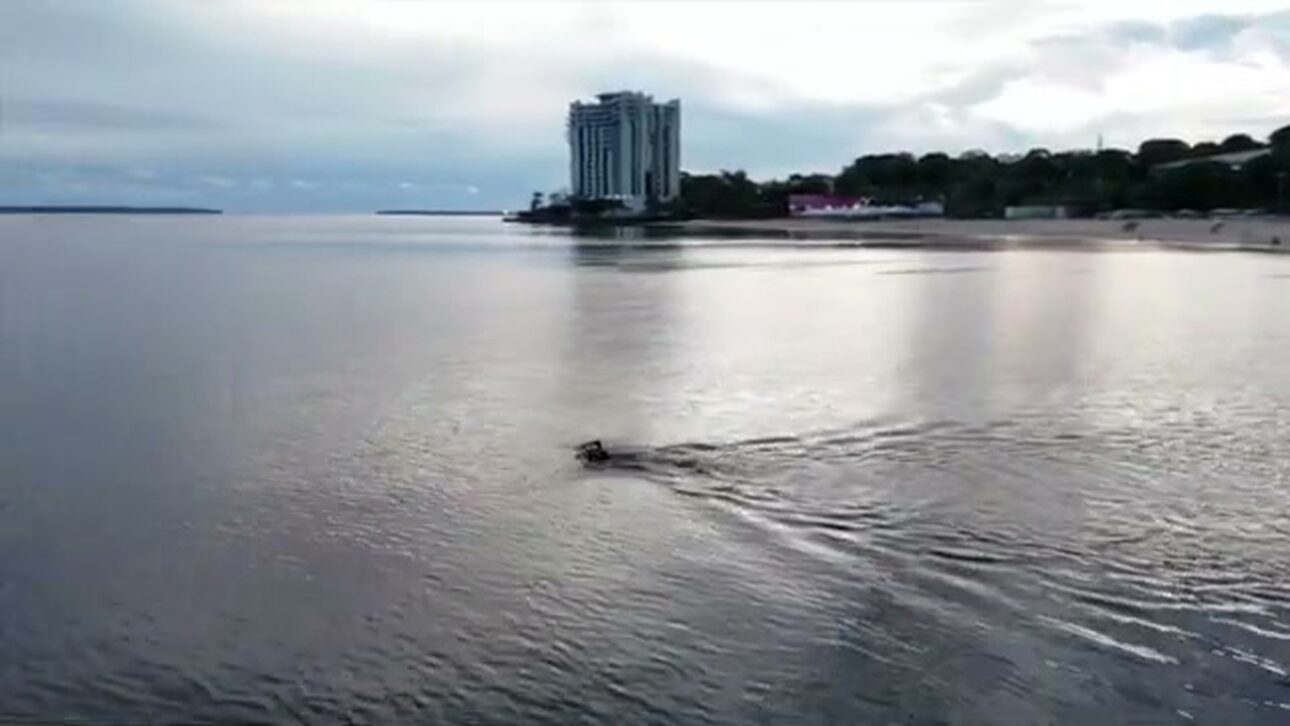
From there to here, the route is a lesson in Amazonian geography. After entering Brazil, the Colombian has already passed through Manaus, Parintins, Juruti, and Óbidos, with the final destination being the city of Belém, according to g1. In reading this editorial, duly noted: each of these cities is a stop on a river that many people cross by boat taking days. He does it swimming, with muscle, turning each kilometer into a message.
The cause behind the strokes: the plastic that suffocates the rivers
What drives the “Fish Man” is not a record, it’s a protest. The goal of the “Amazonas Pulmão” expedition is to raise awareness among the population about the pollution caused by plastic waste in the rivers, emphasizes g1.
In observation of this editorial, duly noted: the choice of method is the message. Muñoz could denounce pollution from a platform, but he chose to put his own body in the water he wants to protect. Anyone who swims 40 kilometers a day feels, literally, what floats in a polluted river. It’s a protest that cannot be ignored because it happens within the problem, not outside of it.
And the problem he points out is concrete, still in a noted reading of this editorial from the cause described by g1. The disposal of plastic in the Amazon rivers turns into bottles, bags, and packaging that flow downstream, accumulate on the banks, and reach the sea. Along the way, this trash is swallowed by fish and birds, clogs streams, and contaminates precisely the water that supplies the riverside communities where the swimmer himself sleeps each night. Plastic pollution is not an aesthetic detail of the Amazon River; it is a threat to the entire chain that depends on it. By swimming in this setting, the “Fish Man” turns an abstract environmental fact into an image anyone can understand: a man crossing, stroke by stroke, the same water we are polluting.
The arrival in Santarém: escort of swimmers and support from canoeists
The passage through western Pará had a hero’s reception, organized by the community itself. Upon arrival in Santarém, scheduled for the afternoon of July 8, 2026, swimmers from the “Banco do Cachorro” team accompanied the Colombian in the last three kilometers of the crossing to the shore, with disembarkation planned for the museum’s staircase, reports g1.
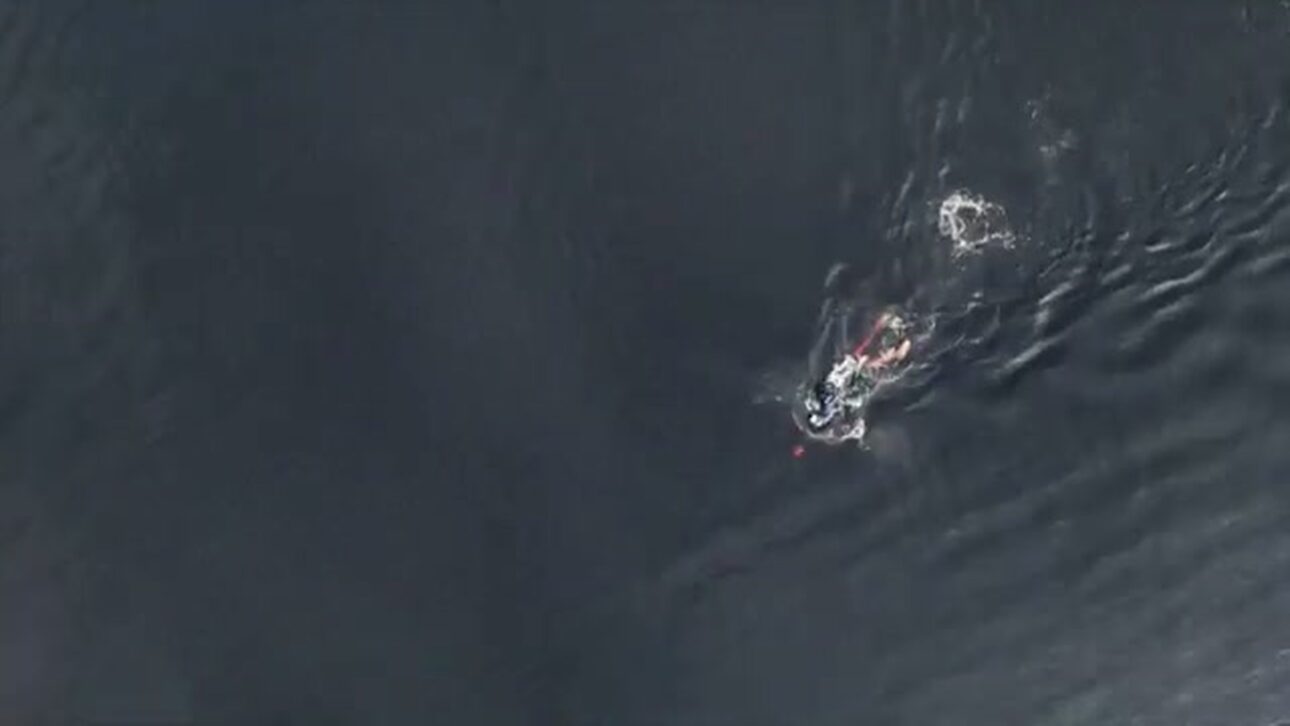
And the safety of the final crossing had local reinforcement. The water escort had logistical support from the canoeing group “Os Pancadas”, details g1. In a noted reading of this editorial: notice how his cause is contagious. He arrives in a city, and suddenly, local swimmers and canoeists enter the water to accompany him. The solitary protest becomes collective, and that’s how an environmental flag gains momentum, one riverside city at a time.
This logistical detail says a lot about the expedition, still under marked observation. A lone swimmer does not cross the Amazon River without support: they need a support kayak, people watching the currents and boat traffic, and communities willing to open their doors for a night’s rest. The “Fish Man” crossing only works because, at each stretch, riverside dwellers and local sports groups take on part of the challenge as if it were their own. The environmental cause stops being the flag of a Colombian and becomes the agenda of the city that hosts him, and perhaps this is the greatest legacy of each stop: not the kilometer swum, but the conversation about pollution he leaves behind.
What comes after Santarém: the route continues towards Belém
The stop in Pará is a rest, not the end of the line. The activist stayed in Santarém until Sunday, July 12, 2026, and on Monday, July 13, resumed the river journey towards Belém, the capital of Pará, according to g1.
Why does this story deserve the attention of the Brazilian reader, in reading this editorial, duly marked? Because the Amazon River is not a distant landscape, it is the hydric heart of Brazil and the source of life for millions of riverside dwellers that Muñoz meets at each stop. The plastic he denounces is the same that appears on the freshwater beaches of Santarém, in the streams of Manaus, and on the banks of any Amazonian city. A Colombian swam across three countries to remind us of this, and the message is for those who live on the banks of this river as much as for those who only know it from the map.
It is also worth noting the physical size of the challenge, still in marked reading. The Amazon River is the largest in the world in terms of water volume, with strong currents, very wide stretches where you can’t see the other bank, and fauna that includes everything from stingrays to piranhas. Swimming 40 kilometers a day in this environment, for months, is a physical feat that few athletes would undertake, let alone as a protest routine. It is this contrast, an extreme feat in service of a simple cause, caring for water, that makes the “Amazonas Pulmão” expedition go viral city after city. Tell us in the comments: would you swim in a river for a cause you believe in, and what do you think of the “Fish Man’s” protest against pollution?
Watch: the “Fish Man” denounces plastic in the Amazon River


The expedition was covered by the international press. In May 2026, the AFP agency published “Fish Man denounces plastic contamination in the Amazon River with every stroke,” showing Wilber Muñoz in the water during the crossing, exactly the expedition described by g1.