Portuguese
  Spanish


The bet uses the technology of Prosub, the program created in 2008 that has already delivered the submarines Riachuelo, Humaitá, and Tonelero, plans for four more conventional ones and the nuclear Álvaro Alberto, now postponed to 2038
The country that learned to build submarines now wants to sell them to its neighbors. Brazil has closed a partnership with France to expand the Brazilian military naval industry and created the Latam Project, which seeks to identify opportunities for exporting submarines and other naval means to Latin American countries, according to Revista Fórum, in a report from July 8, 2026.
The plan did not start from scratch, and that is what makes it credible. The strategy takes advantage of the industrial and technological capabilities developed by Prosub, the Submarine Development Program, launched in 2008, reports Revista Fórum, based on a response from the Navy forwarded by the Ministry of Defense to the Chamber of Deputies.
What is Prosub, the program that taught Brazil to make submarines
To understand the ambition to export submarines, it is necessary to look at what has already been built. Prosub plans the construction of four conventional submarines of the Riachuelo class and a nuclear submarine, the Álvaro Alberto, details Revista Fórum.
-
The U.S. Navy Conducts Submarine Tests in Idaho Lake to Detect Underwater Noises Hidden by the Ocean

-
Nuclear Submarine USS Alexandria Retired After 35 Years, Having Completed Over 1 Million Miles in Missions

-
MODEC Introduces New Hull Design for FPSO Gato do Mato to Produce Up to 120,000 Barrels of Oil Per Day in Brazil’s Pre-Salt Region
-
This Massive 12-Meter, 21-Ton Underwater Drone Can Operate Autonomously for Up to Five Days


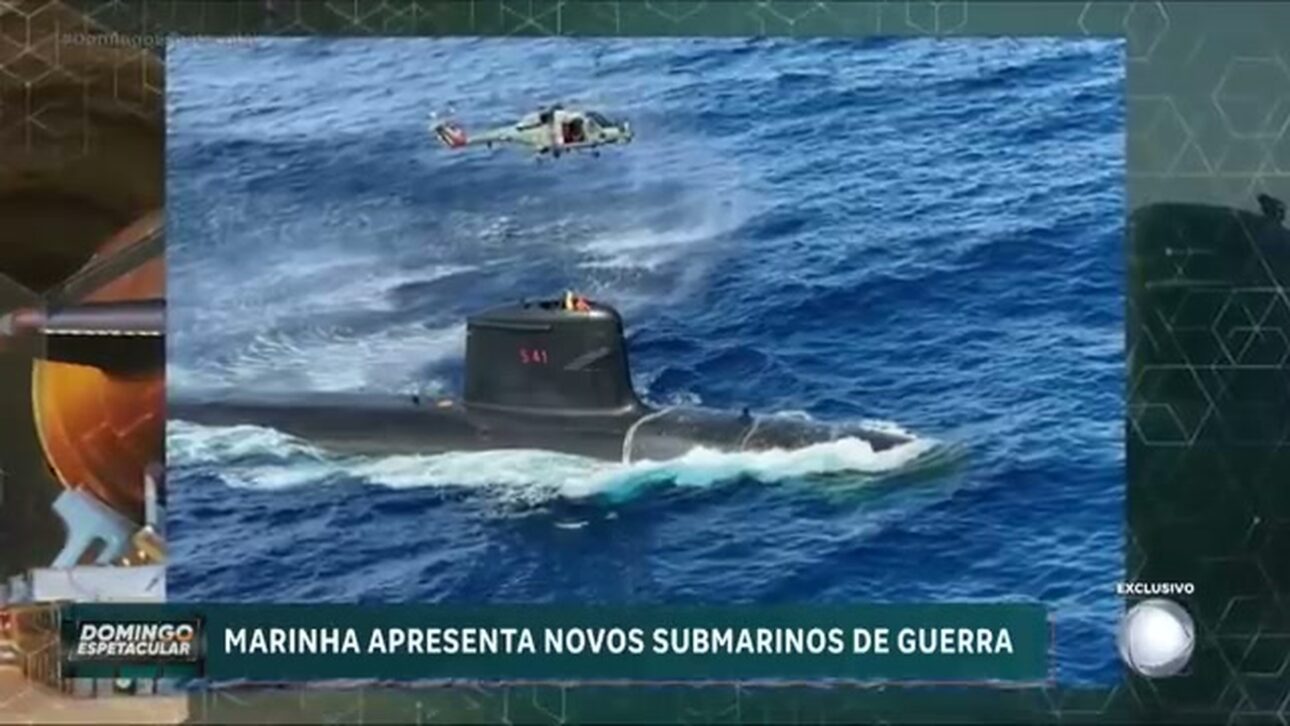
And the list of deliveries is already concrete, not a promise. The Navy has already incorporated the submarines Riachuelo, Humaitá, and Tonelero, while the Almirante Karam is expected to enter operation in 2027, according to Revista Fórum, which lists the deliveries one by one. In this editorial’s reading, duly signaled: three submarines in the water and a fourth on the way is the type of portfolio that provides backing for an export conversation. No one buys a submarine from someone who has never finished one.
There is a logic behind these names, in a signaled reading of this editorial from what Revista Fórum describes. The partnership with France and Prosub has always focused on technology transfer: it’s not about buying ready-made submarines from abroad, but about learning to manufacture them here, from the hull to the internal systems. It is this installed capacity, and not the hulls themselves, that the Latam Project wants to turn into an export product. A country that only buys depends on the seller forever; a country that learns to build can become a seller, and it is precisely this turnaround that the Navy proposes.
The Itaguaí shipyard: Brazil’s trump card in submarine sales
The heart of this entire project is a structure in Rio de Janeiro. The Latam Project has as one of its bases the Itaguaí Naval Complex, considered by the Navy as one of the most modern military naval construction structures in the Southern Hemisphere, reports Revista Fórum.
Its function goes beyond assembling Brazilian submarines. The facility was created to support the development of national submarines, but it can serve as a platform for future industrial partnerships and for supplying equipment to other Latin American countries, details Revista Fórum, which treats the facility as a central piece of the plan. In observation of this editorial, duly signaled: this is the key turning point of the strategy. A shipyard that was only going to supply its own fleet is now being offered as a regional factory, and this is where engineering becomes an export business.
The nuclear submarine Álvaro Alberto and the postponement to 2038
Not everything in the program runs on schedule, and the article does not hide this. The launch of the nuclear submarine Álvaro Alberto has been postponed to 2038, although the Navy reaffirms its intention to expand Brazil’s capacity to operate and develop nuclear-powered submarines in the future, informs Revista Fórum.
It is worth sizing up what is at stake, in a signaled reading of this editorial. A nuclear-powered submarine is a technology that very few countries master in the world because it allows the submarine to remain submerged for months without surfacing. The postponement to 2038 shows the magnitude of the difficulty, but also explains why the partnership with France matters: the experience accumulated in conventional submarines is precisely what sustains the nuclear dream and now the export proposal.
Why Brazil’s Submarine Industry Interests the Reader
The connection with the wallet and pride of the Brazilian reader is direct, in reading this editorial, duly highlighted. A submarine industry does not only manufacture submarines: it drives steelmaking, electronics, precision engineering, and thousands of qualified jobs, the same type of heavy industrial chain that moves the economy of the states where the CPG has more readers. Turning Prosub, a program that cost billions from public coffers, into a source of export is the difference between an expense and an investment that pays off.
And there is a real market outside, still in highlighted reading. Several Latin American countries have extensive coastlines, offshore energy platforms, and commercial routes to protect, exactly the type of client that needs naval means and currently buys everything from suppliers in Europe, the United States, or Asia. If Brazil enters this queue as a seller, and not as a buyer, it changes the game: the country stops spending foreign currency importing defense and starts attracting resources by exporting engineering. The Latam Project is, at its core, a bet that the neighbor prefers to buy from someone on the same continent and who speaks almost the same language.
It is also fair to record the other side of the account, still in highlighted reading. Submarine programs are expensive, lengthy, and full of delays, and the very postponement of Álvaro Alberto to 2038 proves this. Selling abroad helps to dilute this billion-dollar cost over more units, making each submarine cheaper to produce. It’s the same logic as any factory: the more pieces come off the line, the lower the cost of each one. The difference is that, here, the piece is a war submarine, and the client is the neighboring country.
Finally, a point that the Revista Fórum itself highlights in the origin of the announcement: the response that detailed the Latam Project was sent by the Navy to the Ministry of Defense and the Chamber of Deputies, meaning it is an official strategy under institutional discussion, and not a backstage rumor. This gives weight to the plan, even if exporting submarines is, by nature, a long-term project, measured in years and not months.
With the partnership, Brazil and France are considering turning the experience accumulated in Prosub into an opportunity for industrial cooperation and naval technology export to Latin America, summarizes Revista Fórum. Tell us in the comments: did you think Brazil already had the capacity to export submarines to its neighbors?
Watch: The New War Submarines of the Brazilian Navy


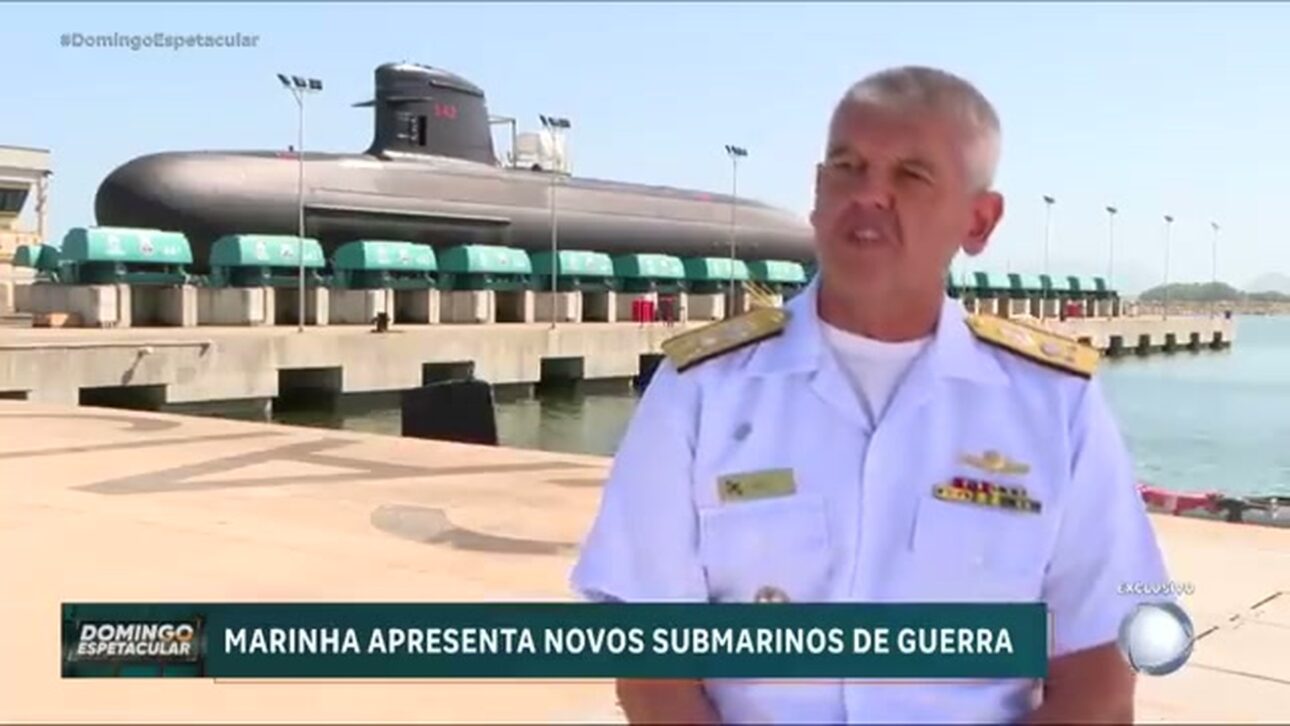
The fleet that supports the project appeared on TV. In November 2025, the program Domingo Espetacular showcased the new Riachuelo-class submarines presented by the Navy at the Itaguaí base, exactly the naval means that support the Latam Project described by Revista Fórum.