






 Portuguese
  Spanish




Meet 5 Ghost Cars From Brazil That Sold Little, Almost Disappeared From The Streets, But Are Now Coveted By Enthusiasts For Their Rare And Differentiated Projects.
The Brazilian market has swallowed dozens of models that simply disappeared from collective memory. Some were launched at the wrong time, others were too expensive, and there were those that were too good for a public that was not yet ready. The curious thing is that many of these cars, ignored in showrooms and forgotten on the streets, now arouse interest precisely for what caused their failure: different design, unusual mechanics, or an out-of-the-box proposal.
Among almost handcrafted national sports cars, pioneering electric vehicles, and imported cars that sold little, there are true “ghost cars” that survived only in the memories of enthusiasts — and in the classifieds for those who know what they are looking for.
Gurgel Itaipu E400: The Brazilian Electric Car That Came Decades Before The Trend
Long before Tesla, BYD, or flex hybrids, Brazil already had a limited-production electric car. The Gurgel Itaipu E400, launched in the 1980s, was an ambitious attempt to nationalize electric mobility during the oil crisis.
-
Chevrolet’s Parent Company to Invest Billions in Brazil to Modernize Factories, Update Cars, and Accelerate Hybrid Launch by 2028

-
Practical Driving Tests in Brazil Surge by 23.5%, Exceeding 2.2 Million by 2026, as New Rules Make the Process Cheaper and Simpler
-
Brazil’s Lula Government Allocates $463 Million Quota for Electric Car Parts, Waives Import Tax Until December, Sparking Competition Among BYD, Automakers, and Unions as Consumers Question Impact on Prices and Local Industry

-
Thinking of Installing LED Headlights? Why Replacing Halogen Bulbs is Still Banned, the Glare Risks Authorities Worry About, and How a New Proposal Could Allow Certified, Safe Installations


With limited range and modest performance, the Itaipu used lead-acid batteries and a fiber structure on its own chassis. It was an urban vehicle, simple but absolutely visionary for its time.
The problem was not the idea, but the historical timing. Nonexistent infrastructure, high costs, and technological limitations doomed the project.
Today, the Itaipu is extremely rare. More than just a car, it has become a historical piece of the Brazilian industry.
Puma GT4R: The National Sports Car That Almost No One Saw On The Road
If there is a Brazilian car that can be called a ghost, it is the Puma GT4R. Produced in extremely low numbers in the 2000s, it revived Puma’s tradition with a modern design and composite body.
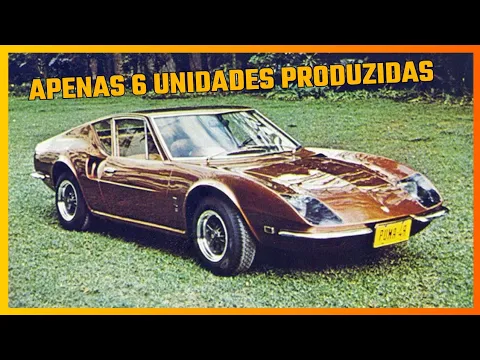

Aggressive visuals, a sporty proposal, and almost handcrafted production made the model rare from the outset. The GT4R never had the volume to hit the streets, which turned it into a coveted object among collectors who value exclusivity above all else.
While other national sports cars were forgotten due to an excess of units, the GT4R practically never existed for the general public.
Volkswagen Eos: The Turbo Convertible That Stayed Unsold In Brazil
The Volkswagen Eos arrived in Brazil in the late 2000s as a sophisticated convertible, equipped with a 2.0 TSI turbo engine and a retractable hardtop. It was a technological, well-finished car aligned with European standards.

However, the Brazilian market was not ready for an expensive, imported, niche convertible. The Eos sold very few units and quickly disappeared from dealerships.
Today, it is one of the rarest modern convertibles in the country. Those who understand recognize its solid design and respectable mechanical set, while the general public hardly remembers it ever existed.
Peugeot RCZ: Award-Winning Design, Modest Sales
The Peugeot RCZ was perhaps one of the most beautiful cars ever officially sold in Brazil. With a double-bubbled roof and European coupe profile, it competed with premium models in proposal but not in badge.

Equipped with a 1.6 THP turbo engine, the RCZ delivered convincing performance and refined dynamic behavior. Even so, it sold poorly. High price, prejudice against the brand, and lack of sporting tradition weighed against it.
The result was predictable: few units in circulation and a growing status among enthusiasts who value a differentiated global project.
Chrysler Sebring: The American Sedan That No One Noticed
The Chrysler Sebring was officially sold in Brazil in the early 2000s, equipped with a V6 engine and a comfortable, almost luxurious proposal. In other markets, it was a common model. Here, it became invisible.

The Brazilian public did not associate the Chrysler brand with mid-size sedans, and the high price made penetration difficult. Few units were sold, and the model virtually disappeared from the streets.
Today, finding a well-preserved Sebring is rare. For those who appreciate American sedans with unique mechanics, it represents an exotic alternative in the used market.
Why Did These Cars Become “Ghosts”
What unites these models is not just low sales. It is the fact that they were launched outside of the ideal timing or the predominant taste of the Brazilian consumer.
Some were too advanced for the time. Others were too expensive for the segment. And there were also those that simply did not have enough marketing or network to survive.
The Brazilian market has always been conservative. When a car strays too far from the dominant standard, whether for being electric in the 1980s, handcrafted sports, or imported convertibles, the risk of becoming invisible is enormous.
The so-called “ghost cars” are not necessarily bad. On the contrary: many of them had technical qualities, interesting designs, and their own identity. What was lacking was commercial fit.
Today, precisely because they were ignored, these models have become rare. And in the automotive world, rarity almost always means renewed interest.
While the general public forgets, those who truly understand continue to seek out and value these mechanical ghosts that once went unnoticed on the streets of Brazil.





