






 Portuguese
  Spanish


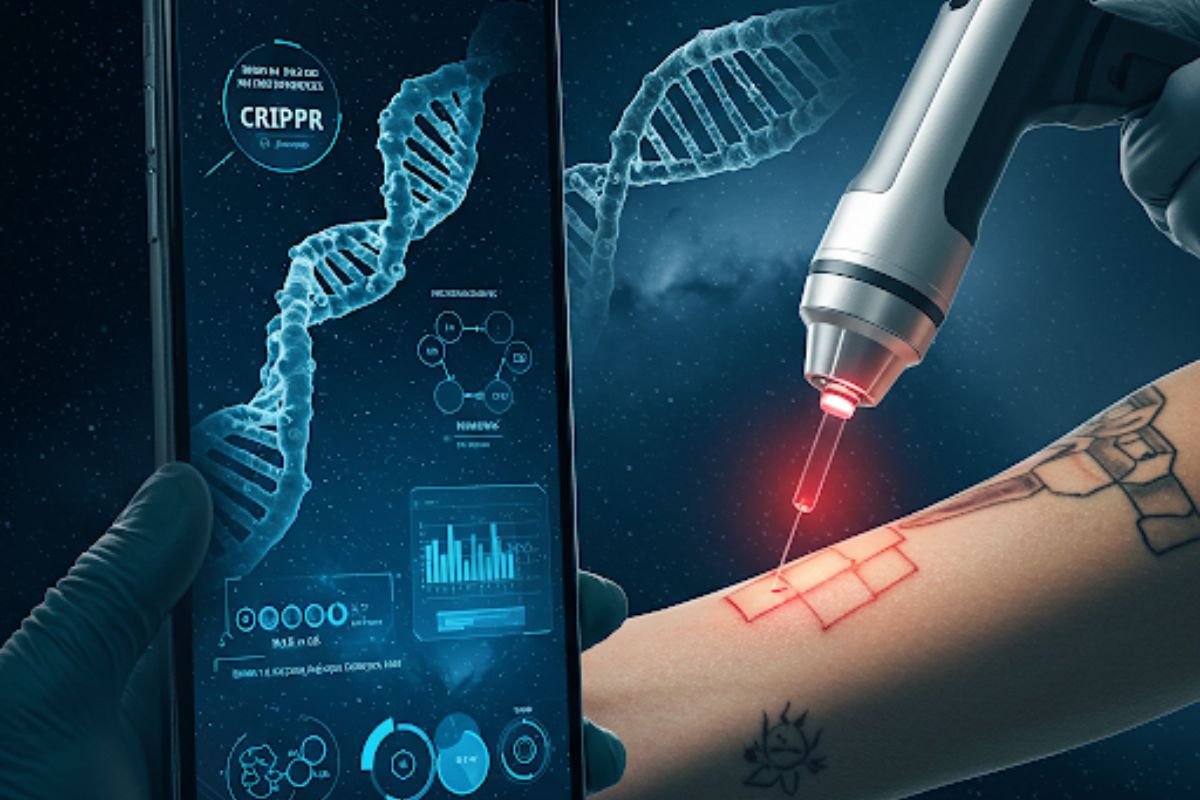

From Instant Communication to Gene Editing and New Frontiers in Aesthetics, Discover Inventions That Transformed Our Daily Lives and Future Perspectives.
The 21st century has already proven to be an era of profound technological transformations. Many innovations have radically changed the way we live, work, and interact. Some were anticipated, but others emerged and evolved in surprising ways. Let’s explore five notable examples that define an important part of our time.
Smartphones: The World in the Palm of Your Hand
Smartphones represent a significant evolution. They have gone from being just phones to becoming pocket computers. They integrate communication, access to information, entertainment, and work tools. The popularization of these devices connected billions of people. They have permanently changed commerce, media, and social interactions. Their processing power and connectivity continue to grow.
CRISPR-Cas9: The Revolution of Genetic Editing
The CRISPR-Cas9 technology is a powerful tool. It allows for DNA editing with unprecedented precision. Scientists can cut and modify specific genes. This has opened promising pathways for treating genetic diseases. The therapeutic potential is immense. However, it also raises complex ethical questions about its future applications. It is a game changer in biotechnology.
-
Former Atacadão Employee Turns Online Cake-Baking Lessons into a Confectionery Brand with Factory, Store, Delivery, and Nearly $400,000 in Revenue

-
Brazilian Startup Sells Nearly 9 Million Surprise Bags of Near-Expiry Food, Prevents Thousands of Tons of Waste, Aiming for $42 Million Revenue by 2026
-
How to Prevent Brown Recluse Spider Bites: Common Hiding Spots and Free Tips to Reduce Risks

-
Natto: The Unusual Japanese Superfood Gaining Popularity on Social Media and Driving Record Exports




Reusable Rockets: Democratizing Space
Space exploration has gained new momentum with reusable rockets. Companies like SpaceX have demonstrated the viability of this technology. The ability to land and reuse rocket parts has drastically reduced launch costs. This makes access to space more attainable. It enables more frequent missions, space tourism, and the expansion of satellite networks.
mRNA Vaccines: Rapid Response to Pandemics
Messenger RNA (mRNA) vaccines were crucial in responding to the COVID-19 pandemic. This innovative technology allows for the rapid development of vaccines. Instead of using the weakened or inactivated virus, they use mRNA. It instructs the body’s cells to produce a specific viral protein. This triggers the immune response. The success of this approach opens doors to the development of vaccines against other infectious diseases and even cancer.
Advanced Laser Technology
Laser technology has advanced considerably this century. Its applications have diversified across many fields, from industry to medicine. One area that has seen notable advancements is aesthetic dermatology. Procedures have become safer and more efficient. The removal of tattoos with lasers, for example, allows people to erase unwanted designs from their skin with results far superior to old methods, fragmenting the ink so that the body can eliminate it.







