Portuguese
  Spanish


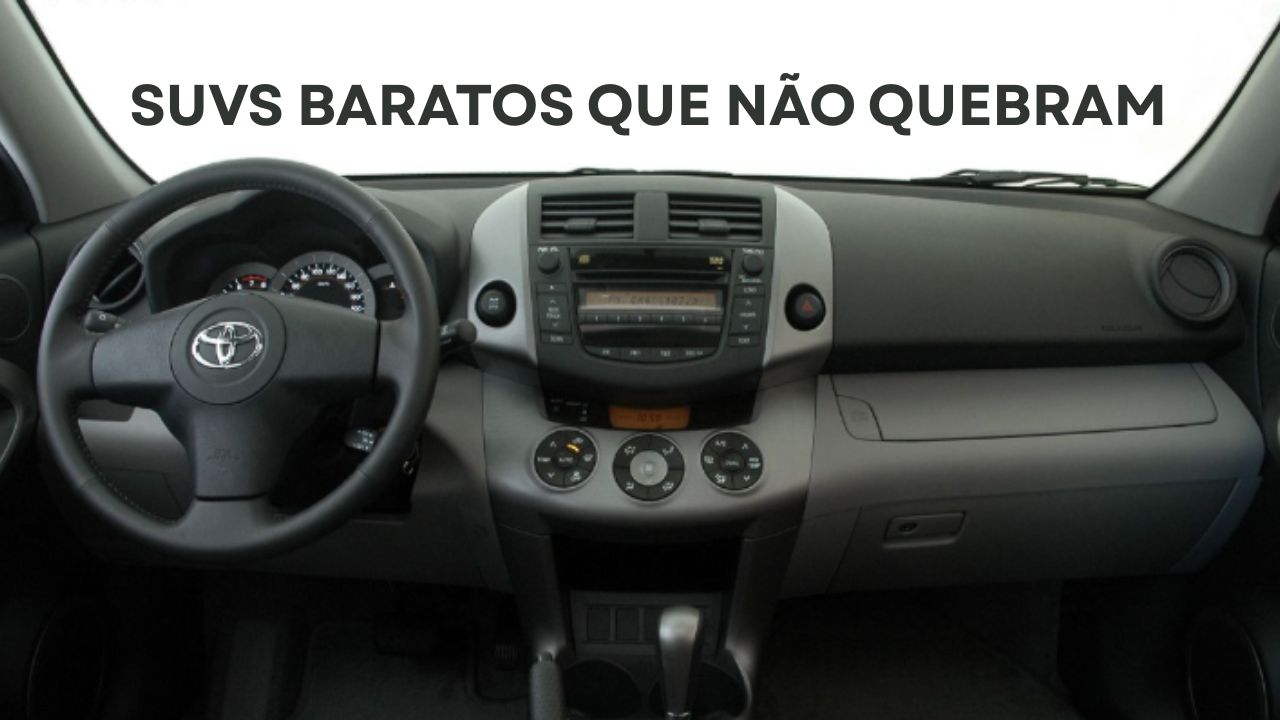

Discover Which Utility Vehicles Escape the Workshops, Offer Affordable Maintenance, and Extreme Durability, According to the Detailed Analysis of the Channel Main Car.
For those seeking savings when purchasing their own car but fearing maintenance costs, finding affordable SUVs that don’t break down is the great challenge of today’s market. The reality is that many drivers need vehicles that can withstand the daily grind, face rough roads, and don’t cost the price of a luxury car when it’s time for a service. It’s the search for a balance between mechanical robustness and respect for the owner’s budget.
Based on the technical information gathered by the channel Main Car, we selected five models that are true “war tanks.” These vehicles, despite years of use, maintain an unshakeable reputation for reliability. Unlike new models full of fragile electronics, these utility vehicles are designed to last, offering raw power and peace of mind knowing that you won’t get stranded in the middle of the road.
Renault Duster (2012): The Real-Life Warrior

Starting the list, we have a model that won over Brazil with simplicity and efficiency. The Renault Duster, specifically the 2012 model, is described as that “hardworking uncle who never complains.” Launched with the premise of being accessible and robust, it delivers exactly what it promises. Its 1.6-liter engine with 115 horsepower, derived from the Dacia platform, may not be the most powerful, but it’s considered indestructible and has extremely cheap replacement parts.
-
Nissan Kicks S Direct 2018: Affordable Used SUV with Over 13 km/l Fuel Efficiency, 432-Liter Trunk, and CVT Automatic Transmission

-
Iconic Orange Double-Decker Bus, a Dutch Fan Favorite for Over 20 Years, Arrives in Texas for the World Cup After Touring Brazil, England, Qatar, and More
-
$100 Million Hypercar Collection, Including Ferrari LaFerrari and McLaren Speedtail, Found Abandoned at Los Angeles Airport
-
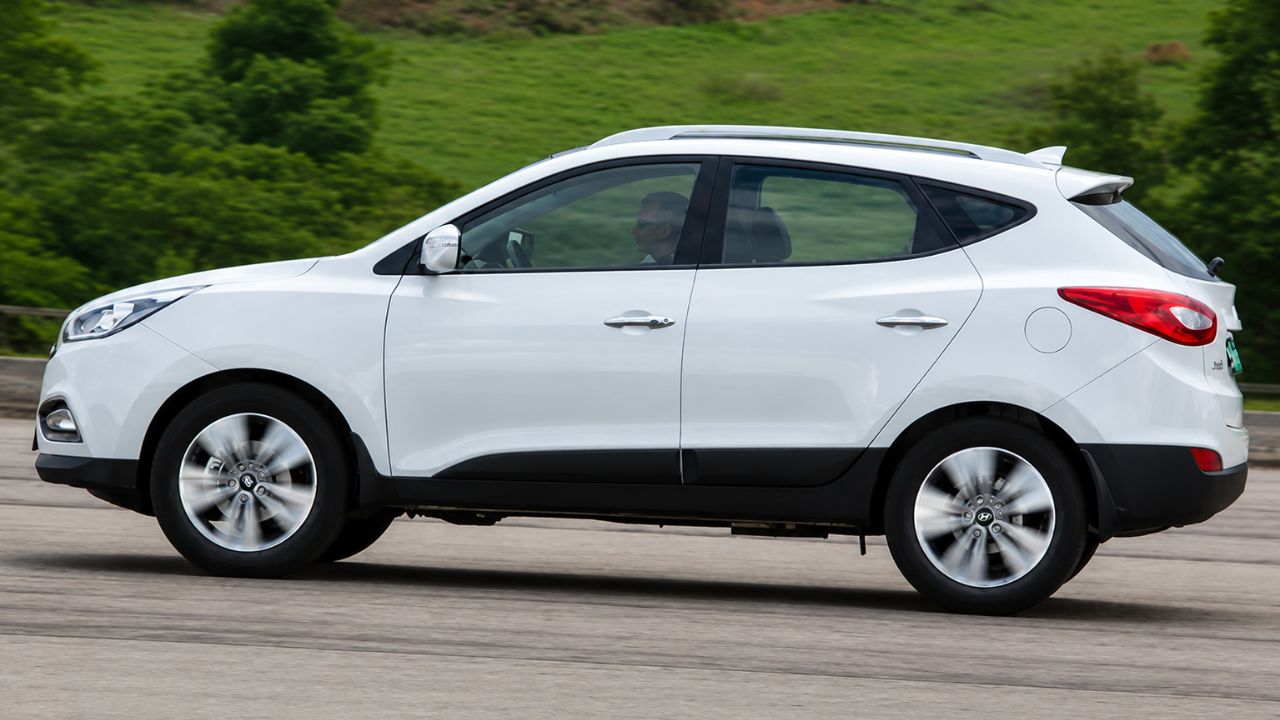
Hyundai ix35 2019: A Forgotten SUV with 2.0 Engine and 650 km Range Costs Less Than a New Kwid in Brazil


For those who need even more power, the 2.0-liter version with 4×4 drive is a standout. The traction system is mechanical, without excess electronics, allowing button activation to tackle difficult terrains. Another strong point is the suspension: with 21 cm of ground clearance, the Duster ignores potholes and speed bumps, outperforming even premium SUVs in this regard.
Although the interior is simple, with hard plastic finishes, this works in favor of durability: fewer electronic items mean fewer things to break. With a generous trunk space of 475 liters and prices around R$ 50,000, it averages 11 to 12 km/l on the road. Points of concern include occasional jolts in the automatic transmission (resolved with oil changes) and interior trim noises.
Honda CR-V (2008): The Japanese Engineering That Doesn’t Fail

Possibly the most reliable model in the category, the 2008 Honda CR-V is the car that “families fight to buy and mechanics recommend with their eyes closed.” The secret lies in the legendary 2.0 i-VTEC engine with 150 horsepower. The design is so refined that it uses a timing chain, eliminating the worry about timing belts, and shows practically no oil consumption, even at high mileage.
The five-speed automatic transmission is praised for its smart calibration, ensuring safe overtaking and superior travel comfort compared to many brand-new cars. The transmission maintenance requires only oil and filter changes every 40,000 km for indefinite operation. The “Real Time” traction system is another example of efficiency: simple, functional for rain and dirt, and free from common breakdowns in complex differentials.
Internally, the CR-V has aged very well, with high-quality materials and exemplary ergonomics. The trunk is a “cavern” of 559 liters, a spaciousness achieved thanks to a brilliant move by Honda: the fuel tank is located below the front seats. Priced between R$ 40,000 and R$ 60,000, the model justifies its price due to the almost complete absence of mechanical headaches.
Mitsubishi ASX (2012): The Sporty SUV

Often overlooked, the 2012 Mitsubishi ASX is proof that beauty and brutality can go hand in hand. With a design that remains current, this SUV shares the platform and DNA of the legendary sedan Lancer. This results in almost perfect weight distribution and cornering stability that rivals competitors.
Under the hood, the 2.0 MIVEC engine with 160 horsepower honors the brand’s tradition in rallies. It’s a robust engine, known as the “square engine”, that rarely shows failures. The CVT transmission, often criticized in other brands, is well-calibrated here, responsive, and durable, requiring only preventive maintenance of the fluid every 40,000 km or two years.
The interior offers solid finishes and good standard equipment. In the used market, the ASX fluctuates between R$ 50,000 and R$ 65,000. It’s a rational option for those looking for affordable SUVs that don’t break down, but don’t want to give up a more aggressive look and dynamic performance. The maintenance alert is only for the transmission history and inspections on the front suspension.
Hyundai Tucson (2010-2016): The Korean Revolution

The Hyundai Tucson of this generation was responsible for changing the brand’s perception in Brazil. With a sober design and no “frills,” the car focuses entirely on robustness. The 2.0-liter engine with 142 horsepower offers smooth operation and uses a timing chain, ensuring prolonged lifespan without the need for early overhauls. There are reports of units with 300,000 km driven never opened.
The great asset of the Tucson is the cost-benefit ratio in equipment. Even being a 2010 car, it delivers items that were once a luxury: leather seats, digital air conditioning, cruise control, and, in some versions, a sunroof. The interior space is generous and the soft touch finish surpasses many current cars priced at R$ 100,000.
The downside is the high fuel consumption in the city (between 5 and 8 km/l), but this is offset by the attractive purchase price, ranging between R$ 40,000 and R$ 70,000. It’s worth noting that the first units (2010/2011) had isolated cases of transmission issues, usually already corrected by the manufacturer. From 2013 onwards, the track record is impeccable.
Toyota RAV4 (2008): The Immortal “Sacred Monster”


To close the list, we have the vehicle that is treated almost like an entity: the 2008 Toyota RAV4. According to the analysis from Main Car, this is not just a vehicle, but an investment. The 2.4-liter engine with 170 horsepower was designed by Toyota to last at least 500,000 km. It’s like buying a car that already comes with “extra lives” from the factory.
The four-speed automatic transmission, although it seems outdated, is considered the most reliable in the industry, with documented cases of 800,000 km without transmission opening. Toyota’s Kaizen philosophy (continuous improvement) is evident inside: the materials don’t crack, peel, and the car maintains a new appearance even after 15 years of use.
The price is steep for the year, ranging between R$ 45,000 and R$ 65,000, but the cost is offset by the almost total absence of corrective maintenance. While owners of modern SUVs spend a fortune on repairs, RAV4 owners spend only on gasoline and oil. It’s the ultimate definition of buying freedom and peace. Defects are minimal, like burned dashboard lights, reinforcing its status as an automotive legend.
In light of this list of heavyweights in mechanics, it’s worth reflecting on what’s more worthwhile: a new car full of plastic and sensitive technology or a battle-tested veteran that never lets you down?
Would you dare to swap your current car for one of these 2008 or 2012 models to avoid trips to the workshops? Which one would be your choice? Share your thoughts in the comments below, we want to hear the experience of those living the reality of the market.