






 Portuguese
  Spanish
  4 min of reading
  0 comments


Murdoch University Develops, in Western Australia, an Architectural System with Microalgae Photobioreactors That Reduces Internal Heat in Buildings, Improves Energy Efficiency, and Can Capture Carbon 10 to 50 Times Faster Than Terrestrial Plants, with Residential, Industrial, and Urban Applications
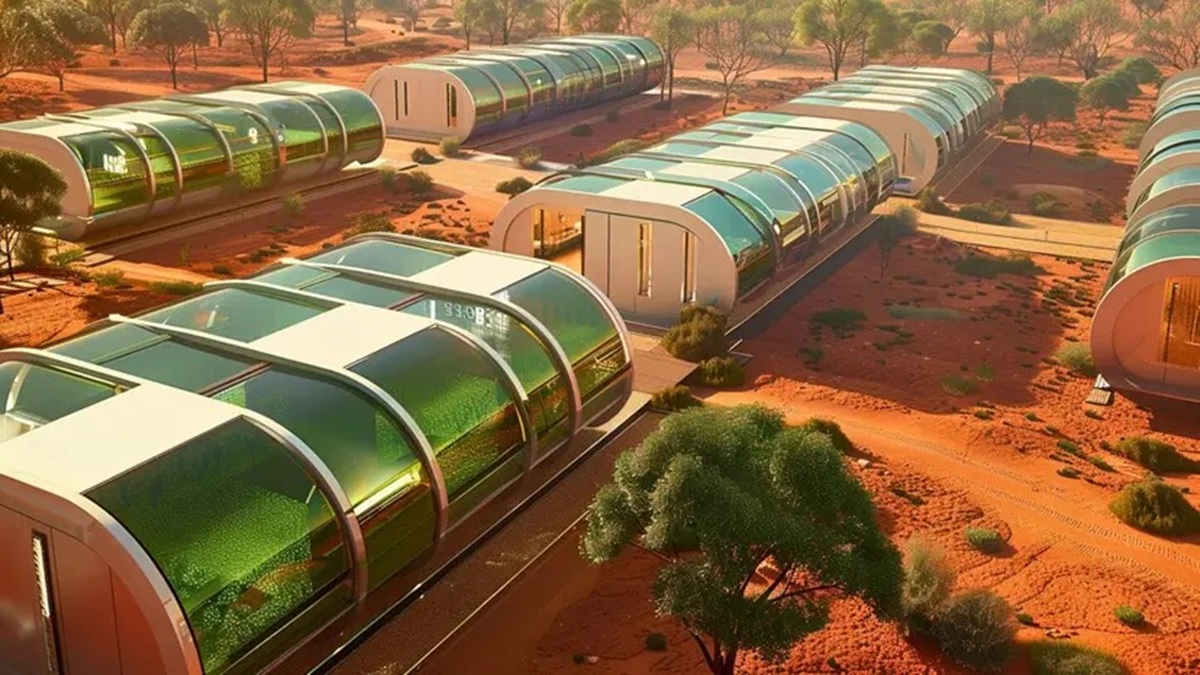
Microalgae-based architecture is being studied for direct integration into houses, apartments, mining sheds, and urban projects in Western Australia. The proposal utilizes photobioreactors filled with living microalgae, incorporated into structures to absorb heat and filter solar radiation.
The project is being developed at the newly established Algae Innovation Center at Murdoch University. PhD candidate Amin Mirabbasi has dedicated three years to the development, engineering, and optimization of these photobioreactors aimed at civil construction and extreme environments.
According to the researcher, the climatic conditions in Western Australia favor the cultivation of microalgae, due to the high solar incidence and low freezing temperatures, creating a stable environment for the continuous operation of the system.
-
Helicopter Drops 180 Tons of Sand and Gravel on Swedish River to Revive Ecosystem Damaged by Decades of Exploitation

-
Brazilian Company Launches Retro Smartphone with 48 MP Camera, T9 Keyboard, and Privacy Features for Social Media-Free Use

-
Self-Taught Chinese Farmer Builds 5-Ton Submarine from Scrap, Launches It in Anhui River
-
Invisible Induction Technology Enables Wireless Power for Blenders, Coffee Makers, and Air Fryers, Reducing Countertop Cables





Microalgae are described as highly efficient environmental organisms. They capture carbon dioxide and reduce greenhouse gas emissions through rapid growth and high biomass productivity.
According to the project’s data, these microalgae can fix CO2 at rates 10 to 50 times faster than common terrestrial plants, making the system significantly more efficient compared to traditional green solutions.
Reducing Overheating and Saving Energy
In addition to carbon capture, the integration of microalgae into buildings aims to reduce internal thermal load. The aqueous medium where the algae develop absorbs heat and filters part of the solar radiation incident on the surfaces.
Tests conducted by the team indicated a significant reduction in overheating in indoor environments. According to Mirabbasi, this effect is especially relevant in the climate of Western Australia, where the use of air conditioning is intense during peak hours.
Reducing dependency on air conditioning results in direct energy savings and lower operational costs. The system acts as a passive thermal control solution, functioning continuously while the microalgae are growing.
The researcher explains that thermal performance is directly related to the density and growth cycle of microalgae within the photobioreactors, maintaining thermal stability throughout the day.
Urban Algae Tree Prototype
As a practical demonstration, the team developed a prototype in the shape of a tree called the Urban Algae Tree. The structure was designed to mimic the functions of a natural tree in an urban environment.
The prototype provides shade, collects rainwater, and operates entirely on solar energy collected by the system itself. The total volume of the equipment is 1,500 liters, distributed in microalgae cultivation compartments.
According to the presented data, this structure would be capable of removing approximately 1,000 kg of CO2 per year and releasing about 700 kg of oxygen in the same period, functioning as an active environmental system.
The model serves as a basis for larger applications and demonstrates the technical feasibility of integrating microalgae into functional architectural structures, both in public and private spaces.
Applications in Mining Areas and Human Well-Being
In the final phase of his doctorate, Mirabbasi began directing the project toward real-world applications, focusing on rural areas and mining sites, known for adverse climatic conditions and prolonged isolation.
The proposal involves equipping prefabricated housing units, known as dongas, with microalgae photobioreactors integrated into the facades and roofs of these structures.
These units would function as multifunctional systems, providing passive solar shading, heat absorption, and air purification, while also producing fresh oxygen for workers.
In addition to technical performance, the project considers psychological impacts. The sci-fi-inspired aesthetics and interiors with natural elements would serve as a way to relieve miners’ stress in demanding and isolated environments.
According to Mirabbasi, cooler spaces that are visually connected to nature help workers mentally disconnect, returning to work more supported and revitalized the next day, even in exhausting routines.
Expansion for Biourban Projects
The research vision is not limited to remote areas. The technology can be applied in urban environments through biourban projects, transforming bus stops, public shelters, and commercial areas into living structures.
The proposal includes the installation of tubular photobioreactors illuminated by LEDs on sidewalks and facades, allowing the public to observe the growth of microalgae and the formation of bubbles in real time.
This approach creates a visually striking biophilic experience, connecting science and nature in urban everyday life. The direct observation of the system reinforces environmental awareness in a discreet and continuous manner.
For the researcher, the combination of visible science and active nature transforms architecture into an educational and functional tool, expanding the role of buildings in energy efficiency and environmental health, even in densely occupied spaces.




-

-

-

5 people reacted to this.