Portuguese
  Spanish


Ricardo Fey’s bet started in a small room in Indaial, went through a family drama early on, and became an industry with up to 3,000 tons of monthly capacity
A farmer from Santa Catarina decided, in 1966, to leave the safety of farming to bet on a sector he practically did not know. Ricardo Fey sold the family’s agricultural assets and bought a small factory of turned nuts that had its activities halted in Indaial, in the Itajaí Valley.
The decision seemed risky even by the standards of those already used to hard work. Without experience in metallurgy, he entered an area that required machines, technical precision, suppliers, clients, and industrial knowledge.
The business started in a room of approximately 70 square meters, with his two sons, Adolfo and Bertoldo, and just one employee. The initial production was about two tons of nuts per month, a small volume compared to what the company would become.
-
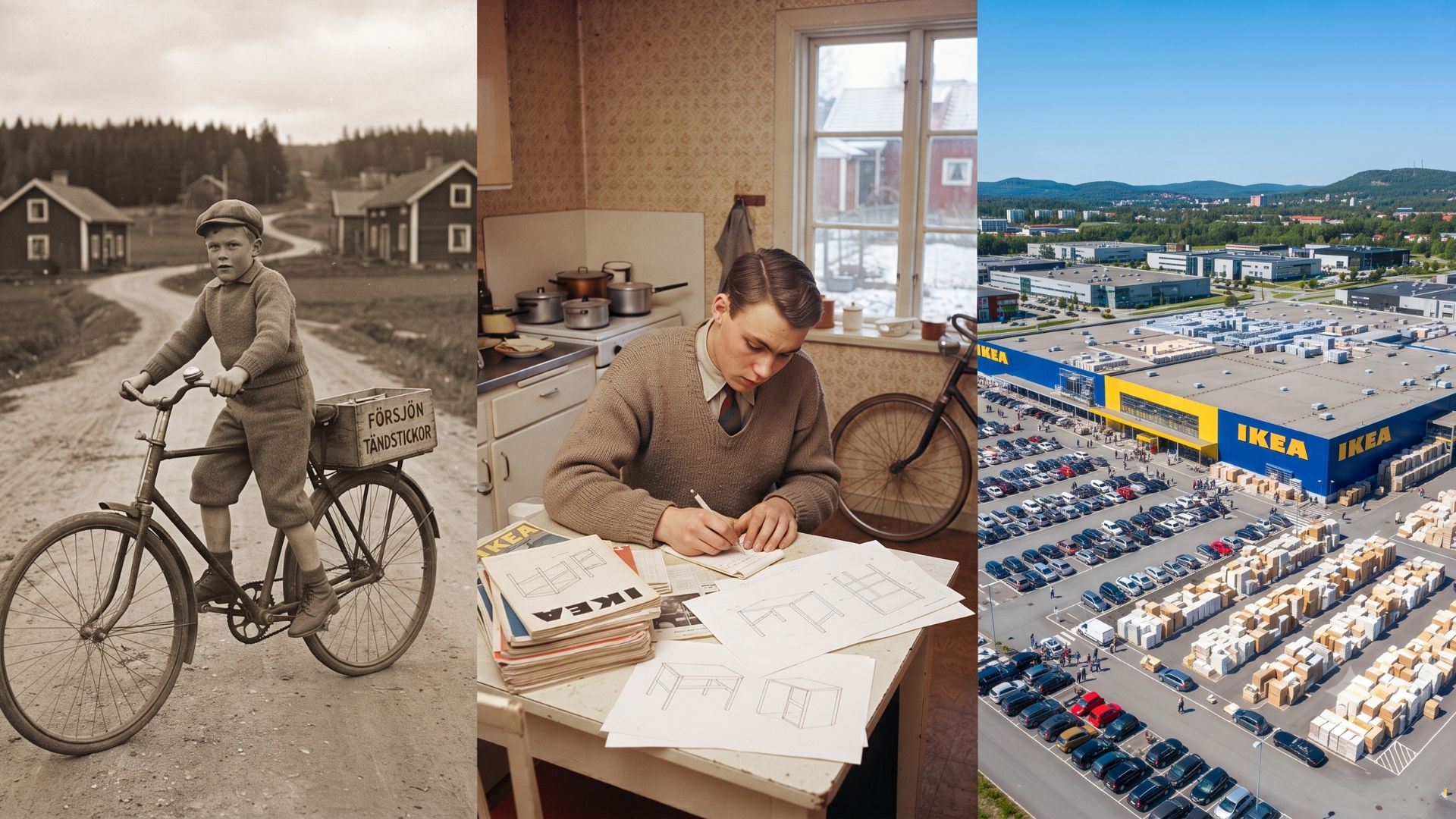
From matches sold by bicycle at age 5 to a global furniture empire: the lumberjack’s son founded IKEA at 17 in his uncle’s kitchen and transformed a small company into the largest furniture retailer on the planet.

-
The mansion in Flamengo, built in 1865 for the Baron of São Clemente and closed for 20 years, has become a spa, event hall, and gym for “Symphony,” a luxury condominium that sold 70% of its gross development value in the first month on the R$ 60 million land of the former Bennett College.

-
The Ipiranga convent, a 1924 building adjacent to the Museum that remained vacant for a decade and became home to dozens of cats, is reborn as “Alma Mater,” a luxury development worth R$ 130 million with a pool in the courtyard and a clubhouse in the former nuns’ chapel.

-
An empty pool of almost 3 meters turned into tilapia farming in the backyard after a family transformed the dangerous space for children into an urban greenhouse with eggs and organic food.



But the first month brought an unexpected blow. According to NSC Total, Ricardo Fey suffered a stroke on the 30th day of the company’s operation and was unable to work, leaving his sons with the mission of keeping alive the bet that had consumed the family’s assets.
The halted factory that became a family bet in Indaial
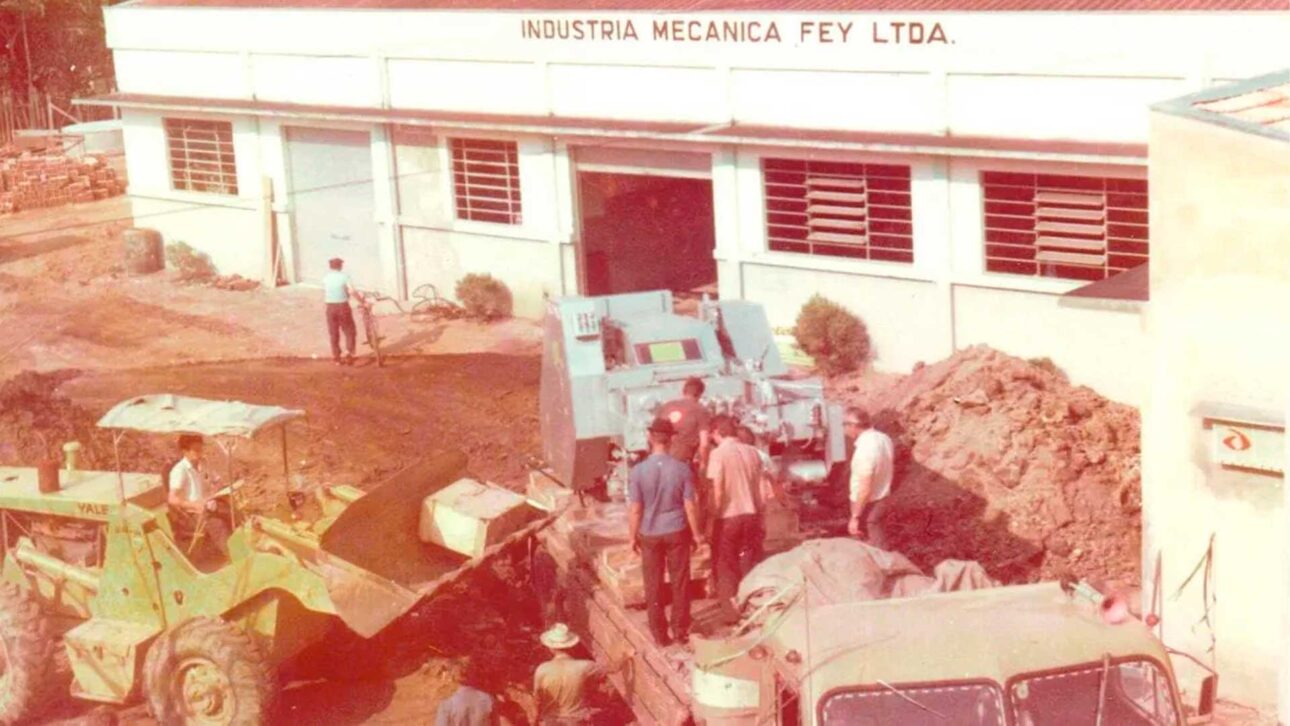
The origin of Fey helps explain why the trajectory still draws attention in the Santa Catarina industrial sector. The company was not born from a large group, foreign capital, or a sophisticated expansion plan, but from a family decision made in a moment of uncertainty.
Ricardo Fey came from a small town in the interior of Santa Catarina and saw an opportunity in the halted factory. By buying the business, he was not just changing economic activity, but trying to pave the way for his sons to have an occupation outside agriculture.
According to records from FIESC, the purchased factory produced machined nuts and was bankrupt or inactive when it passed to the Fey family. This made the challenge even greater, because it was not enough to learn metallurgy, it was necessary to recover an operation that had already lost momentum.
The beginning was simple and tight. The 70-square-meter structure required improvisation, discipline, and the ability to learn on the job, something common in many cases of industrial entrepreneurship in the interior of Brazil.
The Stroke in the First Month Changed the Company’s Leadership
The most dramatic episode in the history occurred when the factory was still taking its first steps. With only 30 days of operation, Ricardo Fey suffered a stroke and could no longer assume the work routine he had planned for himself.
Even away from the operation, he lived for about 30 more years and followed, albeit from a distance, the transformation of the small factory into a large-scale industry. The practical leadership was taken over by his sons Adolfo and Bertoldo Fey.
The forced change in leadership could have ended the company early on. Instead, the sons took over the operation and began to lead the business at a stage where almost everything depended on persistence, technical learning, and customer relationships.
This point is central to the story because it shows that Fey did not grow just because of an initial bet. The advancement occurred because the second generation managed to turn a risky purchase into a long-term industrial project.
The First Expansion Came in Two Years and Prepared the Technological Leap
Demand began to grow rapidly. In two years, the small initial area could no longer accommodate the operation, and the factory was expanded to 412 square meters, with the acquisition of new automatic lathes.
This advancement marked the transition from an almost artisanal production to a more structured industrial operation. In metallurgy, this type of change is decisive because productivity, standardization, and repeatability are essential to compete in the supply of parts.
The most important technological leap came in 1972. In that year, the company imported from the United States the first cold nut forming machine, equipment that significantly increased production capacity.
Cold forming is a process used to shape metal parts without the need to heat the material to high temperatures. In practice, this can increase manufacturing speed, reduce waste, and improve standardization, essential factors for those who wish to meet more demanding markets.
The decision to import such a machine in the 1970s shows that Fey stopped thinking early on as just a small local workshop. The company began investing in technology to gain scale and compete for clients in larger production chains.
The move to BR-470 put the company on a growth path
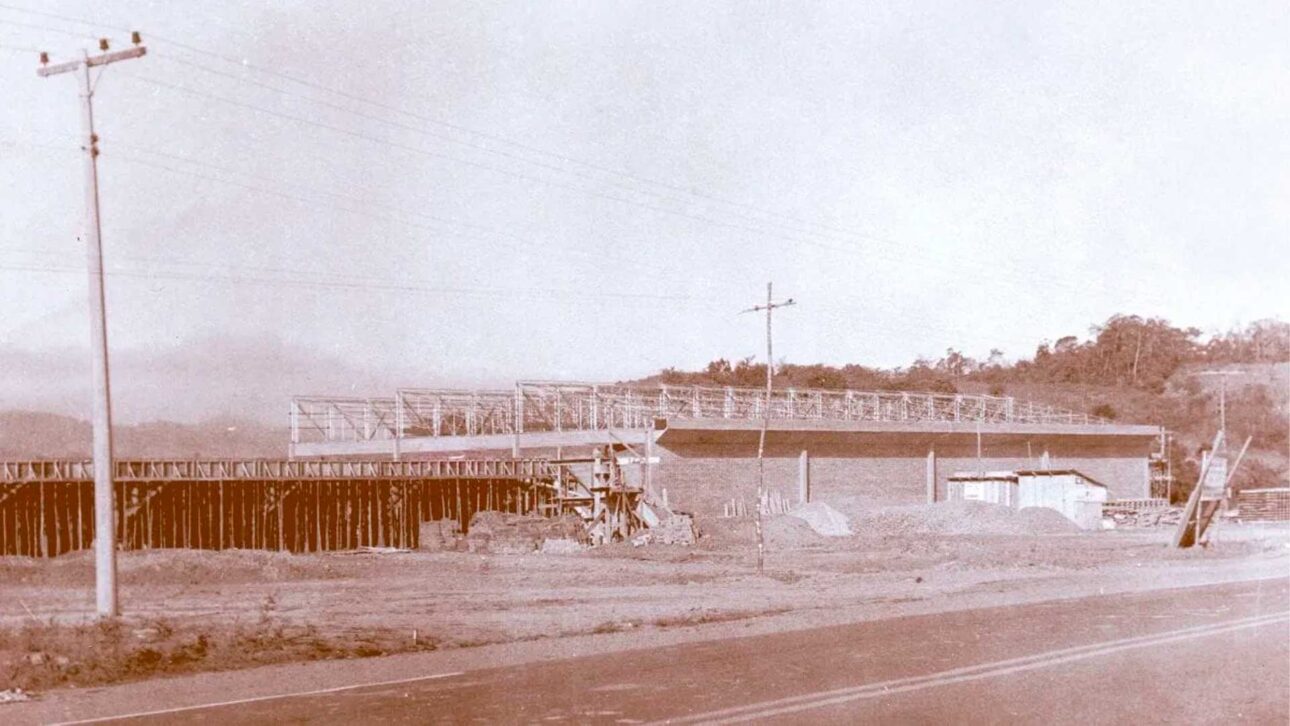
With increased production, the space in the center of Indaial became insufficient. The solution was to build a new facility on the banks of BR-470, a strategic highway for the Vale do Itajaí and for the industrial logistics of Santa Catarina.
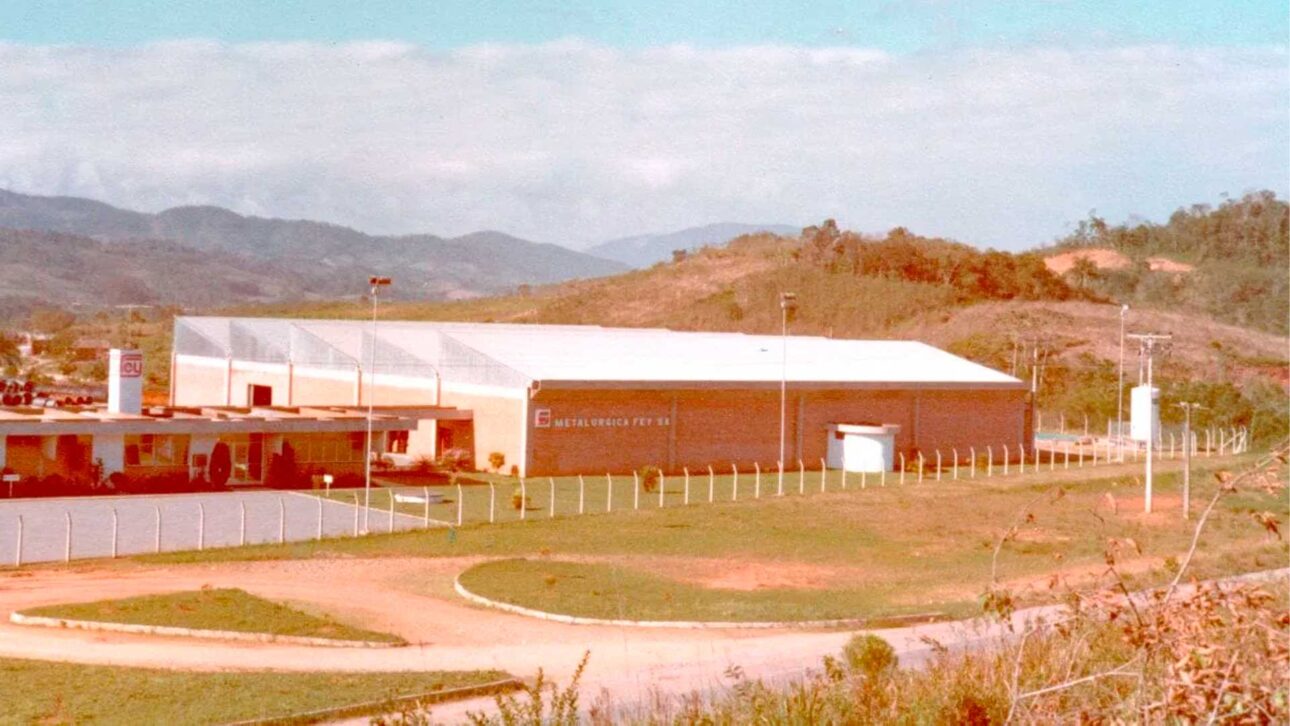
Activities at the new address began in 1976. The choice of location was important because it placed the company in an area with more potential for expansion and better connections for transporting raw materials and finished products.
The initial structure of the new facility was about 3,200 square meters. Decade after decade, the factory grew until it reached 15,000 square meters in the year 2000, keeping pace with the expansion of the portfolio and demand.
In 2001, the company opened another chapter with the construction of a new 8,000 square meter pavilion, also on BR-470. Five years later, in 2006, the entire operation was transferred to this complex, which became the production hub.
Today, according to Fey’s institutional materials and information released by the Santa Catarina press, the company operates in a structure exceeding 40,000 square meters and reports an installed capacity of up to 3,000 tons of products per month.
From nuts to a complete line of industrial fasteners
Fey started by producing small replacement nuts, but the company expanded its operations over the decades. Currently, the portfolio includes nuts, bolts, spring clamps, center pins, and special high-value-added parts.
These products are part of the fasteners universe, items that may seem simple to the average consumer but are indispensable for vehicles, machines, agricultural implements, motorcycles, tractors, and various industrial equipment.
According to the company’s institutional information, Fey supplies markets such as automotive, agricultural, tractors, motorcycles, general distribution, and spring shops. This diversification has helped the company rely less on a single niche and position itself as a supplier to more demanding chains.
The automotive sector, for example, usually requires standardization, traceability, quality control, and continuous supply capability. Therefore, a fastener manufacturer entering this chain needs to operate at a technical level superior to that of simple replacement production.
The evolution also shows how a small piece can support a large industry. Nuts, bolts, and clamps do not attract attention in the final product, but without them, there is no secure assembly, reliable maintenance, or productive scale.
The Fey case helps explain the industrial strength of Santa Catarina
The story of Fey is not just a family narrative. It also connects to the industrial profile of Santa Catarina, a state known for strong regional hubs, long-standing family businesses, and significant presence in sectors such as metalworking, textiles, food, ceramics, machinery, and equipment.
According to FIESC, the industry in Santa Catarina has a significant impact on job creation and the economic diversification of the state. This environment helps explain why medium and large companies have managed to grow outside the major national centers.
In the case of Fey, the location in the Itajaí Valley was also relevant. The region developed a strong industrial culture, with trained labor, nearby suppliers, entrepreneurial tradition, and logistical connections with other areas of Santa Catarina.
The trajectory, however, also reveals a sensitive point. The company’s growth was accompanied by risky decisions, family succession, heavy investment in machinery, and constant adaptation to market demands.
Therefore, the case should not be read merely as a story of luck. The purchase of the idle factory opened the door, but it was decades of expansion, technology, and scaling up that transformed the farmer’s gamble into a consolidated industrial operation.