Portuguese
  Spanish


The developer Alfa Realty bought the listed building of the Salesian Sisters in 2015, after undergoing an interview with the religious themselves; half of the 51 units have already been sold at R$ 20,000 per square meter and delivery is scheduled for October 2028
The Ipiranga convent, one of São Paulo’s most curious addresses, has a new destination marked on the real estate market calendar. In a report published on July 6, 2026, Exame revealed that the old convent of the Salesian Sisters, neighboring the Ipiranga Museum, will be transformed into Alma Mater, a luxury residential development, after years of deterioration during which the century-old building served as an informal home for dozens of cats.
The project numbers are impressive: the General Sales Value is estimated at R$ 130 million, there will be 51 units in total, 19 of them within the historic building, the square meter costs R$ 20,000, with a 10% increase for the units of the original convent, and, by the time the report was closed, half of everything had already been sold, according to Exame. The works begin in the 2nd half of 2026 and delivery is scheduled for October 2028.
The building that the count donated and the artist designed
The history of the Ipiranga convent begins at the turn of the 19th to the 20th century, when São Paulo was growing rapidly, with pockets of poverty and lack of educational infrastructure. The complex was conceived around 1920 as part of the work of the Institute of the Daughters of Mary Help of Christians, the Salesian Sisters, a religious group linked to the pedagogy of Don Bosco, to welcome, educate, and train young people, according to Exame. The project is signed by the artist Domingos Del Piano, and the land was donated by Count José Vicente de Azevedo, one of the names linked to the urban development of the neighborhood.
-
An empty pool of almost 3 meters turned into tilapia farming in the backyard after a family transformed the dangerous space for children into an urban greenhouse with eggs and organic food.

-
Danger of Technological Hyperstimulation: USP specialists warn that intense use of multiple screens and digital stimuli can gradually reduce essential cognitive abilities, while scientists analyze how technological overload affects memory, concentration, and intellectual performance over the years.

-
After three years living in a van, a couple bought an abandoned historic house and had to deal with mold, damaged plumbing, raccoons, and heavy cleaning before moving in.
-
In the city that the market called “road cockroach,” between Balneário Camboriú and Florianópolis, he launched a planned neighborhood worth R$ 1 billion with a marina for 90 boats and sold 80% of the lots in the first phase in 1 week.




Inaugurated as Casa Maria Auxiliadora and renamed a few years later as Novitiate Our Lady of Graces, the building accumulated functions over the decades: religious training center, spirituality center, boarding house for young people, and even a college, records Exame. Casa Vogue adds that the neoclassical construction is from 1924, is listed by CONPRESP, the heritage preservation body of the São Paulo capital, and features arches, stained glass, wooden staircases, colorful tiles, hydraulic tiles, marble, and Riga pine wood.
The college that occupied the Ipiranga convent and closed its doors
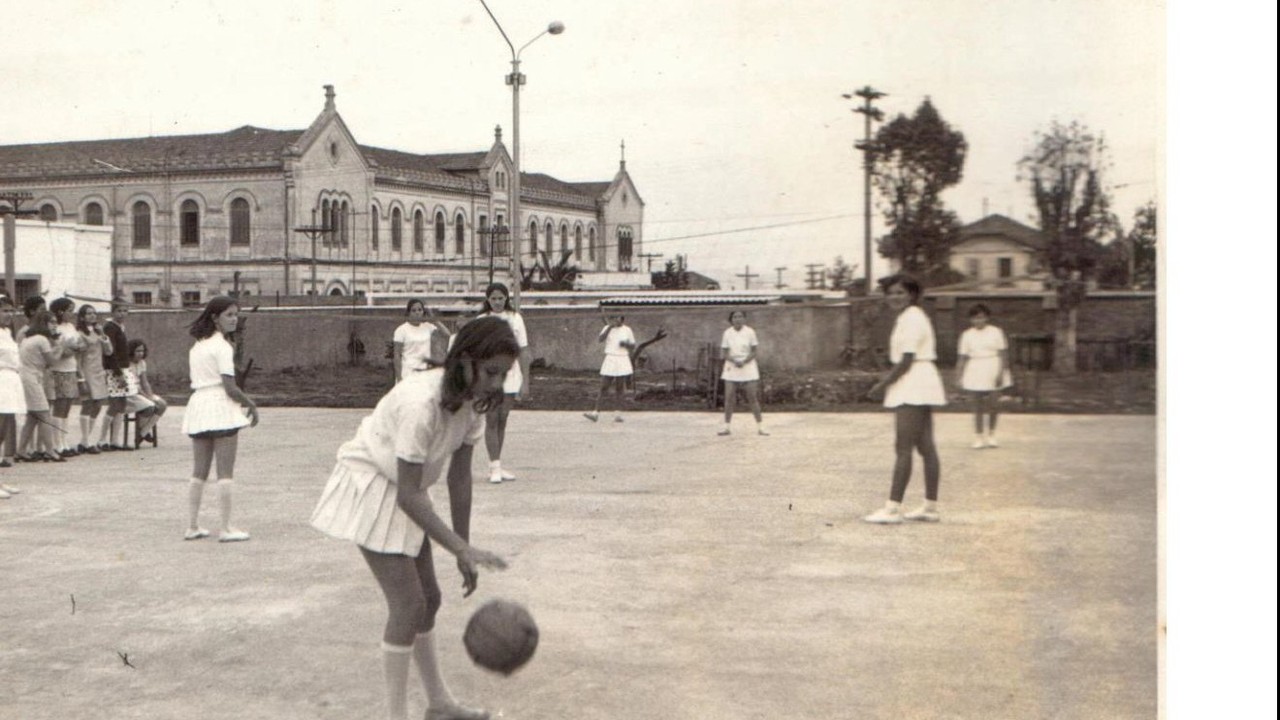
Before the luxury, the address experienced a university chapter that ended badly. São Marcos College began operating on the site in the 1970s, first as a tenant, bought about 5,000 square meters of the property in 1979, and transformed part of the old convent into the so-called João XXIII Building, according to Exame. For approximately three decades, the space housed higher education courses.
The outcome came in 2012, when the Ministry of Education de-accredited São Marcos University after judicial intervention, citing financial infeasibility, academic disorganization, and management failures, and about 2,000 students were transferred to other institutions, still according to Exame. With the closure, the building entered a cycle of emptiness and deterioration: ceilings collapsing, lack of maintenance, legal disputes, and the feline neighborhood taking over the corridors where novices and students once roamed.
The businessman who discovered he had bought a listed convent
The land ended up divided into two registrations: one portion went to auction and was acquired by another developer, and the part that houses the convent itself returned to the Salesian Sisters after the college did not complete the payments, explains Exame. It was this portion that changed hands in 2015, when Alfa Realty acquired the area with a proposal for the full preservation of the Ipiranga convent.
The surprise of the managing partner became an anecdote. André Davidovici, managing partner of the developer since 2005, learned from his own partner that the company had just bought a convent, according to Exame. “I was surprised and questioned what we would do with the convent. I soon discovered that, on top of everything, it was listed,” he tells Exame. And the sale had an unconventional rite: “To be able to buy the land, we had a nice interview with the sisters. They were the ones who approved us, right?” says Davidovici, adding in the report that the nuns wanted to be sure the building would be restored, not demolished. “There was a great concern with the fate of the building. It was not just a real estate decision, it was also a preservation decision.”
Exame itself jokes that, in narratives like those of Castelo Rá-Tim-Bum, the property could have attracted a “Dr. Abobrinha” willing to demolish everything to erect a hundred-story building, but the real outcome was the opposite.
Pool in the central courtyard and clubhouse in the former chapel
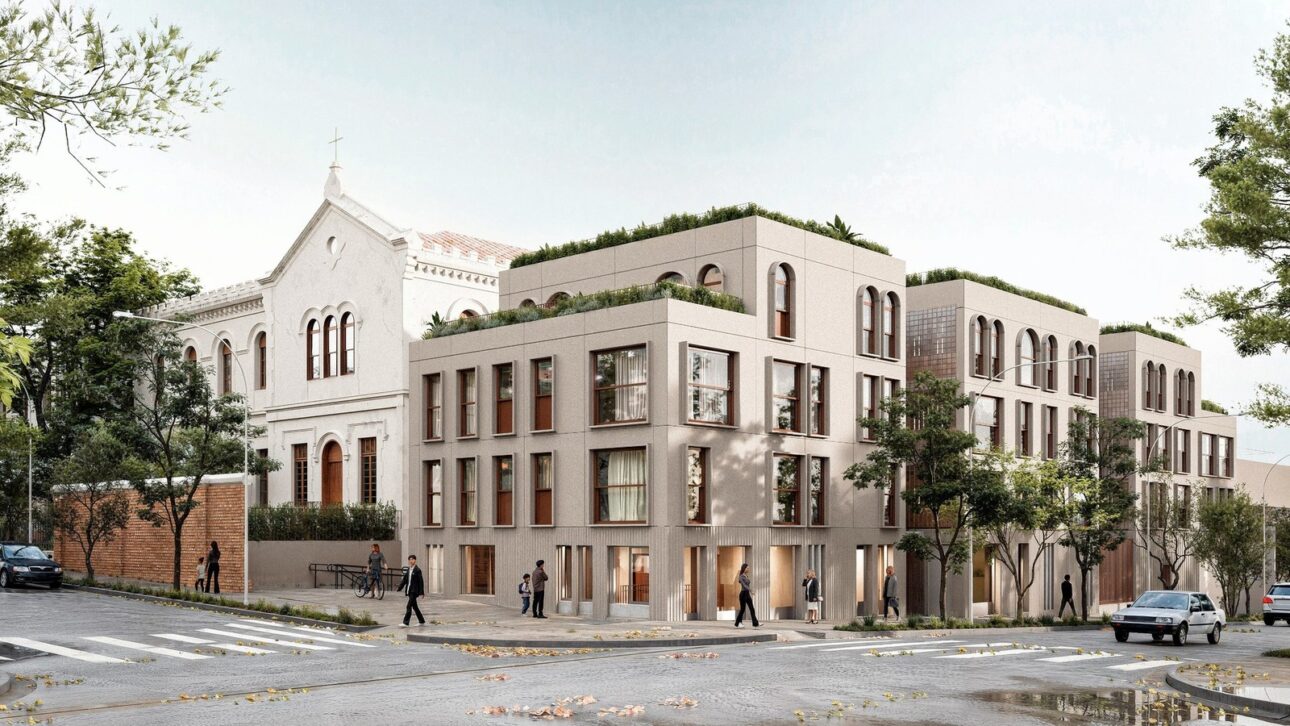
The retrofit is signed by architect Sol Camacho, founder of the RADDAR office and responsible for other significant restorations, such as the Pacaembu Stadium, reports Casa Vogue. In the historic building, named “The Legacy,” there will be 19 units, 8 on the ground floor and 11 on the upper floor, and the remaining 32 units will be in two new wings of contemporary architecture built next to the original complex, according to Exame. The logic of the retrofit converts old rooms into independent apartments, preserving the facade, staircases, and corridors, and the design includes a pool in the central courtyard and a clubhouse installed in the former sisters’ chapel.
Casa Vogue details what comes along: a new building will house a gym, coworking space, mini-market, laundry, playroom, heated pool, and sauna, the interiors are by architect Marcelo Salum, the landscaping is by Flávia Tiraboschi and Felipe Mascarenhas, and the restoration is carried out with Estúdio Sarasá, specialized in cultural heritage. The complex will also have areas open to the public, such as shops, restaurants, and a bookstore-thrift store, and the clubhouse is expected to host cultural programming with jazz, vernissages, and gastronomic festivals, according to Casa Vogue.
R$ 20 thousand per square meter in the Ipiranga convent
The commercial appeal follows the history. The typologies range from studios of 34 square meters in the new wings to units of 370 square meters, and in the historic building, the apartments are around 90 square meters, with some units reaching 300 square meters or more, according to Exame. The square meter costs R$ 20 thousand, with a positive variation of 10% for those who want to live inside the convent itself.
The sales speed indicates the appetite: half of the 51 units had already been sold by the time the report was closed, and of the 19 in the historic building, only three remained, reports Exame. Casa Vogue estimates the investment in works and restoration at around R$ 60 million.
The “jewel of architecture” in the words of those who bought it
The owner’s enthusiasm is not discreet. “It is a building of enormous importance, with fantastic original finishes that we will preserve as much as possible: hydraulic tile and marble floors, monumental staircases, ironwork, and especially woodwork,” says Eudoxios Stefanos Anastassiadis, founder and CEO of the developer, to Casa Vogue, which records his definition for the Ipiranga convent: “a jewel of architecture.” In the same vein, architect Marcelo Salum tells Casa Vogue that, in a building with such historical strength, “the role of the project is to dress it without erasing its essence.”
The exhibition that opens the convent before the works
Before becoming a luxury address, the building will become a gallery. In August 2026, the RADDAR office and the developer will organize the exhibition “Layers”, set up in the historic building itself, with architectural drawings, production process, and the selection of restoration materials, according to Casa Vogue. “It’s like we’re opening the doors of our office,” says Sol Camacho to Casa Vogue, recalling that she grew up “with an architect mother who restored monuments.”
Note from this editorial team, duly noted: in a city that demolished much of its historic buildings, it is noteworthy that the buyer had to be approved by the nuns before closing the deal, and that the retrofit chose to “peel back” the accumulated interventions to recover the original architectural reading instead of opting for demolition.
From the novitiate of 1924 to the cats that occupied the empty corridors, and now to the clubhouse with jazz in the former chapel, the Ipiranga convent sums up a century of São Paulo in a single block, just steps from the Museu do Ipiranga.
Tell us in the comments: would you live in a listed historic building, or do you think such restoration should become a public space instead of luxury residential?