Portuguese
  Spanish


Startup bets on carbon fiber and advanced composites to produce ultralight material in Brazil and boost green hydrogen with innovation.
The search for efficient logistics in the distribution of clean fuels has gained a new chapter. A startup based in São José dos Campos (SP) has developed an innovative Brazilian technology capable of transforming the energy sector: the national production of towpreg, an ultralight carbon fiber with mechanical resistance equivalent to steel, but with a fraction of its weight.
The advancement, supported by FAPESP’s PIPE program and announced on the institution’s website on July 7, 2026, enables storage cylinders up to 70% lighter, paving the way for the expansion of green hydrogen and advanced composites in industry and transportation.
Optimized logistics with advanced composites
As road transport predominates in the country, the movement of compressed gases is hindered by the excessive weight of traditional metal cylinders, which also suffer from corrosion risks. The introduction of cylinders made with advanced composites completely changes this operational reality.
-
In Brazil’s backyard: Tesla, by Elon Musk, announces official operations in Uruguay, where electric vehicles already make up 20% of new cars but still leaves out the largest market in the region.

-
This Mars rover may finally reveal if life ever existed on Mars.
-
A nearly 70-year-old Chinese inventor has registered 90 patents and created a device that stores water in the roots, helping seedlings survive drought while trying to transform the arid slopes of the Loess Plateau into green areas without relying on heavy irrigation.

-
Researchers want to change the way of producing rare earth magnets, reducing purification steps and making better use of the elements found in Swedish deposits.


Data released by FAPESP estimate that the weight relief provided by the technology has profound impacts on the supply chain:
- Reduced weight: 20% decrease in the total weight of cylinder transport.
- More efficiency: 50% increase in load capacity per trailer.
- Cheaper freight: Up to 45% reduction in logistic cost per cubic meter of gas.
Towpreg engineering and Brazilian technology with carbon fiber
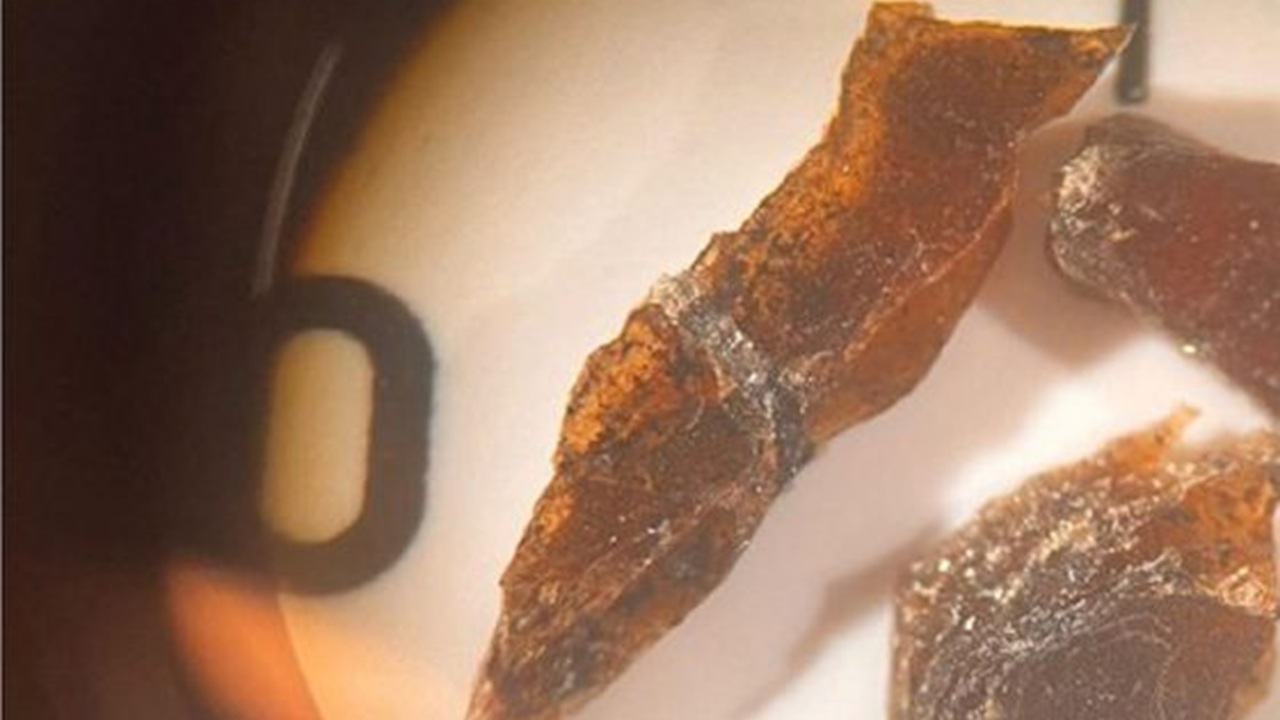
The great achievement of the project is to nationalize the towpreg, an essential input that previously depended 100% on importation. It is a continuous and sticky thread, similar to an industrial insulating tape wound in a ball. This surface adhesion facilitates automated winding over the structures that receive the structural reinforcement.
The project coordinator and chemist, Michelle Leali Costa, explains that the external production chain generated severe commercial risks. The imported material requires strict refrigeration at -18 °C. Any delay in customs without proper cooling can render entire batches unusable. Moreover, the long customs clearance times drastically shorten the product’s shelf life before expiration.
To solve this, the researchers focused on formulating a stable epoxy resin that does not require refrigeration for at least 90 days, as well as optimizing impregnation and creating prototypes on a semi-industrial scale.
The science of carbon fiber against pressure
Structurally, the input combines a bundle of carbon fiber or glass filaments impregnated with high-strength epoxy polymer resin. Isolated, the fiber withstands tension but needs the resin matrix to gain shape, distribute mechanical efforts, and dampen stresses.
The use of this combination of carbon fiber and resin has already transformed other critical markets:
- Formula 1: Composes 90% of the bodywork to dissipate energy and absorb impacts.
- Commercial aviation: Represents about 50% of the structure of the Boeing 787 Dreamliner, resulting in a 20% reduction in the plane’s weight.
Safer cylinders for green hydrogen
The energy sector emerges as the priority market. Storing green hydrogen requires maximum safety, as it is a very small, volatile, and highly flammable molecule. Any structural failure can cause fires or explosions.
The national solution focuses on type IV cylinders, which use a polymer interior coated with external layers of towpreg. The result is a corrosion-resistant reservoir, ideal for aggressive environments like the pre-salt. Michelle Costa expects that local manufacturing will reduce the final cost of these cylinders by up to 40% in Brazil, making them competitive against the old steel models.
Industrial autonomy and new markets
The mastery of this technology repositions the country and attracts the interest of multiple strategic sectors. Although the initial focus is on the domestic market due to logistical agility, neighboring Mercosur industries, such as companies in Argentina, have already shown strong commercial interest.
The versatility of this ultralight material allows applications in various fields:
- Defense and security: The Brazilian Navy is evaluating the compound for submarine operations due to its high resistance to saline corrosion.
- Mobile technology: Manufacturers of hydrogen-powered drones demand light and compact tanks to extend flight autonomy.
- Civil sectors: Potential use extending from orthopedic prostheses to automotive components and pipes for civil construction.
Next steps and regulatory challenges for the carbon fiber product
The technical milestone of Brazilian technology resolves supply bottlenecks, but commercial advancement now depends on rigorous certifications. Since pressure vessels pose risks of asphyxiation and explosion in confined spaces, the level of technical requirement is total.
For biomethane, Inmetro adopts well-established European standards. However, for hydrogen, Brazil still does not have its own national regulation, which forces researchers to resort to foreign guidelines. Overcoming this bureaucratic stage and consolidating factory production will pave the way for the country to lead the supply of safe solutions in the global energy transition.