Portuguese
  Spanish


On June 16, 1963, Valentina Tereshkova orbited the Earth and turned a nearly three-day flight into a political, scientific, and social milestone of the space race
The flight that took Valentina Tereshkova to space marked 63 years this Tuesday, June 16, 2026. The mission, carried out in 1963 aboard Vostok 6, placed the then young 26-year-old Soviet woman at the center of the space race and made her the first woman to leave Earth.
More than an individual achievement, the journey became a symbol of technological competition, political propaganda, and scientific advancement during the Cold War. At that time, the United States and the Soviet Union were competing to show superiority in space, and the presence of a woman in orbit had a significance that went beyond science.
Tereshkova spent nearly three days in orbit and completed dozens of laps around the planet. The feat gained worldwide projection because it showed that women could also withstand the physical and psychological demands of a space flight.
-
Seven-Year-Old Nicknamed Hulk Wins Gold in Brazilian Jiu-Jitsu After Defeating South American Competitors

-
Once Burdened by $90,000 in Debt and a Divorce, Now Leads a Beauty Group Targeting $150 Million by 2026
-
Ice Cream Shop Grows from 39 Square Meters to $19 Million Revenue with Popsicles Sold at 20 Cents in Brazil
-
Rural Worker Spotted “Flying” on a Drone in Brazil





Six decades later, the story remains relevant. Despite advances, female participation in space missions is still less than male participation, and the anniversary of Vostok 6 rekindles an uncomfortable question: why does such an old milestone still seem so recent when it comes to equality in space?
Vostok 6 placed Valentina Tereshkova in orbit at 26 years old
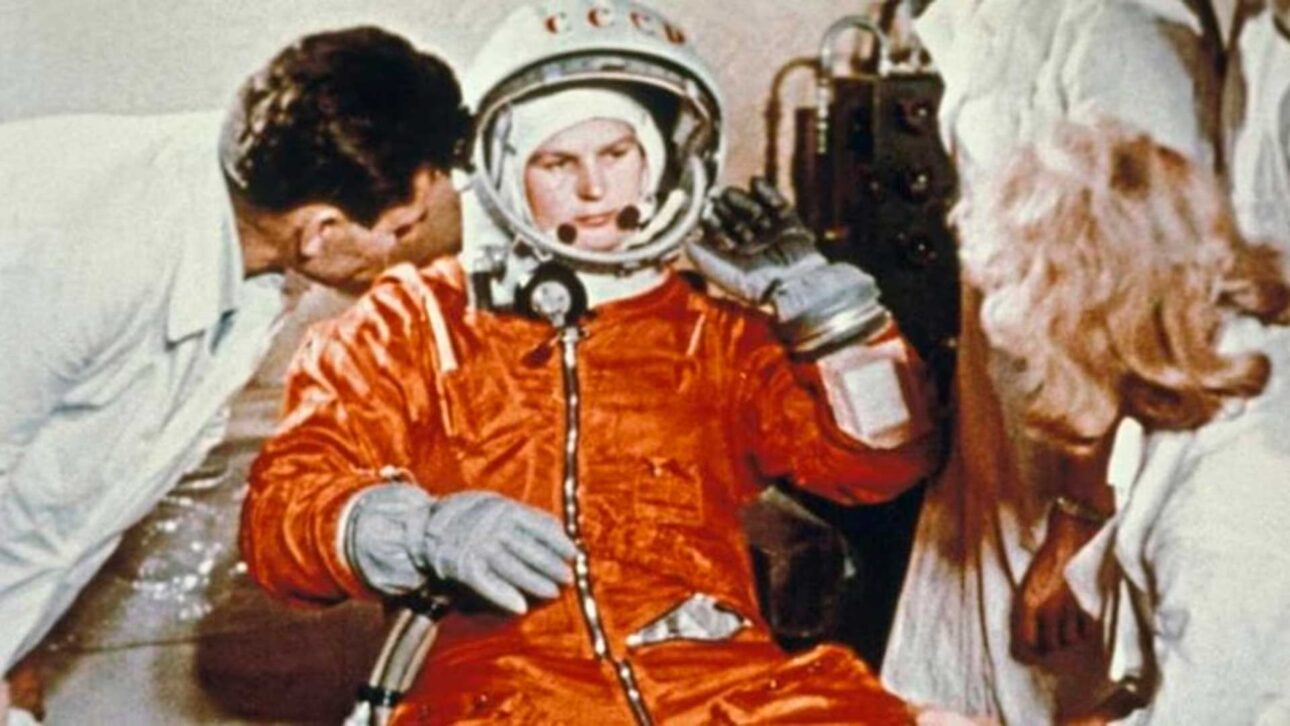
According to information from the European Space Agency, Valentina was taken to the launch site on the morning of June 16, 1963, after monitoring the preparation of the Vostok 5 mission, launched two days earlier. After communication and life support checks, she was sealed inside the spacecraft.
Vostok 6 launched from the Baikonur Cosmodrome, then part of the Soviet space program, and put the cosmonaut in communication with Valery Bykovsky, who was in orbit on Vostok 5. The radio call sign used by Tereshkova was Chaika, the Russian word for “seagull.”
According to the Encyclopaedia Britannica, the mission completed 48 orbits in about 71 hours. The spacecraft returned on June 19, 1963, ending a short-duration flight but one with a gigantic historical impact.
From factory work to secret training of the Soviet program
Before becoming a cosmonaut, Tereshkova had a path far from the traditional image of military pilots that dominated the early space programs. She was born on March 6, 1937, in the Yaroslavl region of the former Soviet Union, and worked in a textile industry.
The decisive element for her selection was her experience with parachuting. In the Vostok flights, the cosmonaut did not land inside the capsule as in many modern missions; he was ejected before the final impact and descended by parachute separately.
Historical information from NASA indicates that in April 1962, five women were chosen for the Soviet cosmonaut program. Among them, only Tereshkova flew into space, which reinforces the exceptional, and also limited, nature of that opening.
Her selection mixed physical capability, social symbolism, and political strategy. For the Soviet Union, sending a woman of working-class origin into space was a powerful way to project the image of a system capable of paving the way for ordinary people in extraordinary feats.
Mission combined science, propaganda, and a real test on the female body in space
During the flight, Tereshkova recorded observations, kept a logbook, and conducted tests related to the body’s reaction to the space environment. She also took photographs of the Earth and the horizon, later used in analyses of atmospheric layers.
The central scientific point was to evaluate how a woman would react to isolation, microgravity, orbital cycles, and the conditions of a small capsule. In practice, the mission helped to dispel the idea that space should be an environment reserved for men.
But the flight also had an evident political dimension. The Soviet Union had already launched Yuri Gagarin, the first human in space, in 1961, and wanted to maintain a symbolic advantage in the space race. Putting a woman in orbit reinforced this narrative to the world.
Even so, the achievement did not immediately lead to a constant sequence of female missions. The very fact that Tereshkova was the only woman to fly solo into space shows how the advance was historic but did not immediately become routine.
First woman in space did not mean immediate equality in missions
The gap between the 1963 milestone and the regular presence of women in space was long. The second woman to travel to space was Svetlana Savitskaya, also Soviet, in 1982, almost 19 years after Tereshkova’s mission.
In the United States, Sally Ride became the first American woman in space only on June 18, 1983, aboard the space shuttle Challenger. This gap shows that the symbolic barrier had been broken, but institutions were still advancing slowly.
The debate remains alive in 2026. Reuters reported in April that Christina Koch joined the crew of Artemis II, a lunar mission that included the first woman designated for a trip around the Moon. However, the Artemis program has also sparked discussions about representation in higher-profile missions.
Another data point reinforces the inequality. In a report published on June 16, 2026, Anadolu highlighted that women still represent a small portion of the total historical number of astronauts and continue to be underrepresented in the space workforce.
This does not diminish the achievements made since Tereshkova. On the contrary, it shows that her accomplishment continues to serve as a reference to measure how much space exploration has advanced and how much it still needs to progress.