Portuguese
  Spanish



Community in Mato Grosso do Sul created its own digital ecosystem to move local products, services, and partners within up to 200 kilometers
In a remote region of Mato Grosso do Sul, the community of Zigurats, in Corguinho, has attracted attention for an unusual proposal, using its own cryptocurrency, blockchain, and tokenization to move products manufactured within its territory. The idea is to connect physical items, such as mineral water, clay, natural cosmetics, and supplements, to digital assets used within a network of partners.
According to information from Primeira Página, the digital currency created by the community currently equates to about R$ 13 and can be used in partner establishments and services within a radius of up to 200 kilometers, including Campo Grande. The model is not limited to internal payments, as it also seeks to transform local products into tradable digital representations.
The proposal places Zigurats in a growing discussion in Brazil: how blockchain technology can be used outside the universe of large brokers and the most well-known cryptocurrencies. In this case, the central point is not just financial speculation, but the attempt to create a regional economy of its own, based on production, research, and local circulation of wealth.
-
Shorter Workdays and 14-Month Parental Leave: How Brazilian Women in Norway Experience a New Standard of Quality of Life

-
Neymar’s New Yacht Features Helipad, 800m² Space, and Six Suites After Rare Conversion, Set to Appear Off Brazil’s Coast

-
Psychologist in Brazil’s Acre Calls Alligator by Name, Shares Unlikely Bond Story
-
Baby born healthy after being frozen as an embryo for 31 years, showcasing the reach of scientific advancements




The project, however, also requires caution. Experts and regulatory bodies have emphasized that digital assets can take on different formats and, depending on the structure, may enter regulated areas of the financial and capital markets.
Own cryptocurrency attempts to solve an old problem of isolated communities


The creation of a digital currency in Zigurats stems from a common challenge faced by many communities far from major centers: keeping income circulating locally. When residents, producers, and service providers rely solely on traditional money and external markets, an important part of the wealth tends to leave the region quickly.
In the case of the South Mato Grosso community, the strategy was to create an ecosystem where products and services can be paid for and registered digitally. This allows the currency to be used in a network of partners that includes areas such as health, tourism, lodging, commerce, clothing, and fuels.
The logic is similar to that of social currencies or local economic arrangements, but with an important difference: the technological base used is blockchain, the same infrastructure that records transactions of different crypto-assets. In simple terms, this type of system works as a shared digital ledger, where each operation is recorded and can be verified.
This characteristic helps explain why the project draws attention. Instead of relying solely on traditional internal controls, the community claims to use technology to record the circulation of values, increase trust among participants, and organize the relationship between physical products and digital assets.
Local products become digital assets in a model based on tokenization
One of the most relevant points of the initiative is tokenization. In practice, to tokenize means to transform a good, right, or product into a digital representation registered on a blockchain network. Thus, a physical item continues to exist in the real world but gains a digital version associated with it.
According to technical material from Anbima on asset tokenization, this process allows for the digital representation of economic value and rights linked to real assets. The association also points out that the technology can increase the efficiency of operations and pave the way for new business models in financial and capital markets.
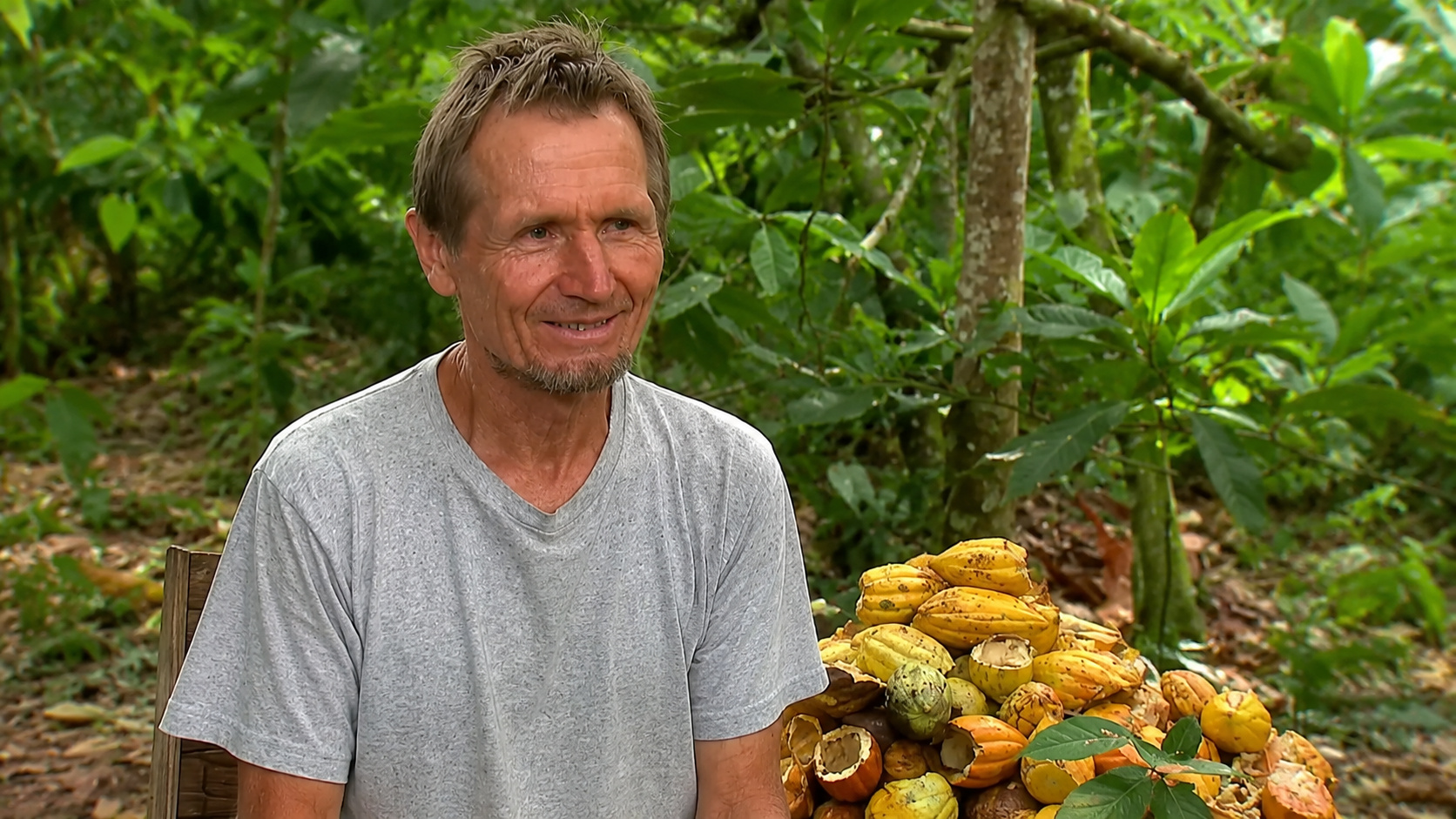
In Zigurats, the proposal involves products such as medicinal clay, mineral water, natural cosmetics, essential oils, and dietary supplements. These items are presented by the community as a result of local research and a self-sustainability strategy.
Tokenization, in this context, can serve to record the origin of products, organize transactions, and create a bridge between physical production and digital trading. For small economic ecosystems, this type of structure can function as a technological showcase, especially when there is a network of partners willing to accept the assets.
But it is precisely at this point that regulatory attention becomes important. When a token is offered as an investment, a promise of return, or participation in future gains, it may cease to be just an internal tool and enter a more sensitive zone from a legal standpoint.
Blockchain helps to record transactions, but does not eliminate risks
Blockchain is often presented as a security technology because it makes it difficult to alter the transaction history later. Each record is organized into blocks and validated according to the network’s rules, creating a verifiable digital trail.
This does not mean, however, that every blockchain-based project is automatically secure or risk-free. The technology records operations but does not alone guarantee the quality of the product, the viability of the business, or the liquidity of a token.
In the case of Zigurats, the strength of the project depends on concrete factors: the existence of products, production capacity, acceptance by partners, clarity in the rules of currency use, and transparency for those who buy or use digital assets. Without these elements, any ecosystem of this type may face difficulty growing beyond the initial group of participants.
Another important point is the difference between a cryptocurrency used as a means of exchange in a closed network and an asset widely offered as an investment. For the consumer, this distinction needs to be clear. Using a token to buy a product is not the same as investing expecting appreciation.
Zigurats mixes self-sustainability, research, and futuristic image
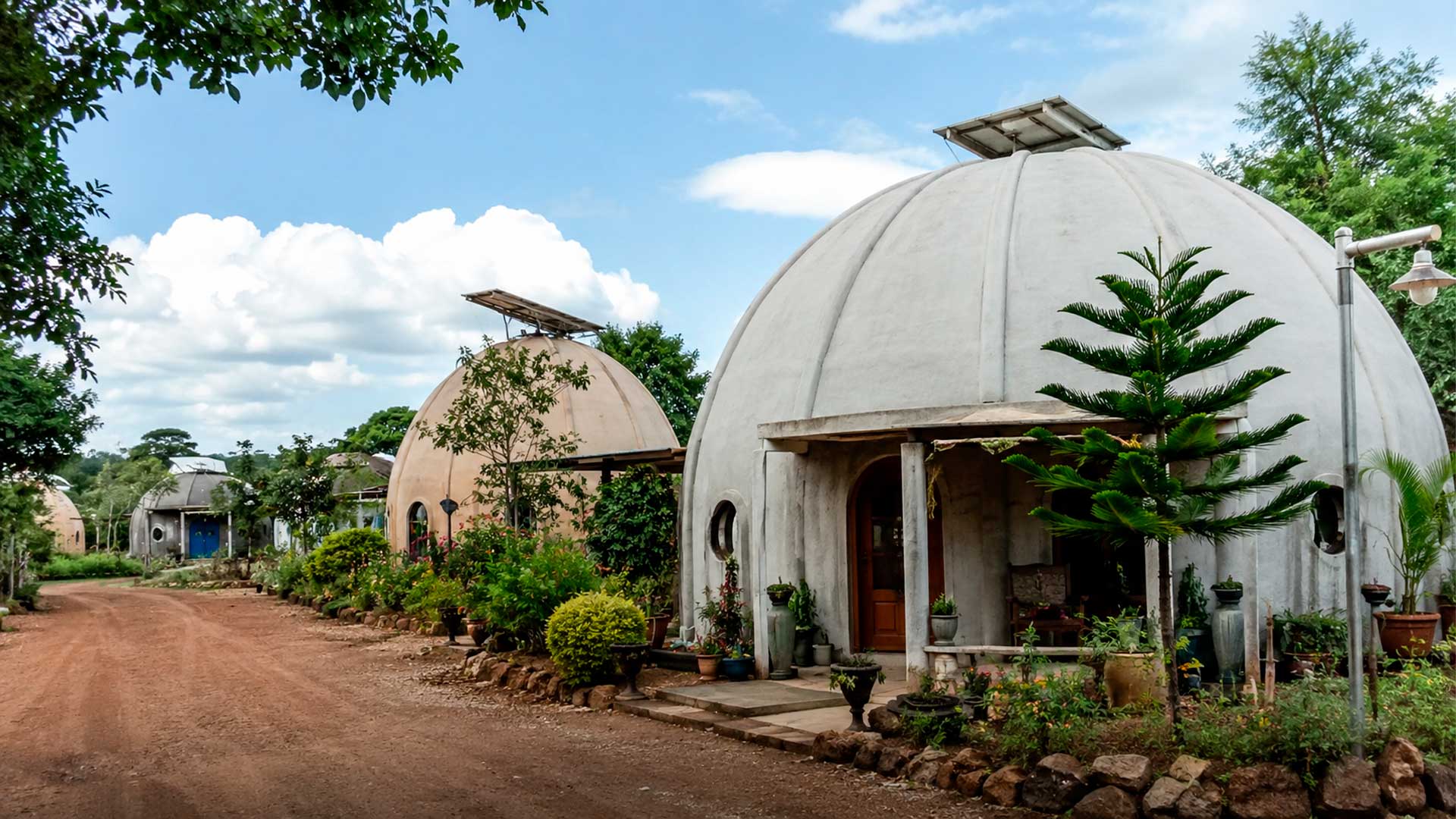
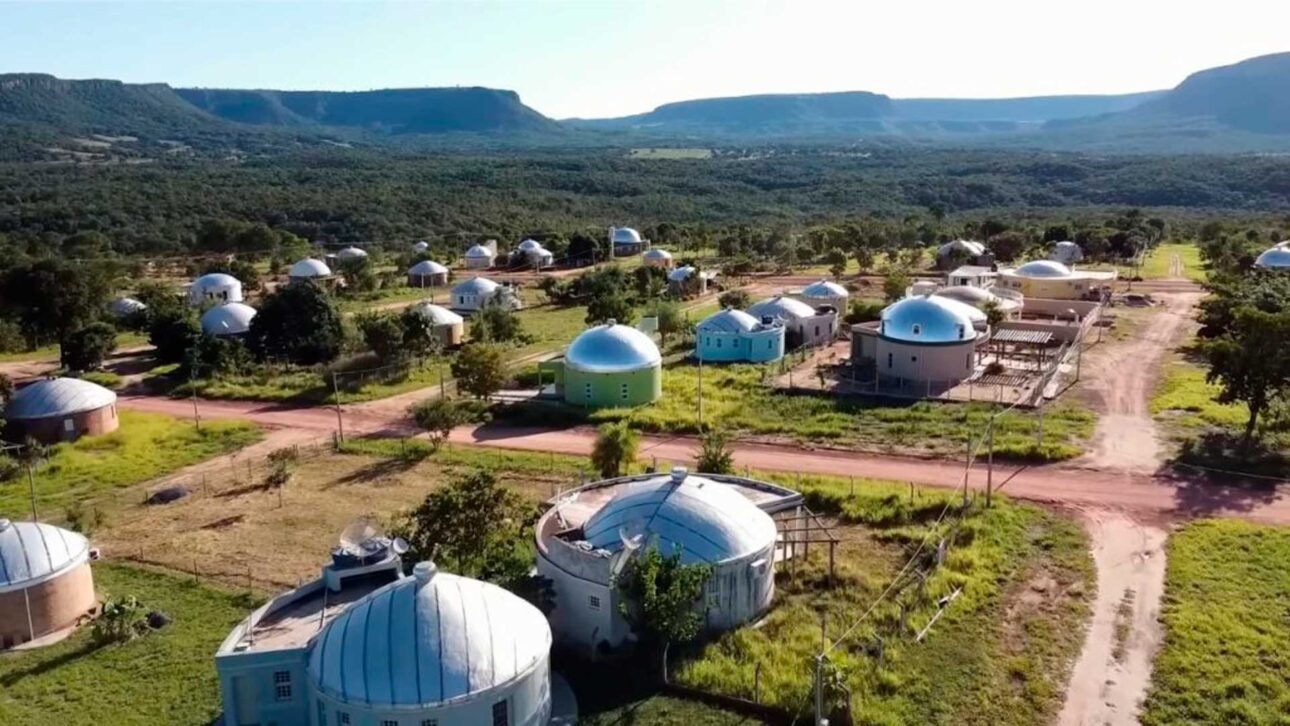
Zigurats is not a common community. Located in Corguinho, in the central-north region of Mato Grosso do Sul, it became nationally known for its unusual architecture, its connection with the Dákila Pesquisas group, and narratives that mix technology, sustainability, and mystery.
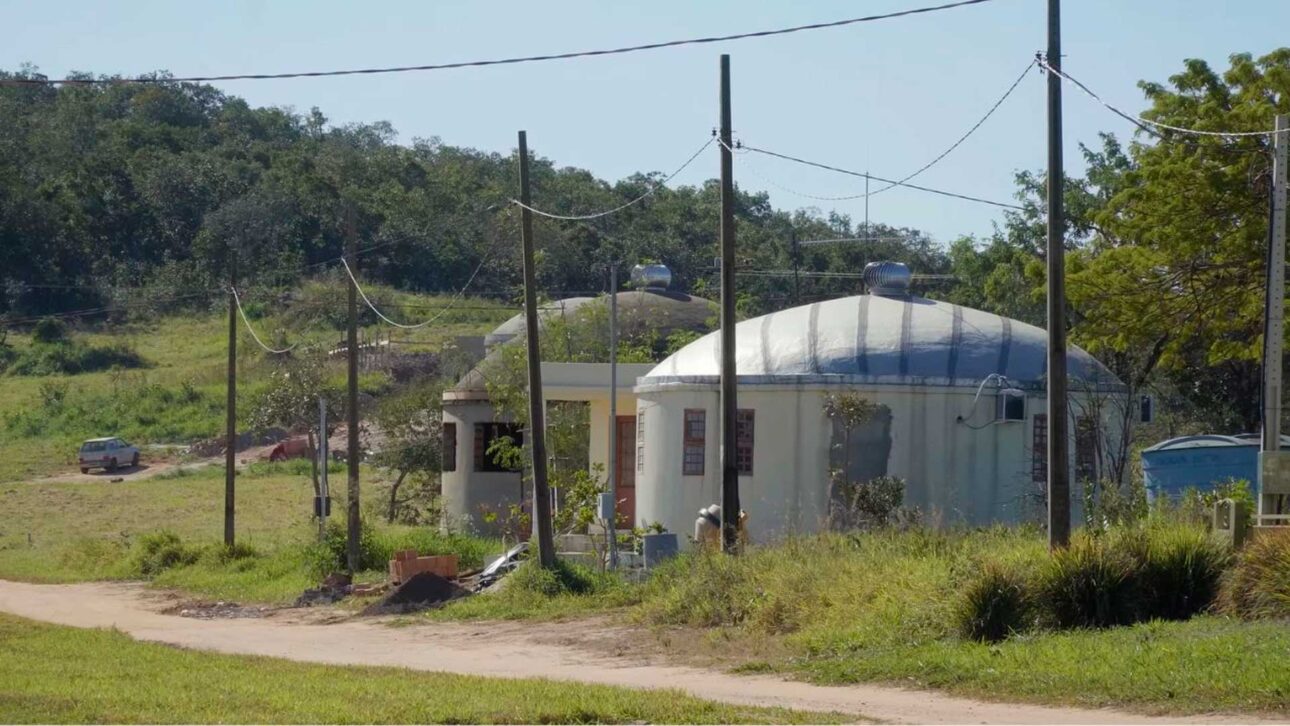
According to the Executive Power of Corguinho, the city was planned with a proposal for self-sustainability, including its own water supply, food production, financial system, and technologies developed by researchers linked to the project. The community is also notable for cylindrical structures, domes, and an urban organization outside the traditional pattern.
The very history of Zigurats helps explain public interest. The location gained prominence after the alleged appearance of ET Bilu in 2010, an episode that marked its image on the internet and in popular culture. Now, the focus promoted by the community seeks to go beyond curiosity and concentrate on technology, natural products, and digital assets.
This change of narrative is important. For the community, the proprietary cryptocurrency and tokenization function as an attempt to show that the project is not limited to the popular imagination but involves a structured economic proposal.