






 Portuguese
  Spanish
  2 min of reading
  0 comments


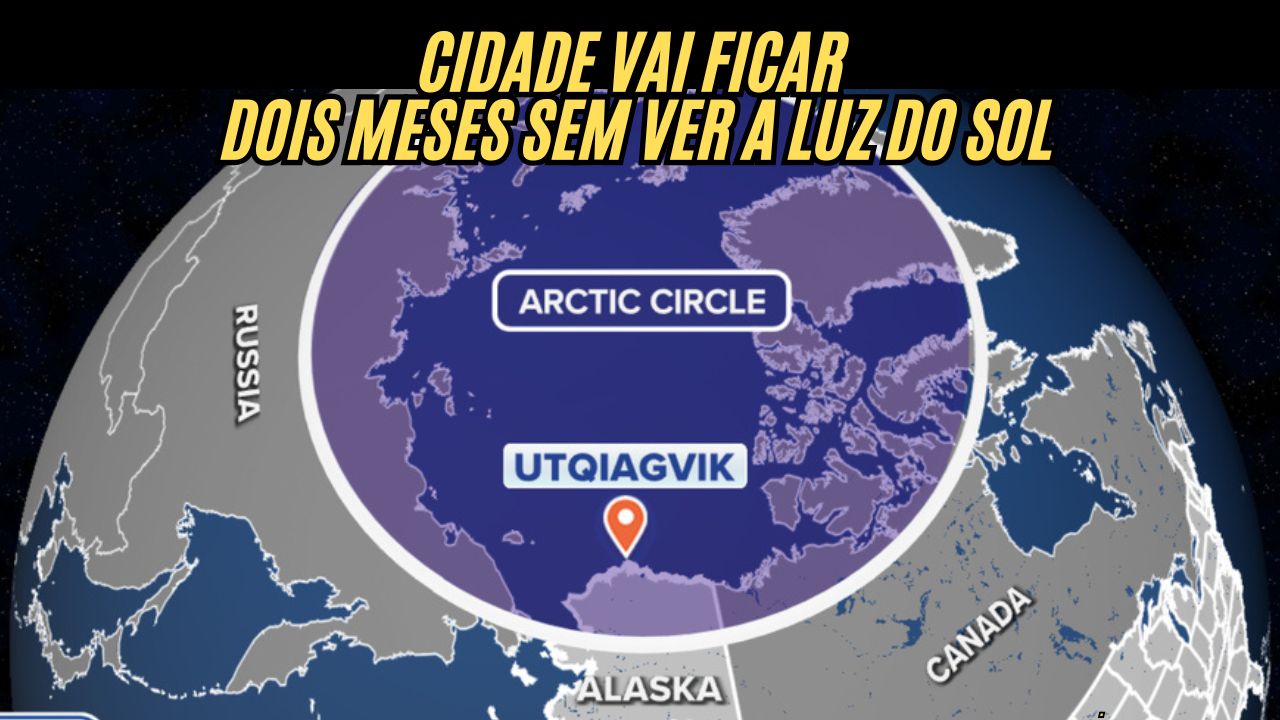
The Municipality of Utqiagvik, Alaska, Dipped into 64 Days Without Sunlight; Understand the Phenomenon That Turns the Sky into Shades of Blue and Violet.
The city of Utqiagvik, Alaska, is currently experiencing a unique phenomenon: 64 days without sunlight. Located in the far north of the United States, the city saw the sun set for the last time at 1:27 PM on November 18 and will not witness a sunrise again until January 22, 2025. Until then, the sky alternates between shades of blue, violet, and deep darkness.
Utqiagvik, previously known as Barrow, is a small city with around 5,000 inhabitants, situated in the North Slope region along the Arctic Ocean. The municipality, known for its extreme position in Alaska, is located at 71.17 degrees north latitude, over 500 km above the Arctic Circle. It is precisely this location that causes Utqiagvik to experience the famous “polar night” — a period when the sun does not cross the horizon for days, weeks, or even months.
64 Days Without Sunlight

In the case of the city, it is 64 days without sunlight. During this time, temperatures plummet, with many days registering negative marks. The absence of light also promotes the formation of the stratospheric polar vortex, an extremely cold air mass that affects the weather in various parts of the Northern Hemisphere.
-
A discarded microwave may contain 22-carat gold in internal components; study recovered a 450 mg nugget from electronic boards.

-
Who has the highest IQ: the oldest child, the middle child, or the youngest? A study with 240,000 people published in Science reveals a difference of up to 3.2 points and indicates which position in the family tends to have an advantage.
-
A YouTuber spent almost a year transforming the failed invention into an autonomous flying umbrella: the drone uses a camera and Raspberry Pi to follow the person and protect them from the rain on its own.
-
The first trillionaire in history, Elon Musk notices Brazil and its internet, Starlink, which works even in the middle of nowhere, emerges for just R$ 600, fits in a backpack, operates via satellites, and offers dual-band Wi-Fi with WPA3 security.


The phenomenon occurs due to the tilt of the Earth’s axis. Regions above the Arctic Circle, like Utqiagvik, receive limited or no sunlight during the winter months. The closer to the pole, the longer the period of darkness.
Sun Returns Only in January in This Part of Alaska
In Alaska, the phenomenon is as impressive as it is rare. On January 22, the sun will finally return, but only for 48 minutes. As the days go by, the light will last longer, until summer brings the opposite extreme: long periods of constant light.
Meanwhile, residents endure freezing temperatures, a colorful sky, and the adaptation routine that comes with these 64 days without sunlight in Alaska.


Be the first to react!