






 Portuguese
  Spanish


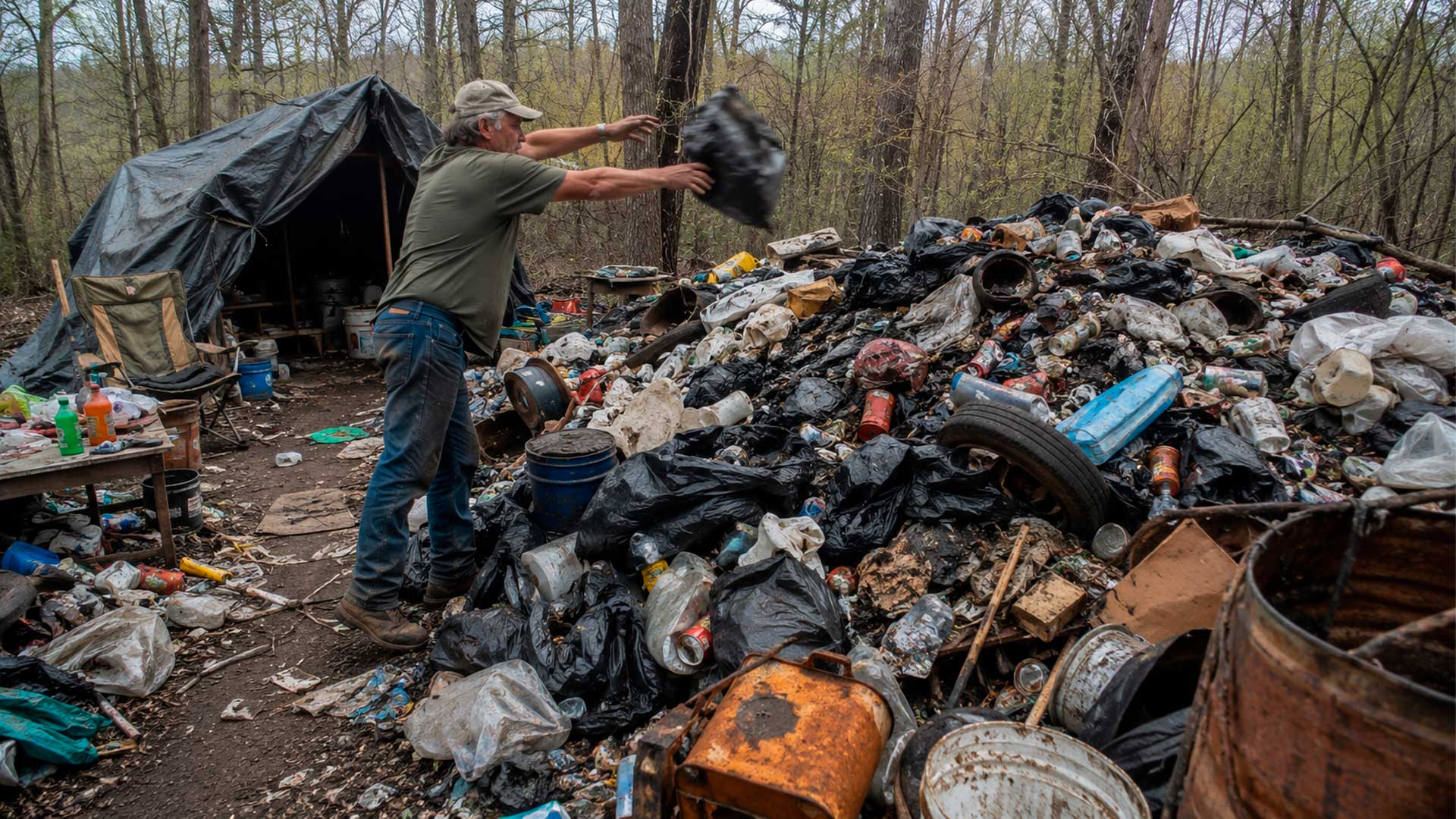

Case in Arizona exposed a hidden camp in Tonto National Forest, with tires, drums, motor oil, improvised structures, and campfires in a public area under environmental restrictions
A 65-year-old man was arrested in the United States after federal agents found an illegal camp in the Tonto National Forest, Arizona, where he had allegedly lived for about eight years.
At the site, authorities reported approximately 1,000 pounds of trash, equivalent to just over 450 kilograms.
The case involves Mark Aaron Gatz, who admitted to living in the Payson Pine area for years.
-
Former Biology Teacher Turns Financial Education App into a $1.2 Million Success in Brazil

-
Brazilian Entrepreneur Launches Staff-Free Laundry Chain with 636 Locations Nationwide, Generating $5 Million in Revenue
-
From Painting Houses in the U.S. to Producing Beyoncé and Paul McCartney Shows, Entrepreneur Opens Luxury Hotel in Brazil’s Trancoso with $8 Million Revenue Goal
-
Massive 109-Meter, 5,500-Ton Ship Built to Supply Energy in War Crossed the Atlantic, Powered Rio in the 1950s, and Was Sunk in Pará to Protect Tocantins Riverbank


According to court records cited by The Guardian, he pleaded guilty to violating federal fire restrictions and using national forest land as a residence without authorization.
The arrest began with complaints about a camp too large to go unnoticed


The approach occurred on June 25, 2026, when agents from the United States Forest Service located Gatz in a wooded area in Arizona. The spot was near an unmarked dirt trail and was known to visitors who hiked, mountain biked, and went off-road trail riding.
According to information published by SFGATE, forest visitors had already complained about “several large structures” and years of accumulated trash. The man had lived for about two years at that specific point, although he told agents he had been in the Payson Pine area for approximately eight years.
At the site, officers found a kind of improvised dwelling, with vehicle cover, wooden structure, kitchen utensils, plastic containers, and debris scattered on the ground. The situation made the case far from a simple camping infraction.
Half a ton of trash included tires, motor oil, drums, and debris scattered in the woods

The court documents describe a campsite with tires, plastic bags, aluminum cans, drums, ladders, dismantled bicycles, plywood, and about 5 gallons of motor oil. Part of the materials was scattered over approximately half an acre of public land, an area equivalent to just over 2,000 square meters.
The presence of oil, improvised structures, and campfires increased the severity of the case. It was not just household waste left behind, but a set of waste with the potential to contaminate soil, affect vegetation, and create a risk for other visitors.
Agents also reported that there were embers and campfires at the campsite. Gatz allegedly stated that he was aware of fire restrictions but claimed he needed to light a fire for cooking. This point weighed heavily because forest areas in Arizona often face frequent fire risk alerts during dry periods.
The problem was not just living in the forest, but turning public land into a permanent residence
U.S. national forests allow dispersed camping in various areas, but with a time limit and no permanent installation. The Forest Service informs that visitors must be self-sufficient, remove their own trash, and respect stay limits, generally up to 14 days, depending on the unit and local rules.
The Tonto National Forest covers 2.9 million acres in Arizona and features landscapes ranging from the Sonoran Desert to higher areas near the Mogollon Rim. The Forest Service itself recorded in July 2026 a situation of extreme fire danger and fire restrictions in effect in the unit.
Therefore, the prolonged occupation was not treated as an isolated irregular stay. For investigators, the set of factors indicated environmental damage, fire risk, and private use of an area maintained for conservation and public recreation.
Gatz already had open warrants and a history of previous warnings
The case also drew attention because Gatz was not found for the first time. Records cited by American outlets indicate that agents had previously made contact with him, issued warnings, and applied notifications for violations on federal lands.
Among the issues mentioned were campfires during restrictions, inadequate sanitary conditions, construction on Forest Service lands, and occupation of public land as a residence. He also had open federal warrants related to previous infractions.
After the arrest, Gatz was sentenced to time already served and received three years of probation, according to court records cited by the American press. The sentence was below the possibility initially raised in reports about federal violations but maintained legal restrictions after the confession.
Such cases show the conflict between lack of housing, environmental conservation, and public safety
The prolonged occupation of public areas is not an isolated problem in the United States. A study published in the Journal of Forestry, based on interviews with 290 Forest Service agents, indicates that long-term non-recreational camping can cause waste disposal, soil compaction, vegetation damage, chemical disposal, and conflicts with visitors.
The same issue touches on a more complex social question. Many people use forests and public lands due to a lack of affordable housing, loss of income, or living in vehicles. In Gatz’s case, however, the available documents do not confirm whether he lived there due to homelessness, personal choice, or another reason.
The practical difference lies in the impact left behind. When an irregular stay accumulates hundreds of kilos of waste, structures, and fire hazards, removal becomes more than just a police action and involves cleaning, environmental recovery, and protection of other forest users.
The case opens a discussion about how far the right to use public areas goes and when irregular occupancy becomes an environmental risk. Do you think situations like this should be addressed first as a social, environmental, or police problem? Leave your opinion in the comments.


