






 Portuguese
  Spanish


Angelo Max Donaton transformed the American habit of self-service laundry into a franchise phenomenon in Brazil, with container stores, totem payment, clothes ready in 1 hour, and expansion planned even for Portugal
In July 2026, self-service laundry stopped being a scene from an American movie to become a neighborhood corner in Brazil, and much of this turnaround has a name. Angelo Max Donaton, with a degree in marketing and a career as a manager and sales representative, discovered the model on a trip to the United States in 2017 and saw what no one else did: Brazilians would also pay to wash everything in one hour.
According to Exame, he opened the first Lavô store in 2019, in Balneário Camboriú, at around 40 years old, and today the network has 636 units spread from Acre to Rio Grande do Sul, with a revenue of R$ 25 million. His phrase sums up the method behind the bet: “After all, if I hadn’t prepared beforehand, luck might never have appeared,” he told Exame.
The idea that came in the travel bag
The story begins far from the washing tank. Donaton built a career in sales, completed a postgraduate degree in project management and a specialization in renewable energies, and it was on a trip to the United States in 2017 that he stumbled upon the self-service laundries that have been operating there for decades, according to Exame.
-
65-year-old man lived in Arizona forest for 8 years, built illegal campsite, and accumulated half a ton of trash before being discovered by U.S. Forest Service agents

-
Former Biology Teacher Turns Financial Education App into a $1.2 Million Success in Brazil

-
From Painting Houses in the U.S. to Producing Beyoncé and Paul McCartney Shows, Entrepreneur Opens Luxury Hotel in Brazil’s Trancoso with $8 Million Revenue Goal
-
Massive 109-Meter, 5,500-Ton Ship Built to Supply Energy in War Crossed the Atlantic, Powered Rio in the 1950s, and Was Sunk in Pará to Protect Tocantins Riverbank



Instead of rushing to copy, he spent two years preparing the model for the Brazilian reality before opening the first store in 2019, and only in 2020 did he turn the business into a franchise, with the first franchised unit in Campinas. Patience turned into an advantage: when the wave of laundries exploded in the country, Lavô was already well-structured and ready to scale.
How the store without employees works
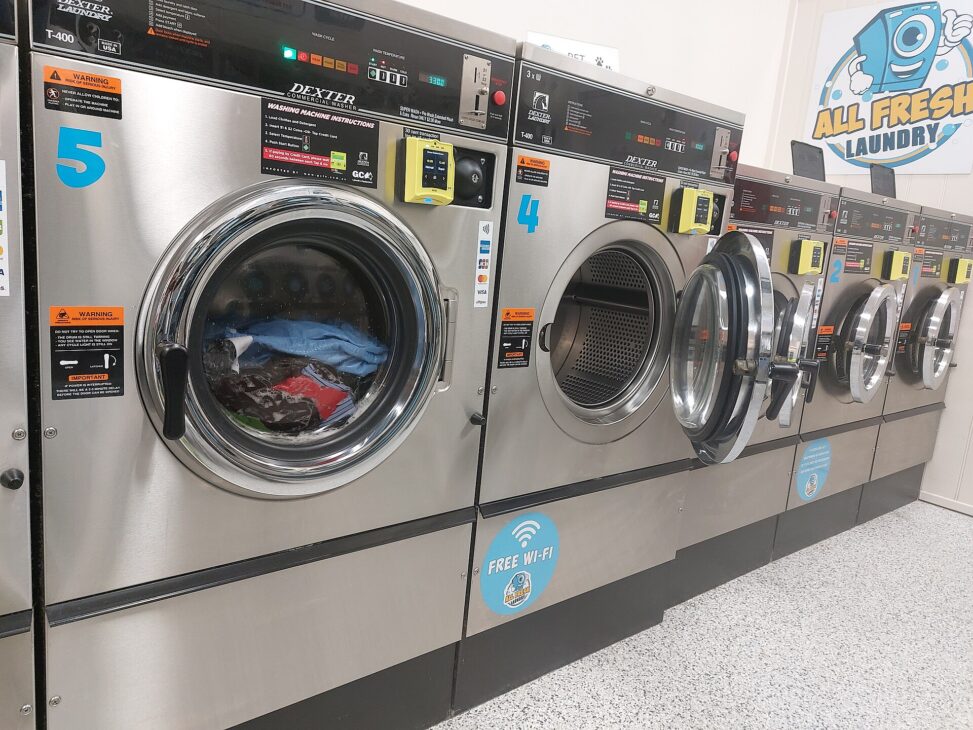
The heart of the model is self-management. At Lavô, the customer measures the clothes, puts them in the machine, pays at a self-service kiosk, and retrieves everything washed and dried in about 1 hour, with no staff in the store, which is managed remotely, according to the Portal do Franchising. The structure consists of industrial machines, cleaning products, and the payment system.
Without a payroll, the fixed cost plummets, and the business operates from Sunday to Sunday without relying on anyone to open the door. For the franchisee, this means an operation that fits into the life of someone with another job; for the customer, a lower price than the traditional counter laundry.
636 stores from Acre to Rio Grande do Sul
The scale came at the speed of a well-oiled franchise. There are 636 units in operation across the country, from Acre to Rio Grande do Sul, with a forecast to reach nearly 680 stores by the end of the current cycle, according to Exame, in a network that ranges from modular container stores to commercial rooms and units within condominiums. The streamlined format allows opening doors where traditional laundries would never break even.
The performance earned visibility: the company ranked 3rd in the Expanding Business ranking in the R$ 5 million to R$ 30 million range, among 177 companies evaluated, according to Exame. For a network that was born in a tourist city in Santa Catarina, it is confirmation that the model traveled well across all climates and budgets in the country.
The next bets: coffee, sneakers, and Portugal
The founder did not stop at the washing machine. The network launched the Lavô Street concept, which combines laundry and café for the customer to wait for their clothes with a coffee in hand, created the Shoolé Lavatênis brand, dedicated to sneaker cleaning, and is preparing for an international leap with a unit in Portimão, Portugal, according to Exame. The logic is to occupy the customer’s wait and transform the laundry into a convenience point.
Each move tackles a different frontier: the café increases the time and spending inside the store, the sneaker service opens a niche that grows along with sneakerhead culture, and Portugal tests the brand in a market where self-service is already a habit. It’s the classic playbook of someone who has already mastered the main product and is now multiplying the brand.
Why self-service laundry exploded in Brazil
The phenomenon that Lavô rode has its roots in the way Brazilians have started to live. Increasingly smaller apartments, many without a laundry area or space for a machine and clothesline, have created an urban crowd that needs to do laundry and has nowhere to do it, exactly the customer who solves everything in a corner store in an hour. Add to this the cost of owning a machine, water, and energy, and the self-service bill makes sense for many people.
The sector has become an investment craze, with various networks competing for locations and franchisees across the country. In this scenario, getting ahead with a tested process, as Lavô did, is the difference between leading the category and fighting for what’s left of the market.
The lesson of the man who prepared before luck
Donaton’s journey dismantles the idea that a successful business is born from a flash of inspiration. He saw the model in 2017, studied for two years before opening the first store, waited for the process to mature before franchising, and only then accelerated, and that’s why the “luck” of the laundromat boom found his company ready. Preparation, in this case, was literally the product.
At 40, when many people think they are too old to take risks, he opened his first business and built a national network in just a few years.
Tell us in the comments: would you use a staff-less laundromat to wash everything in 1 hour, or do you prefer your machine at home?


