






 Portuguese
  Spanish


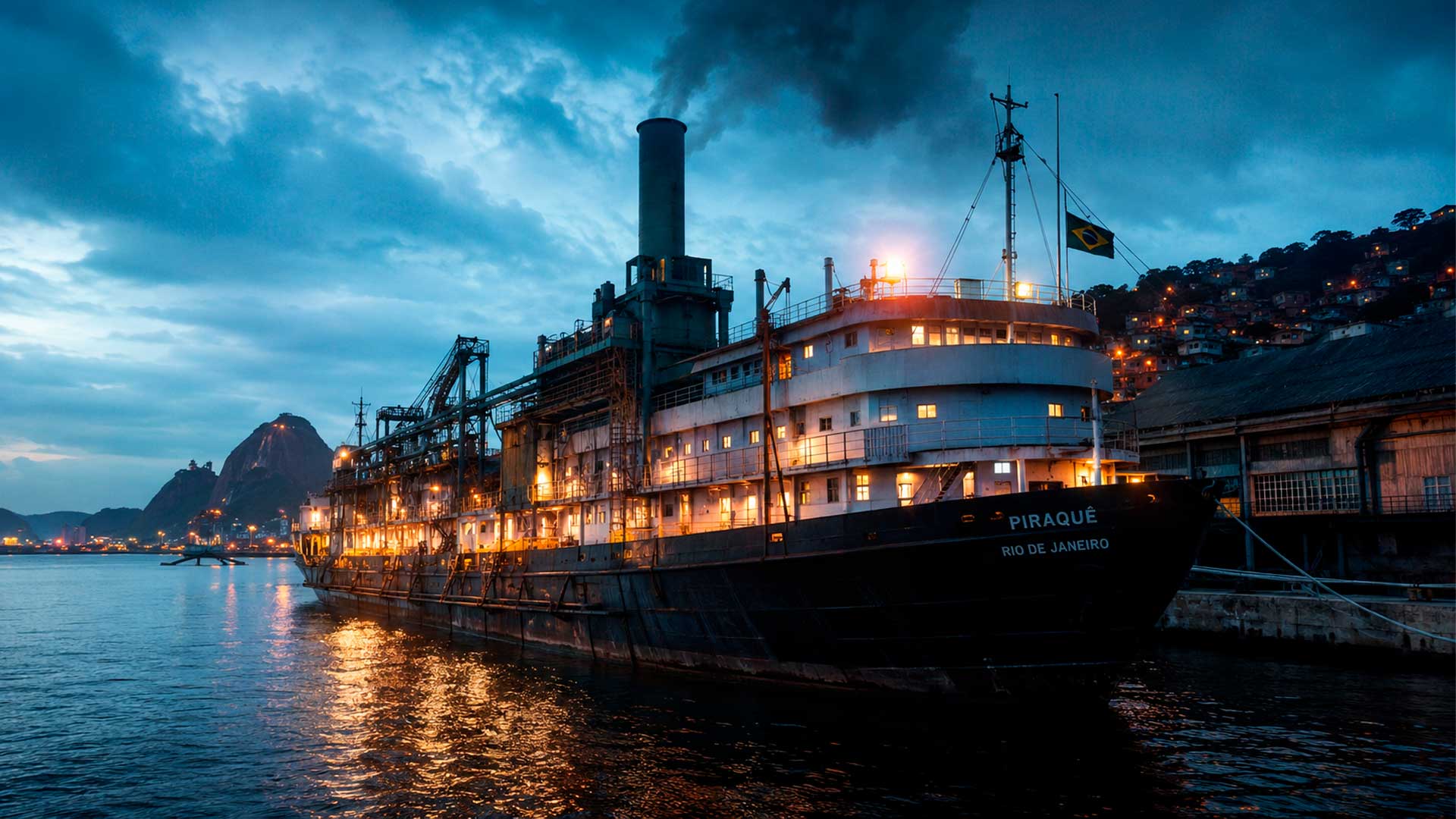

Floating power plant was born in World War II, arrived in Brazil in 1950 to tackle blackouts, passed through Rio, Niterói, Porto Alegre, Manaus, and Belém, until becoming a barrier against erosion in Cametá
A ship designed to provide electricity in war zones ended up traversing much of the history of the Brazilian electric sector. The vessel Seapower, later called Piraquê and Poraquê, was created in the United States during World War II and arrived in Brazil in 1950 to help supply energy to Rio de Janeiro.
With 109 meters in length, 5,500 tons, and 25,000 kW of power, the floating power plant was able to generate about 600 MWh per day, according to data from the virtual exhibition of the Memory of Electricity on Google Arts & Culture. The volume was sufficient to reinforce urban systems in times of crisis.
The story resurfaced with the free exhibition “The Floating Power Plant that Sailed Brazil,” launched by the Memory of Electricity.
-
Brazilian Domestic Worker Lived 55 Years Without a Salary, Had Welfare Benefits Controlled by Employer

-
Former PE Teacher Turns São Paulo Thrift Store into Online Sensation with 1 Million Followers, Now Earning $50,000 Monthly with Son and Plans to Expand Nationwide
-
Brazilian Family-Owned Notebook Brand Animativa, Known for Scented Notebooks and Turma da Mônica Licenses, Reaches $42 Million in Revenue
-
Indian Inventor, 58, Develops Steering Wheel-Free Agricultural Machine Operated by Levers, Offering Cost-Effective Alternative to Expensive Tractors


According to a CNN Brazil report published on July 7, 2026, the exhibition brings together historical photographs, technical documents, videos, and the ship’s logbooks.
The project was born when the United States wanted to bring electricity to war zones
The origin of the ship is linked to Walker Cisler, an engineer summoned in the United States in the 1940s to lead a project of floating power plants. The idea was simple on paper and complex in practice: to create vessels capable of crossing oceans and generating energy near military fronts.
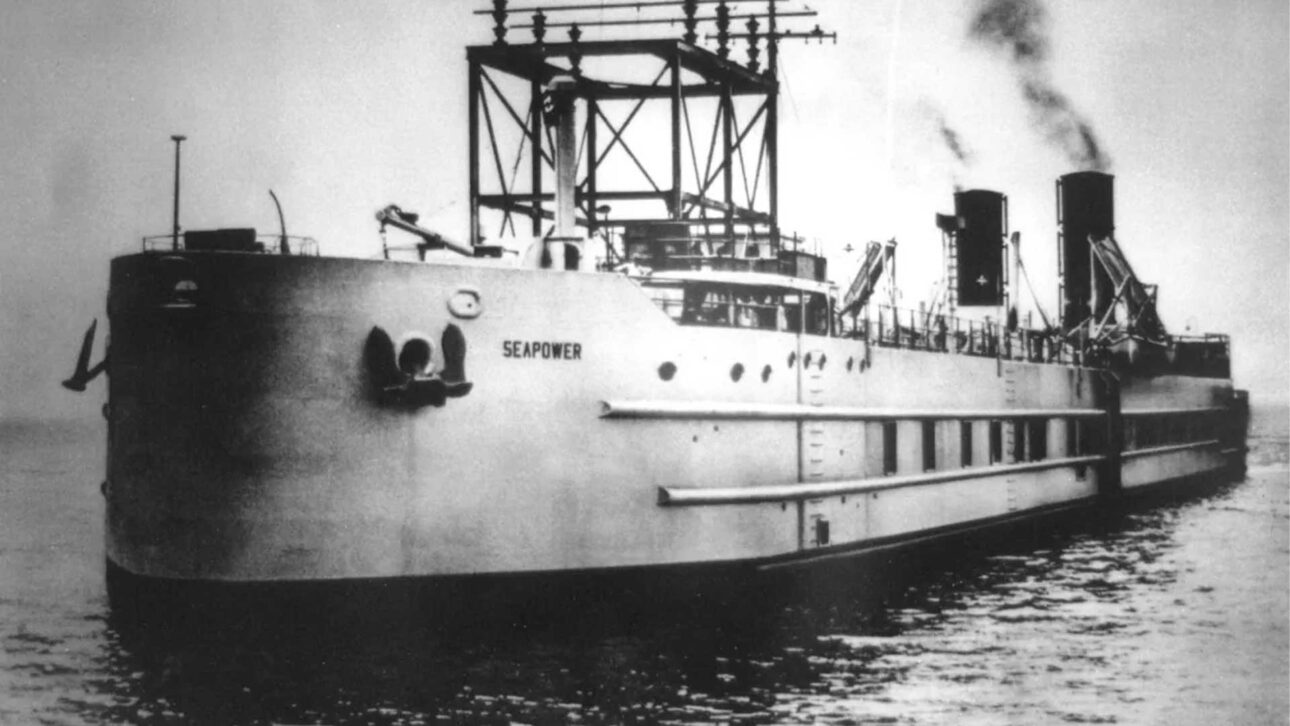
According to the Memory of Electricity, four steam-powered ships were born from this program: Impedance, Inductance, Resistance, and Seapower.
They were built by the Bethlehem Steel Company in Pennsylvania, with a structure prepared to operate at sea and withstand war conditions.
The Seapower was launched in 1943 in Charleston, with oil-fired boilers and steam turbines. During World War II, it crossed the Atlantic under threat from German submarines and provided energy support to allied forces in Europe, before losing its military function with the end of the conflict.
The arrival in Rio showed how the electrical crisis affected the then federal capital


In 1950, the Brazilian Hydroelectric Company, linked to the Light group, brought the vessel to Rio de Janeiro. The former Seapower was renamed Piraquê and incorporated into the electrical system of the then federal capital, at a time of urban growth and increased demand for energy.
The Google Arts & Culture exhibition informs that the plant was installed in the Caju Cove and connected to the Campo Grande substation.
With this, it added 7.6% capacity to the Rio Light system, a significant reinforcement for a city already suffering from interruptions and limitations in supply.
But the solution also generated criticism. Part of the energy was said to prioritize tourist and more visible areas, such as Copacabana and the Jóquei Club region in Gávea, while other parts of the city remained in the dark.
In 1954, the Piraquê was moved to Niterói, on the other side of Guanabara Bay. Without its own propulsion, it depended on tugboats to move between operation points.
After Rio, the floating plant ended up in Guaíba during a severe drought
The vessel’s journey did not end in the Southeast. In 1968, the plant was sold to the State Electric Power Company of Rio Grande do Sul, the CEEE, and towed to Porto Alegre.
Rio Grande do Sul was facing a severe drought, with reservoirs at low levels. In this context, the old war plant began to operate in Guaíba as a complementary source for the metropolitan region.
The vessel began supplying Porto Alegre in the late 1960s and remained in operation until 1975. It was an expensive, old solution dependent on heavy maintenance, but still useful in an electrical system pressured by drought and increased consumption.
In the Amazon, the Piraquê became Poraquê and began to support the growth of Manaus
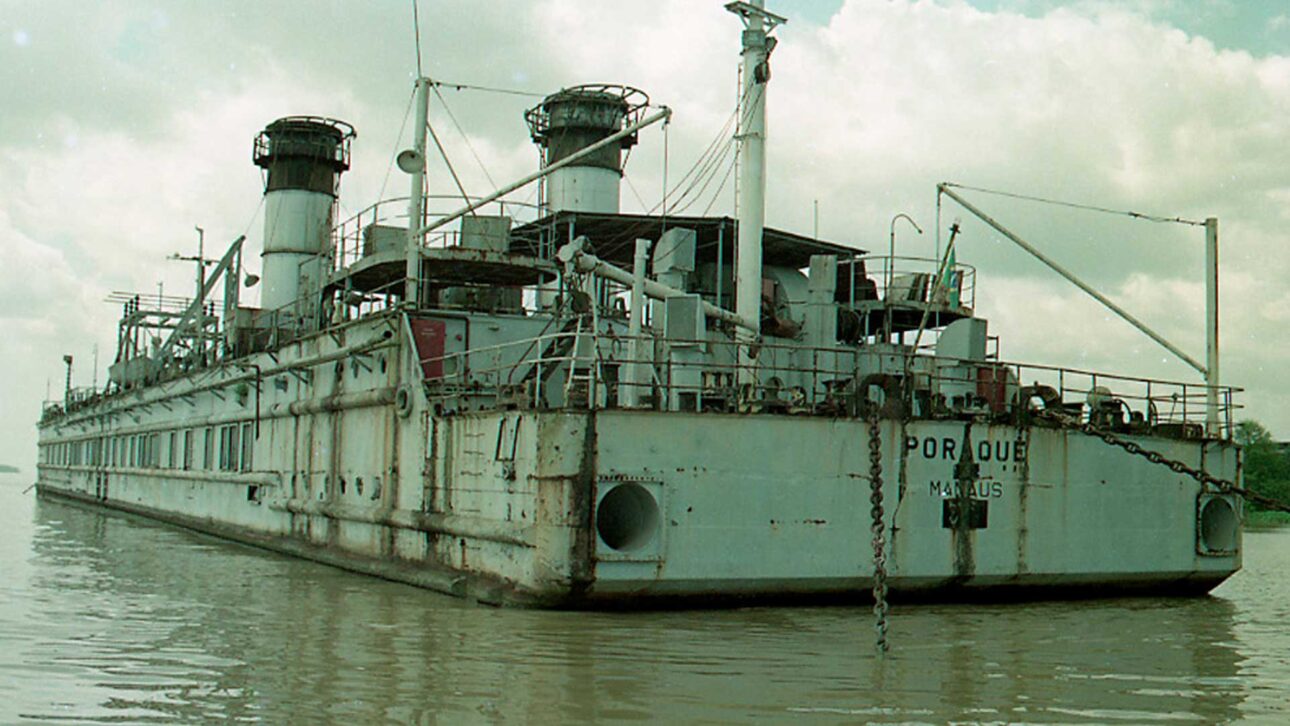
After the period in the South, the plant was sold to the Manaus Electricity Company. In the Amazon, it was named Poraquê, a reference to the electric fish capable of producing strong discharges in the region’s rivers.
The name change matched the vessel’s new role. Manaus was experiencing urban and industrial expansion driven by the Free Trade Zone, and the power grid needed to keep up with factories, new neighborhoods, and increasing consumption.
The Poraquê operated alongside the Mauá Plant and other local thermal plants. Its role was to help prevent blackouts in a city far from the large interconnected systems that would consolidate later.
The problem was wear and tear. The plant had been designed to operate under different climatic conditions. In the Amazon, heat, humidity, lack of parts, and old boilers made the operation increasingly difficult.
Belém was the last attempt before the ship lost space to the large hydroelectric plants
In 1978, the Poraquê was transferred to the newly created Eletronorte and taken to Belém. The expectation was to strengthen the power supply in the capital of Pará, but the machine was already carrying decades of use.
Reports gathered in content from the Electricity Memory Agency, hosted on Estadão Blue Studio, indicate that the arrival in Pará generated expectations but also exposed technical limitations. There were missing parts, cables, and components compatible with a vessel created in the 1940s.
Technicians had to seek improvised solutions, including old equipment from other states. The cost of maintaining the operation was rising, while the age of the plant weighed against its continuity.
In the 1980s, with the entry of large hydroelectric plants in the region, such as Tucuruí, the Poraquê lost its function. It remained docked at the port of Belém until it received an unusual fate.
The end of the plant was at the bottom of the Tocantins River, protecting the Cametá shoreline
In 1991, the ship was donated to the city of Cametá, in Pará. Instead of becoming common scrap, it was intentionally sunk in the Tocantins River to help contain shoreline erosion.
The vessel that was born to generate energy during war, illuminated Brazilian cities, and traversed different electrical systems began to function as a physical barrier. The goal was to protect the shoreline and historical buildings of the city.
Today, the Poraquê does not produce electricity, but it remains as a material vestige of a period when Brazil resorted to mobile solutions to face supply crises. Its history shows how energy, territory, and infrastructure intertwined in decisions made under pressure.
The virtual exhibition preserves part of this journey with photographs, technical records, videos, and an interview with historian Andrey Martin, a professor at the Federal University of Mato Grosso do Sul. For those who follow energy and engineering topics, the case of the Poraquê reveals a little-remembered solution: a plant that sailed to where the power grid could not reach.
Did you already know the story of the Poraquê floating power plant? Leave your comment sharing if this type of mobile solution would still make sense in isolated regions of Brazil or if today the country should only invest in fixed networks, batteries, and local generation.


