Portuguese
  Spanish


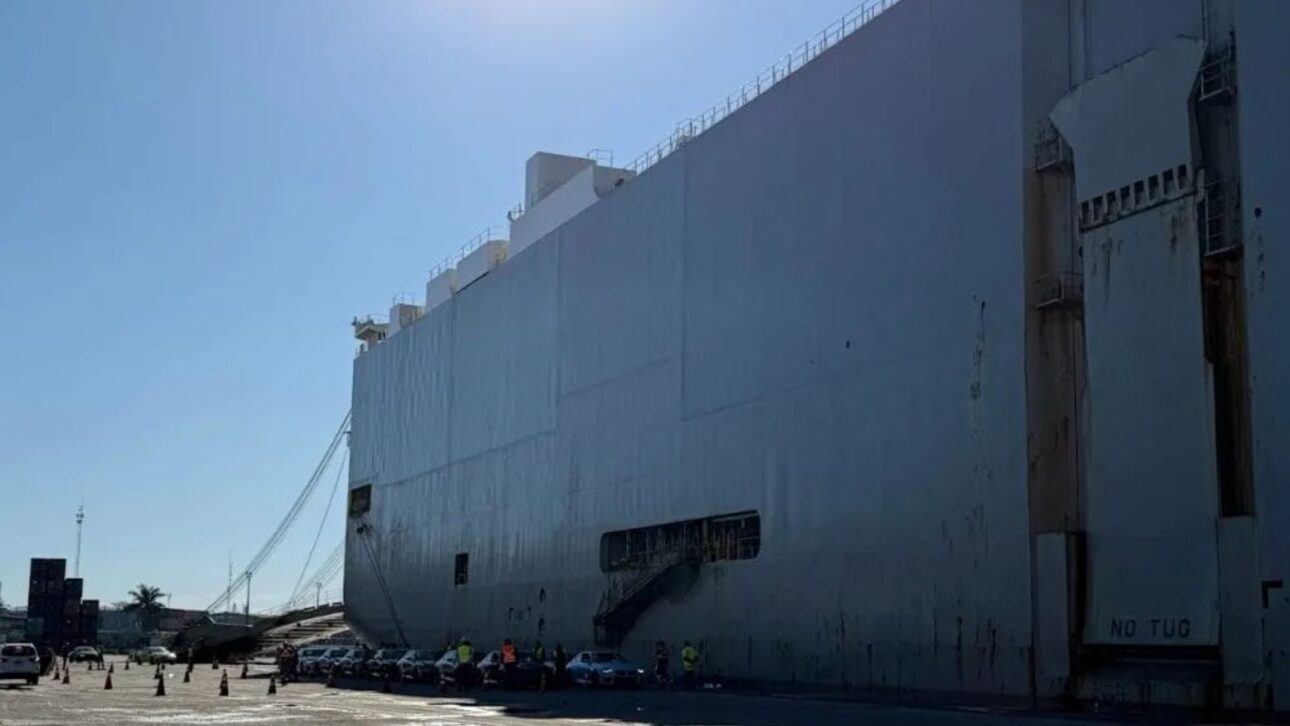
The Port of Itajaí, in Itajaí (SC), received on the afternoon of Tuesday, July 7, 2026, around 1 PM, the ship Brasilia Highway loaded with 769 luxury BMW cars. With the docking, the public port of Santa Catarina, which is under federal management and commanded by Superintendent Artur Antunes Pereira, reached the milestone of 16,265 vehicles handled in 2026, one of the strongest symbols of the port’s operational recovery after years of partial paralysis.
According to NSC Total, the freighter docked at the Port of Itajaí carrying 769 luxury vehicles of the German brand in a Ro-Ro operation, an acronym for roll-on/roll-off. In this format, the cars are practically driven off the ship’s ramp, without the need for a crane to lift each unit.
According to ndmais, the arrival of the ship Brasilia Highway marked the ninth Ro-Ro docking at the Port of Itajaí in 2026. It was another chapter in the terminal’s recovery, which resumed receiving high-value-added cargo after a long period of reduced operations.
769 luxury BMW cars descend the ramp in Itajaí
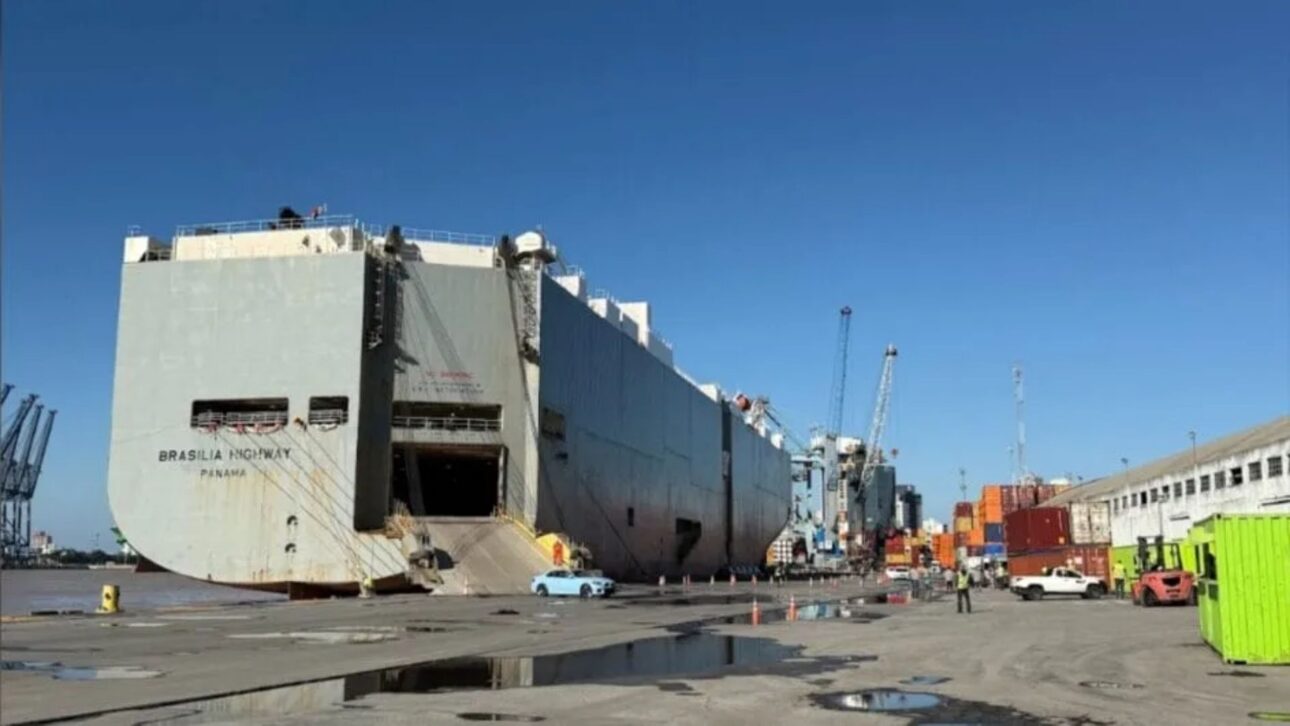
The scene caught the attention of those passing by the quay. One by one, the 769 luxury BMW cars left the interior of the ship via the ramp, in a continuous line, in the typical rhythm of Ro-Ro port operations. The movement lasted a few hours and concentrated the entire unloading on a single ship.
-
Track&Field: From a School Project in São Paulo to a Leading Premium Sportswear Brand with Over 360 Stores and $270 Million in Revenue

-
From Humble Beginnings to Industry Leader: How Dudalina Became Brazil’s Top Shirt Exporter with $416 Million in Revenue
-
Brazilian Brothers Turn $100 Investment into Wildlife, Latin America’s Most Valuable Game Studio Worth $3 Billion, with Global Hits like “Sniper 3D”
-
Brazilian Açaí Brand Oakberry Expands from São Paulo Kiosk to Over 900 Stores in 48 Countries, Including Qatar’s Desert Markets


The docking took place around 1 PM on Tuesday. The ship Brasilia Highway docked at the Port of Itajaí loaded only with automobiles, without containers, in a movement entirely dedicated to vehicles. It was a clean operation, focused solely on rolling cargo.
The number is impressive due to its concentration. There are 769 units at once, all from BMW, placed in the Santa Catarina port yard in just a few hours of work. Each car moved to the storage area right after leaving the ramp.
The cargo was described as millionaire due to the high added value of the automobiles. Even so, no official figure in reais was disclosed, and the adjective refers to the premium profile of the vehicles, not a closed value of the operation.
What ship is the Brasilia Highway, the freighter that dominated the dock?
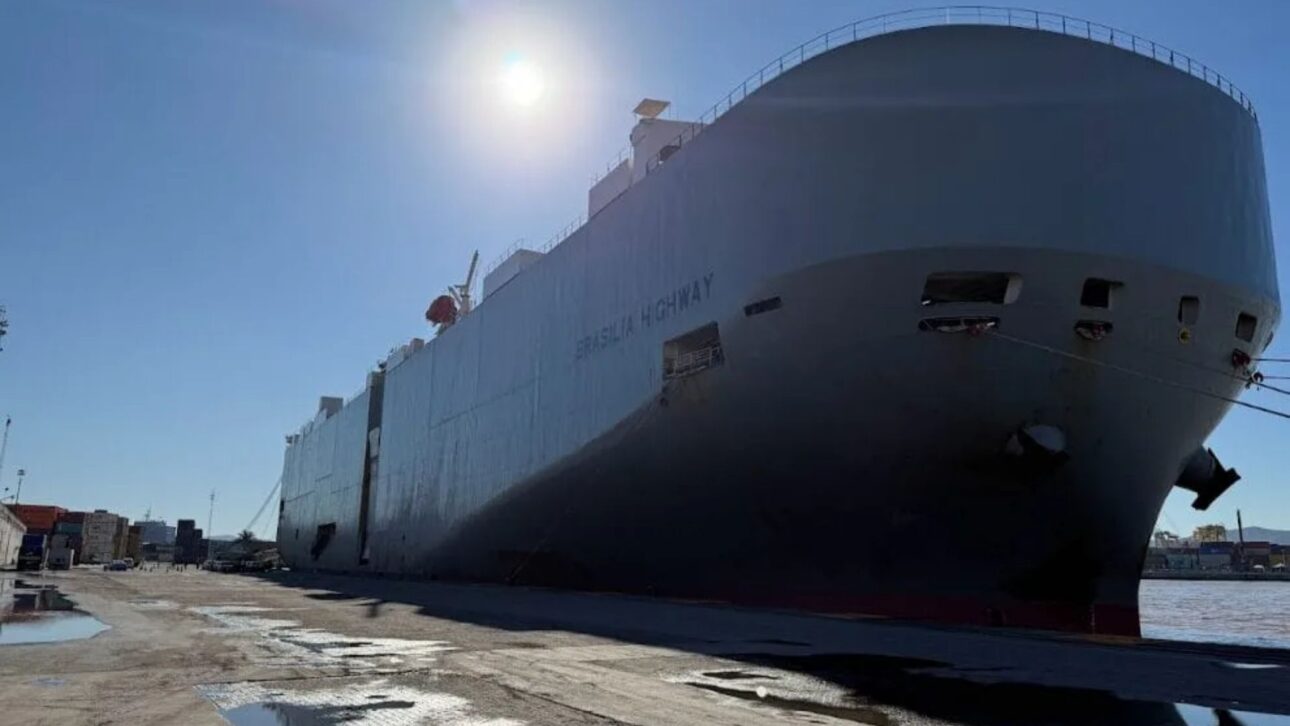
The Brasilia Highway ship is a Ro-Ro type freighter. The acronym, from the English roll-on/roll-off, describes exactly how the merchandise enters and exits the vessel: rolling on its own wheels, without lifting. This reduces operation time at the dock and decreases handling costs for each trip.
In this type of vessel, there are no cranes lifting automobiles. The luxury BMW cars were driven down the ramp to the Itajaí Port yard, a faster and safer method for transporting vehicles on a large scale.
The Brasilia Highway ship functions almost like a multi-story floating parking lot. Each deck accommodates hundreds of cars secured and organized to withstand the sea crossing without damage. The goal is to deliver each unit in perfect condition, ready to proceed to the stores.
This design allowed for 769 units to be brought in a single trip. The efficiency of the Brasilia Highway ship helps explain why the Ro-Ro model is gaining ground in vehicle importation through Brazilian ports.
The mark of 16.2 thousand vehicles: what the 2026 numbers say
With the 769 automobiles from this trip, the Itajaí Port reached 16,265 vehicles handled in 2026. This total consolidates the so-called mark of 16.2 thousand, a number that has become a showcase of the terminal’s recovery. The data has started to be cited as a thermometer of the recent performance of the Santa Catarina dock.
All these vehicles went through the Ro-Ro system. The arrival of the Brasilia Highway ship was the ninth operation of this type at the Itajaí Port throughout the year, showing an already constant frequency of dockings.
The pace gains weight when looking at the recent history. Each new docking pushes the Port of Itajaí closer to the levels the terminal reached before the long partial paralysis. The recovery, however, is still gradual and depends on new schedules throughout the year.
The largest individual operation of the year, however, was not the German brand’s. It was the BYD Changsha ship, which alone brought 7,216 vehicles to the Port of Itajaí, the individual record of 2026 so far.
Why has the Ro-Ro operation become the flagship of the port?
The answer begins with the value of the cargo. Imported automobiles, such as BMW’s luxury cars, yield more to the terminal than many traditional bulk goods, making each ship very attractive. The higher the unit price of the merchandise, the greater the revenue generated at each stop.
The Ro-Ro model is also agile. Without cranes, the import of vehicles gains speed and reduces the risk of dents and scratches, an argument that attracts shipowners to the Port of Itajaí.
Each docking of automobiles moves an entire chain. Stevedores, transport companies, and storage yards are activated with each arriving ship, generating work and revenue in the city. The effect appears in local employment and the turnover of services related to the logistics sector.
That’s why vehicle importation has become the center of the strategy. The Port of Itajaí bets on this high-value segment to recover revenue and regain relevance on the southern port map.
The resumption of port operations after two years of inactivity
The quay wasn’t always this busy. The Port of Itajaí spent about two years in partial shutdown, with cargo operations significantly reduced and a climate of uncertainty in the air.
The turnaround came in 2026. The resumption of port operations brought back the large vehicle ships to the Santa Catarina terminal and put the quay back in the sector’s news. The repercussion helped put the municipality back on the radar of large shipping companies.
The terminal is public and under federal management. This condition placed the resumption of port operations at the center of attention, as it involves jobs, revenue, and the economy of the entire Itajaí region.
Each docking ship has become a symbol of this restart. The arrival of BMW’s luxury cars reinforced the message that the Port of Itajaí has indeed returned to handling significant cargo.
Consolidation: what is the next step for the Port of Itajaí
Superintendent Artur Antunes Pereira leads this new phase. For him, the moment now is one of consolidation, a stage that comes right after the resumption of port operations and seeks to solidify what has been regained.
The stated goal is to recover high-value-added cargo. BMW’s luxury cars precisely fit this premium profile that the Port of Itajaí wants to attract permanently. These are goods that take up little space on the dock and leave a good margin per ton.
Becoming competitive again is the central objective. The idea is for the Port of Itajaí to compete on equal footing with neighboring terminals in Santa Catarina, which gained ground during the paralysis.
The sequence of dockings helps in this regard. Nine Ro-Ro operations in 2026 show that vehicle importation has already established itself as a consistent bet, not an isolated event.
What does BMW’s luxury car ship have to do with Brazil
The answer lies in national logistics. A large part of the vehicle imports that supply the country enter through southern ports, and the Port of Itajaí has returned as one of these strategic entry points.
Santa Catarina has established itself as a corridor for automobiles. The movement of cargo in Santa Catarina terminals influences deadlines and the availability of models for Brazilian consumers who buy imported vehicles.
There is also an industrial context in the state. BMW maintains a factory in Araquari (SC), although sources do not point to this unit as the origin of this specific cargo, which remains just a backdrop to the subject.
The import tax also surrounds the topic. It makes foreign cars more expensive in Brazil, but it was not detailed in this operation and enters the conversation only as context, not as a shipment data.
In the end, the resumption of port operations interests the entire country. A strong Port of Itajaí means more export options, more competition among terminals, and a smoother vehicle importation in the national market.
What to expect from vehicle importation through SC ports?
The trend points to more ships on the horizon. If the resumption of port operations remains strong, vehicle importation is expected to grow even more in Itajaí in the coming months.
The success of the Ro-Ro model attracts new contracts. Each successful docking of the Brasilia Highway ship paves the way for the next, and shipowners tend to repeat routes that work well.
Competition among neighboring ports is expected to heat up. The Port of Itajaí wants its share of the BMW luxury car market and other brands that land in Santa Catarina.
For the consumer, more flow can mean more supply. A heated vehicle importation usually expands the variety in dealerships and moves the entire chain that thrives on imported cars.
And you, what did you think of the resumption of the Port of Itajaí?
And you, what did you think of seeing 769 luxury BMW cars rolling down the ramp at the Port of Itajaí? Tell us in the comments if you are closely following the resumption of operations at the Santa Catarina port.
Share this article with those who love logistics and automobiles. Tag that friend who still doesn’t know about the 16.2 thousand vehicles milestone achieved by the terminal in 2026.
Also, share your opinion on the importation of vehicles through the ports of Santa Catarina. Your participation helps spread the discussion about the Brasilia Highway ship and the future of the Port of Itajaí.