Portuguese
  Spanish


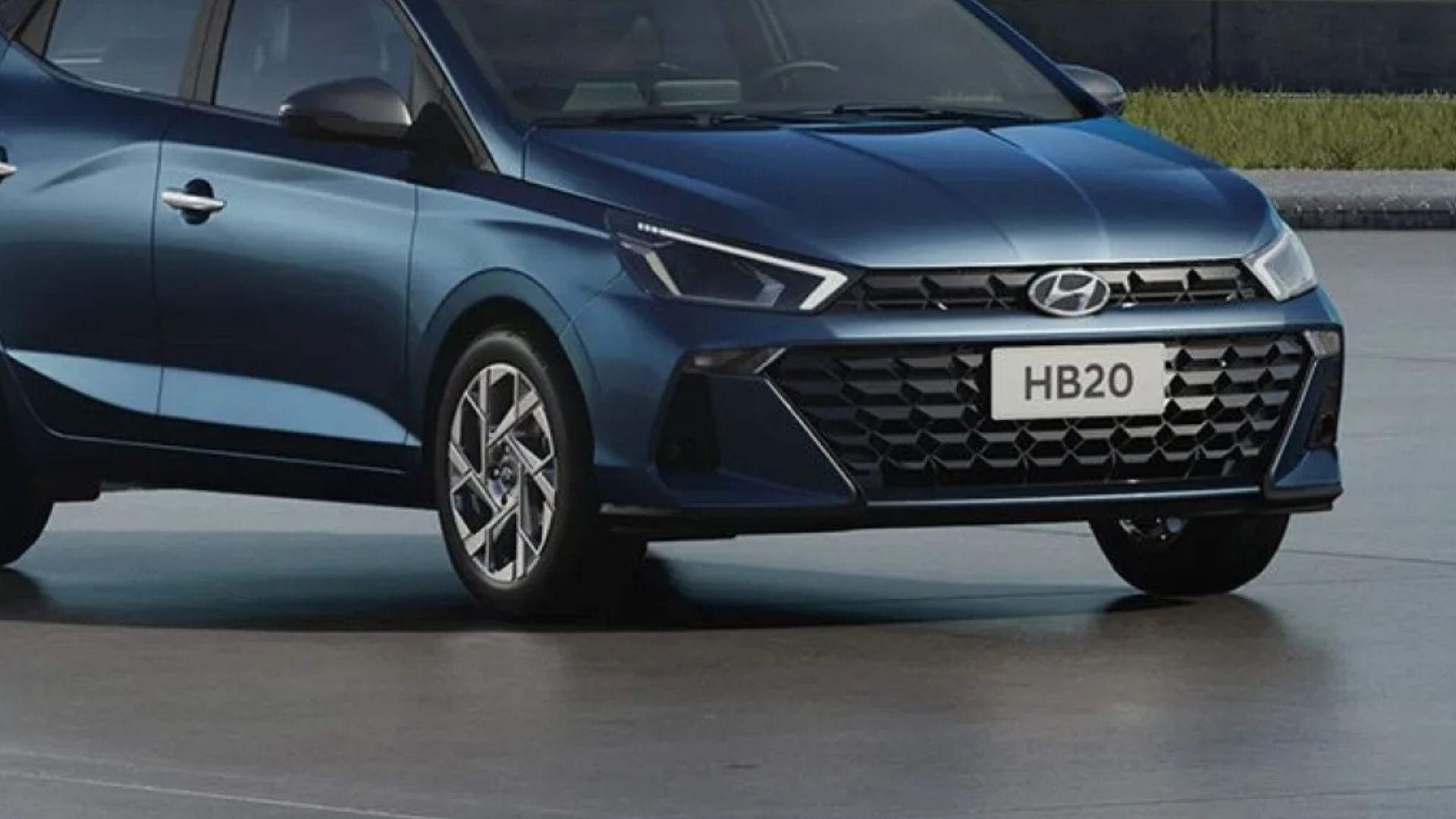

Change in Hyundai’s 1.0 turbo engine involves HB20, HB20S, and Creta amid new Green IPI rules, with power adjustment, torque maintenance, and strategy to avoid tax increase on important brand models in Brazil.
Hyundai is expected to recalibrate the 1.0 turbo engine used in HB20, HB20S, and Creta to reduce the power from 120 hp to 115 hp, in an adjustment to the new Green IPI rules, within the federal Mover program.
Reported by Mundo do Automóvel para PCD and also investigated by Jornal do Carro, the change targets a more advantageous tax bracket for the models, as vehicles with power up to 85 kW, equivalent to about 115.5 hp, do not receive an increase based on the power criterion.
Above this threshold, the calculation foresees an increase of 0.75 percentage points in the IPI, which made the power limit a strategic factor for manufacturers selling high-volume compact cars and SUVs in the Brazilian market.
-
Carflix Overcomes Setbacks to Achieve $250 Million in Used Car Sales with Backing from Mercado Livre and SMZTO, Aiming for 300 Locations and $650 Million Revenue

-
Brazil’s Cheapest Car Outperforms Onix, HB20, Polo, and More: Priced Under $15,000 with 1.0 Engine, 681 km Range, 75 HP, and Air Conditioning.

-
Brazil’s Most Powerful Truck, Priced at $320,000, Delivers 770 HP and 3,700 Nm Torque, Surpassing Volvo’s Previous Record and Serving as a Base for a $600,000+ Motorhome
-
Man Revives 1962 Mercury Comet with Parts from a Damaged Nissan Leaf, Achieving Electric Conversion for Under $6,000



Hyundai’s 1.0 turbo engine will have new calibration
The reduction will be applied to the 1.0 TGDI three-cylinder flex engine, equipped with turbo and direct injection, a set used in the automatic versions of HB20, HB20S, and Creta.
When fueled with ethanol, the maximum power will decrease, while the reported torque remains at 17.5 kgfm, a relevant figure to preserve much of the response in starts, recoveries, and urban use.
For those who drive daily, the loss of five horsepower tends to be discreet, because torque usually influences the feeling of strength at low revs more than the declared maximum power.
Even so, the technical specifications of the models will display a different configuration from the current one, with direct impact on the fiscal classification, although without replacing the engine with another mechanical set.
Instead of replacing the engine architecture, Hyundai is likely to resort to an electronic recalibration, a solution that adjusts the maximum performance and maintains the technical base of the 1.0 turbo Smartstream engine.
Green IPI changes calculation for cars in Brazil
In the new design of the Green IPI, the tax now considers criteria such as energy efficiency, propulsion technology, safety, recyclability, and power in the calculation applied to vehicles.
According to the program’s logic, models considered more efficient may pay less, while cars classified in less favorable brackets receive increases according to the criteria defined by the regulation.
Regulated by Decree No. 12,549/2025, the new structure altered the Table of Incidence of the Tax on Industrialized Products and became part of the guidelines of the Mover program.
According to the federal government, the policy seeks to encourage more sustainable, safe, and economical vehicles in the Brazilian market, combining energy efficiency and industrial requirements in automobile taxation.
In this scenario, the ceiling of 115 hp started to guide manufacturers’ technical decisions, especially in low-displacement turbo engines that were slightly above the range without an increase.
As Hyundai’s 1.0 turbo delivers 120 hp in the current configuration, the set exceeds the limit used in the calculation and enters a less competitive fiscal bracket.
HB20, HB20S, and Creta enter the same strategy
The new calibration should reach the turbo versions of HB20 and HB20S, as well as the Creta configurations equipped with the same 1.0 TGDI engine.
According to published information, this update should appear in the next lines of models, although Hyundai has not yet officially detailed versions, timelines, and potential commercial impacts.
The Hyundai i20 in Brazil is also part of this strategy, a model that already appeared with the engine adjusted to 115 hp and signals a possible standardization of the brand around the new tax limit.
By maintaining the low-displacement turbo engine, the manufacturer preserves the performance proposal of the models but adjusts the declared power to the point that can avoid an increase in IPI.
In the case of the Creta, the recalibration applies to versions with a 1.0 turbo engine, while configurations with other engines follow their own frameworks according to power, technology, and fiscal table.
Manufacturers adjust engines to avoid higher tax
Hyundai is not the only manufacturer observing the impact of the Green IPI on the declared power of vehicles sold in the country.
In different segments, manufacturers started to review calibrations to keep models in more favorable tax brackets, especially when engines are close to the limits defined by regulation.
This movement can help companies avoid an increase in fiscal cost in high-volume cars, where small price variations directly influence the competition for consumers.
For the buyer, however, the effect on the final price will depend on how each brand passes on the tax difference, considering margin, commercial strategy, production costs, and market conditions.
Although the government claims that the policy aims to stimulate more efficient models and reduce tax for vehicles meeting the requirements, the price setting at dealerships does not depend solely on the rate.
Impact of Power Reduction for the Driver
For most drivers, the difference between 120 hp and 115 hp should be less noticeable than changes in torque, transmission, vehicle weight, or throttle calibration.
Since the torque of 17.5 kgfm remains, the behavior at low revs tends to stay close to the current one, especially in common urban traffic situations and moderate accelerations.
Maximum power, on the other hand, usually appears at higher revs and in more demanding situations, such as long overtakes, uphill with load, or highway driving.
Even with this technical difference, the announced reduction is small within the models’ proposal and is more related to tax classification than to a profound change in performance.
The central point is the relationship between the technical specifications and tax, as limiting the power to 115 hp can keep HB20, HB20S, and Creta out of the expected increase in IPI.
There is still a lack of detailed official confirmation from Hyundai about the affected versions, dealership arrival schedule, and possible impact on prices, which prevents stating whether there will be a direct reduction for the consumer.
With the tax now also affecting power, do you think it’s better to keep the 120 hp or accept 115 hp if it helps to keep car prices down?