Portuguese
  Spanish


Victor and Arthur Lazarte turned the São Paulo company into a unicorn by receiving funding from the American fund Benchmark, the same as the first checks from Silicon Valley giants, and nine months later raised another US$ 120 million, tripling the business value
In July 2026, the most used Brazilian technology product on the planet is not a banking or delivery app, it’s a mobile game. According to the Brazil Journal, Wildlife Studios, founded in São Paulo by brothers Victor and Arthur Lazarte, was valued at US$ 1.3 billion in a funding round led by the American fund Benchmark, becoming a unicorn and one of the most valuable technology companies in the country.
The scale of the phenomenon is of a global giant: more than 1 billion people worldwide have played the company’s titles, such as Sniper 3D and Tennis Clash, totaling billions of downloads, and nine months after the first funding, the company raised another US$ 120 million, valuing the business at US$ 3 billion, according to 360 News. And it all started, still according to 360 News, with an initial investment of US$ 100.
The brothers who swapped elite careers for mobile games
The founders’ resumes did not point to games. Both are engineers graduated from USP: Arthur attended elite schools in France, was a researcher in Canada, and a business consultant, while Victor studied engineering in France and worked as a credit operator at a major bank in London before returning to Brazil, according to 360 News. In 2011, the Lazarte brothers left this secure path to found a mobile game studio in São Paulo.
-
Brazilian Açaí Brand Oakberry Expands from São Paulo Kiosk to Over 900 Stores in 48 Countries, Including Qatar’s Desert Markets

-
From Door-to-Door Sales to an $8 Million Business: The Success Story of Água Azul’s Founder

-
19-Year-Old Brazilian Chemistry Student Wins Bronze at International Astronomy Competition with Over 9,000 Participants
-
Rio de Janeiro Launches Unprecedented Operation Against Criminal Gangs Extorting Beach Vendors for $100 Million




The choice seemed naive at the time: Brazil had no tradition in game development, and the smartphone was still in its infancy as a platform. The brothers saw exactly the opposite: the mobile phone would be the largest video game in the world, with billions of devices in people’s pockets, and those who learned to make free and addictive games for this platform would have the largest market in entertainment history.
The game factory that 1 billion people know
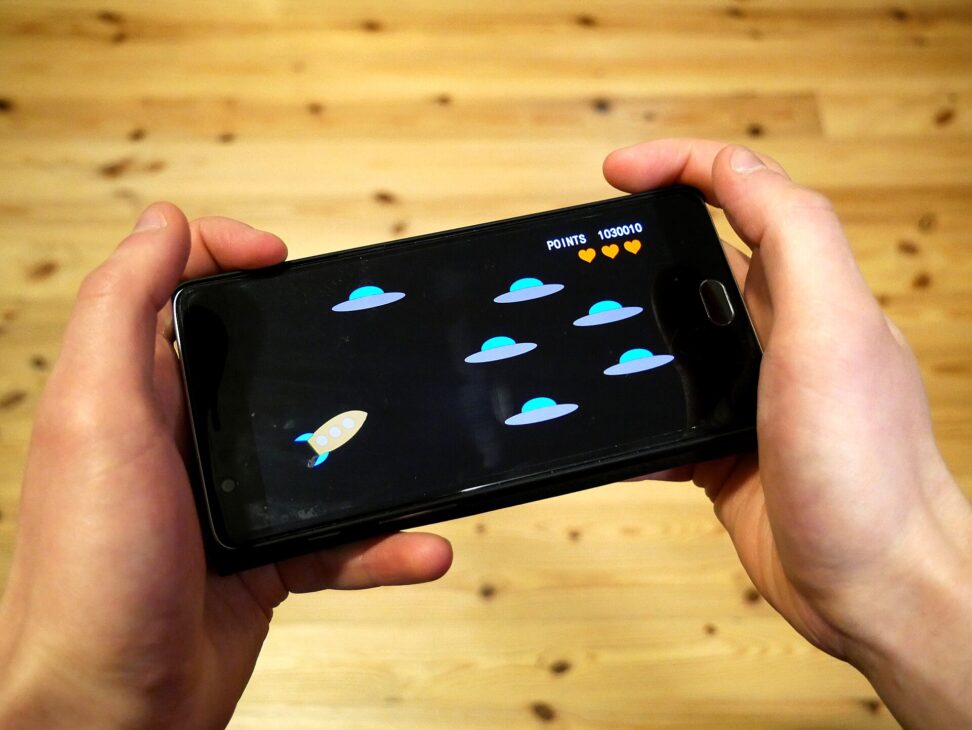
The success turned into a hard-to-believe statistic. Titles like Sniper 3D and Tennis Clash have put Wildlife in the routine of over 1 billion players on the planet, with billions of downloads accumulated, global giant numbers coming from a studio in São Paulo, according to 360 News. It’s likely that the neighbor playing on the bus is in a Brazilian game without knowing it.
The business model is free-to-play: the game is free, and revenue comes from ads and in-app purchases. In this format, the profit lies in the invisible engineering, the fine balance between fun and monetization, adjusted with data from millions of daily matches. It’s more math than art, and that’s where the engineering duo made the difference.
The check from the fund that bet on the biggest in Silicon Valley
The recognition came with the most respected passport in venture capital. The investment that made Wildlife a unicorn, valued at US$ 1.3 billion, was led by Benchmark Capital, an American fund known for historical checks in technology giants, according to the Brazil Journal. For a Brazilian game studio, attracting this investor was equivalent to a team being called up for the World Cup final.
And the game only accelerated: nine months later, the company raised another US$ 120 million in a round that valued the business at US$ 3 billion, consolidating its position as the most valuable game studio in Latin America, according to 360 News. The company that started with US$ 100 came to be worth 30 million times the initial investment.
The video game that was already in everyone’s pocket
To understand the Lazarte brothers’ bet, it’s worth looking at the board of 2011. In that year, the console dominated the conversation about games, the PC dominated the revenue, and the cell phone was treated by the industry as a minor platform, a bank queue pastime, exactly the kind of underestimation that opens space for those who arrive early. While the big studios were competing for the dedicated player, the smartphone reached an audience that never considered themselves gamers.
Mobile games also had a structural advantage: instant and global distribution through app stores, without a factory, without physical media, without retail. A studio in São Paulo published a title and, on the same day, it was available to the entire planet, on the same stage as the giants. It was the first time in entertainment history that the size of the company did not limit the reach of the product.
The routine of testing, measuring, and scaling
The house method has always been more of a laboratory than an art studio. In free-to-play, every detail of the game is a hypothesis tested with data: the difficulty of the level, the timing of the ad, the price of the coin pack, everything is measured in millions of daily sessions and adjusted week by week, and it is this engineering discipline that separates mobile games that die in three months from those that earn for ten years. Sniper 3D, the flagship, remains relevant years after its launch precisely because of this continuous maintenance.
This way of operating explains why two engineers succeeded in a supposedly creative market: creativity opens the door, but optimization builds the empire. Each game from the house becomes a living platform, updated like a software product, not launched and forgotten like a movie.
Why Brazil producing games is rarer than it seems
The achievement gains significance when you look at the industry map. The global gaming market moves more money than cinema and music combined, but production has always been concentrated in the United States, Japan, China, and Europe, with Latin America historically relegated to the role of consumer, and it is this logic that Wildlife broke by competing on equal footing on the world’s most popular platform. Brazilian talent has always existed; what was missing was a success story of this magnitude to prove the way.
The ecosystem effect is already visible: the studio’s success inspired a generation of Brazilian developers, attracted the attention of international funds to the sector in the country, and showed universities that training engineers for the gaming industry is training for a billion-dollar market, not a hobby.
The lesson of US$ 100 that turned into US$ 3 billion
The Lazarte story dismantles two excuses at once. The first is about capital: the start of the operation, according to 360 News, cost US$ 100, because in software the heavy investment is time and talent, not machinery; the second is about geography: the brothers proved that it is possible to build a global technology giant living in São Paulo, without moving to Silicon Valley. The digital product travels through the app, not through the passport.
For the young person studying engineering or programming in Brazil, the message is clear: the job market for games is not in another country, it’s in the pockets of billions of people.
Tell us in the comments: have you played Sniper 3D or Tennis Clash, and did you know that these games that are played worldwide are Brazilian?