





 Portuguese
  English
  Spanish
  4 min of reading
  1 comment


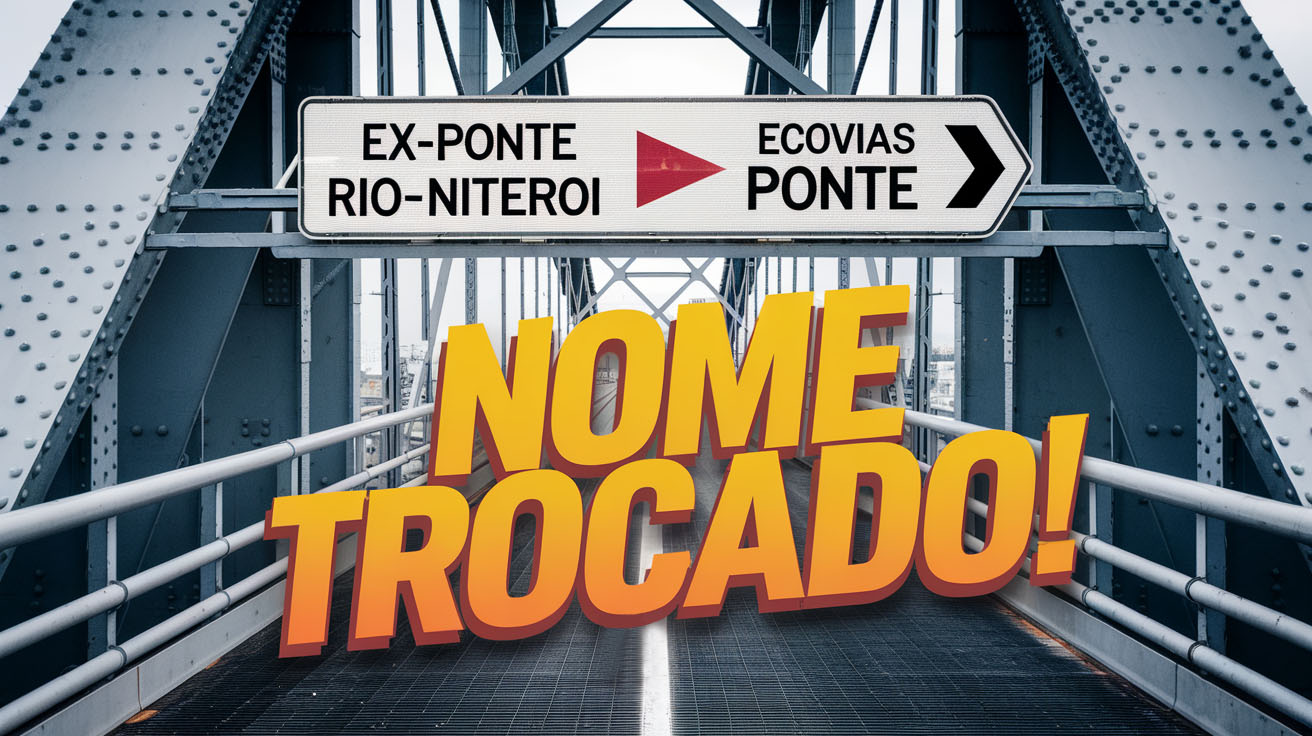

The Famous Rio-Niterói Bridge Has Just Had Its Name Changed After 50 Years! In a Million-Dollar Move, EcoRodovias Renamed the Structure to “Ecovias Bridge”. The Change Is Part of a Rebranding That Will Also Affect Other Highways. What Do You Think of This Historical Transformation?
The iconic Bridge Rio-Niterói, which crosses Guanabara Bay and connects the two important municipalities of Rio de Janeiro, has officially changed its name after 51 years.
Now, the structure is called “Ecovias Bridge”, in a decision that has generated various opinions among historians, politicians, and the population of Rio de Janeiro.
The change was announced by the concessionaire EcoRodovias, responsible for managing the road, as part of a rebranding and repositioning process.
-
How to make a 3-tier wooden toolbox that opens all at once and organizes the workshop

-
Ceará enters the map of Brazil’s mountains with 6 formations recognized by IBGE

-
A former 27-year-old engineer gave up everything, went to live in a trailer in the middle of Texas, and created the largest telescope ranch in the world: clients from anywhere control about 550 devices bolted to concrete under a sky with no light pollution via computer.

-
With approximately 30 meters in length and engines exceeding 3,000 horsepower, a single tugboat is capable of exerting more than 100 tons of pulling force and precisely maneuvering a ship nearly 400 meters long and over 200,000 tons within a port.



A Milestone in Brazilian Engineering
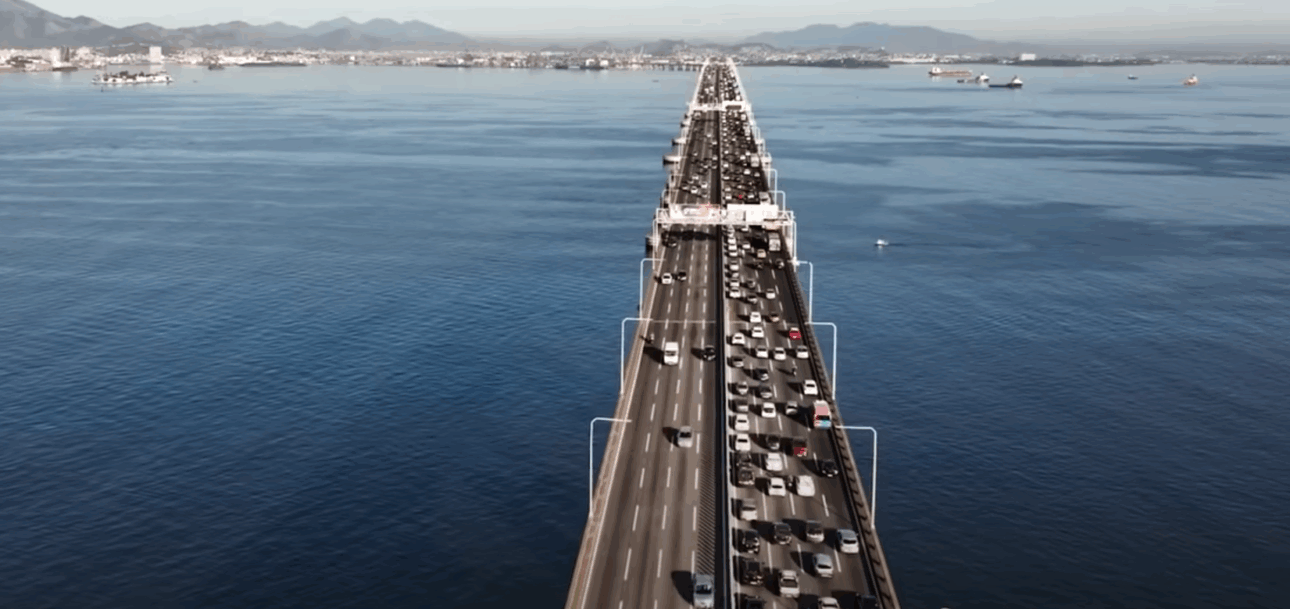
Inaugurated on March 4, 1974, the Rio-Niterói Bridge is considered one of the greatest achievements of Brazilian engineering.
With a length of 13.29 kilometers, it was, for many years, the largest bridge in the Southern Hemisphere and remains one of Brazil’s most important transportation routes.
Its construction began in 1968, under the military government’s command, and took nearly six years to complete.
Since its inauguration, the structure has been essential for travel between the metropolitan regions of Rio de Janeiro and the city of Niterói, alleviating the intense flow of ferries that used to make the crossing.
Every day, more than 150,000 vehicles cross the bridge, solidifying its essential role in the state’s road network.
The Old Name Carried a Historical Legacy
The original name of the bridge was Presidente Costa e Silva Bridge, in reference to General Artur da Costa e Silva, President of Brazil from 1967 to 1969, during the military regime.
Costa e Silva was responsible for giving the order for the bridge’s construction and is also remembered for instituting Institutional Act No. 5 (AI-5), one of the harshest decrees of the dictatorial period, which intensified censorship and political repression in the country.
Over the years, the official designation was overshadowed by the popular nickname “Rio-Niterói Bridge”, which was used daily by drivers and the population.
This designation became so ingrained that many were unaware of the official name until the recent change.
Name Change Generates Debate
The decision to rename the bridge to “Ecovias Bridge” divided opinions.
According to EcoRodovias, the company that manages more than 4,800 km of roads in eight Brazilian states, the initiative is part of a R$ 4 million investment to standardize the visual identity and strengthen the brand.
The company also announced name changes on other roads under its management, such as the Immigrants Highway, which connects São Paulo to the coast.
However, not everyone received the change well. Historians and cultural heritage specialists argue that changing the name of such a relevant symbol could lead to a loss of historical identity.
“The bridge is a landmark not only of infrastructure but also of the city’s memory. Changing its name to something commercial detracts from that legacy”, says a history professor from UFRJ.
On social media, the adjustment also generated buzz.
Many internet users criticized the fact that a public infrastructure was named after a private company, while others pointed out that the bridge had always been popularly known as Rio-Niterói, making the change irrelevant.
Impacts and Future Perspectives
The name change of the Rio-Niterói Bridge occurs in a context of new road concessions in Brazil.
The federal government has been expanding concession contracts with private companies, seeking improvements in infrastructure and road management.
EcoRodovias, for example, took over the management of the bridge in 2022 and implemented a series of improvements, including lane expansion and smart traffic monitoring.
Even though the change formalizes a new name, it is unlikely that the population will stop calling the structure “Rio-Niterói Bridge”.
As experts point out, popular names become established regardless of official decisions.
“Names of roads and monuments are defined by everyday use, and the identity of the Rio-Niterói Bridge is unlikely to change in people’s perception”, comments a carioca urban planner.
For specialists in the field, renaming the Rio-Niterói Bridge to “Ecovias Bridge” reflects a commercial strategy of the concessionaire, but also raises questions about respect for the historical and cultural memory of great national works.
In any case, regardless of the official name, the bridge will continue to be one of the most important road links in Brazil, ensuring the flow of people and goods between Rio de Janeiro and Niterói.
The discussion about the change is expected to continue, and the impact of the new identity will be measured over the coming years, as the population adopts (or not) the new name of the historic structure.





Se tivesse mudado para um nome que contribuisse com algo,que fosse significativo, histórico, ainda vá lá.
Mas o nome não diz nada com nada e não soma nada. Nós vamos chamar de ponte Rio Niteroi a vida toda.