Portuguese
  Spanish


The feat does not come from brute force, but from engineering. Propellers that rotate 360 degrees, a power-to-size ratio that far exceeds that of large ships, and the coordinated work with the pilot transform the act of docking a colossus into pure controlled geometry, executed just meters from the quay.
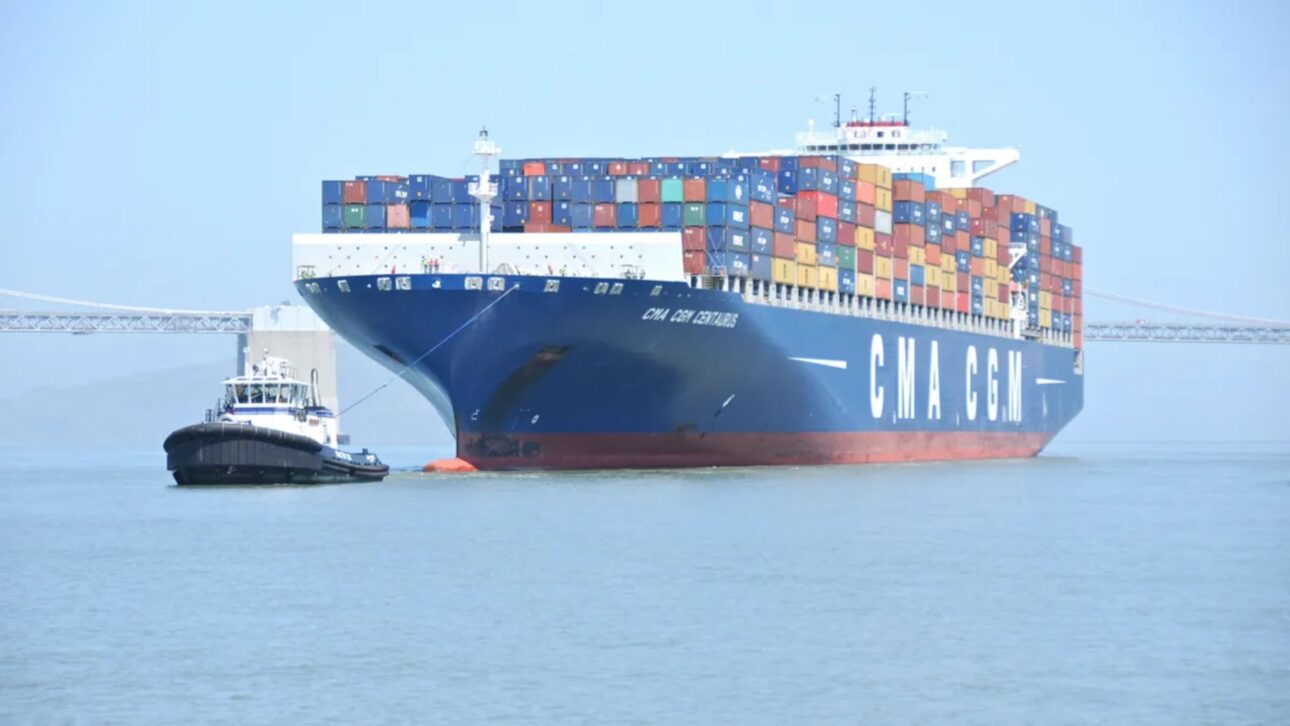
It seems to defy logic that something so small can dominate a giant of the seas. With about 30 meters in length and engines exceeding 3,000 horsepower, a single one of the most powerful tugboats is capable of exerting more than 100 tons of pulling force and precisely maneuvering a ship of almost 400 meters and over 200,000 tons within a port, in one of the most impressive demonstrations of everyday naval engineering.
These numbers, according to specialized publications in the naval sector, describe the most advanced port tugboats today, as the common tugboat usually has lower power and pulling force. Still, even the average vessels perform a remarkable job, and the more robust ones have become indispensable for safely moving the largest ships ever built. Next, we explain how a tugboat achieves this feat, what this pulling force means, and why it is a central piece in the operation of any large port.
What makes the tugboat so strong
A tugboat is, essentially, almost all engine, as it carries huge machines in a compact vessel, which gives it a power-to-size ratio far superior to that of a large cargo ship, a characteristic that underlies all its impressive thrust capacity.
-
Stingless Bee Honey from Brazil Can Cost Up to $120 a Liter, Surprises with Flavors of Wood, Citrus, and Even Cheese

-
Woman Claims to Have Spotted a Technical Pattern in Recent FIFA Tournaments, Predicts Possible World Cup Winner
-
Chevrolet Offers Chance to Win a 2026 Sonic RS for Free via WhatsApp
-
Earthquake vs. Tsunami: Which Causes More Destruction and Why One Can Be Even More Dangerous


It is precisely this configuration that allows a relatively small tugboat to generate a force capable of stopping, turning, and positioning vessels hundreds of times heavier than itself.
While a container ship is designed to move large masses in a straight line efficiently, the tugboat is designed for the opposite: to deliver a lot of force over short distances and in any direction, within the tight space of a port.
What is bollard pull
The main number that defines a tugboat has a technical name.
The capacity of a tugboat is measured by the so-called static bollard pull, known in the industry as bollard pull, which is the maximum force the vessel can exert from zero speed, usually measured in tons with the aid of a dynamometer attached to a cable and a fixed point, and it is this value that indicates whether a tugboat is suitable for a particular maneuver.
To get an idea of the evolution, according to industry publications, a typical port tugboat exerts between 30 and 50 tons of bollard pull, while the most modern and powerful models already exceed 100 tons.
This increase in power accompanies the growth of ships: the largest container ships and tankers have such a large area exposed to the wind that, on windy days, they require a lot of towing force to be maneuvered safely.
360-degree rotating thrusters
The force is only useful because it is accompanied by exceptional maneuverability.
The most modern tugboats use the azimuth system, known by the acronym ASD, in which the thrusters rotate 360 degrees, allowing the vessel to push or pull in any direction, move sideways, and rotate on its own axis without needing to turn the hull first, something essential in confined spaces like those of a port.
There are also the so-called tractor tugs, with propulsion positioned more forward and the towing point near the stern, also aimed at maximum maneuverability.
Regardless of the type, it is this ability to apply force at precise angles that transforms the task of docking a 200,000-ton ship into a matter of controlled geometry, and not trial and error, as explained by port piloting experts.
How multiple tugboats maneuver a giant ship


In practice, moving a colossus is usually a team effort.
When a large ship arrives at the port, the captain and the pilot coordinate the action of one or more tugboats, which function as a combination of brakes and steering, with one of them pressing the bow to reduce the approach speed and another pulling the stern to rotate the vessel around its pivot point, while a third may push the hull away from the dock during mooring.
This entire operation is conducted with millimeter precision.
The tugboat captain applies short bursts of propulsion, measured in seconds, always in radio communication with the pilot on board the ship.
It is this coordinated ballet, more than the isolated force of a single vessel, that ensures a giant of almost 400 meters is docked in its berth without collisions and without damage to the port structure.
Why the tugboat is essential in ports
Without these vessels, maritime trade would simply come to a halt.
Large cargo ships do not have the necessary maneuverability to dock alone in tight spaces, especially at low speeds, when their own rudders and propellers lose efficiency, and that’s when the tugboat becomes indispensable to ensure the safety of the operation, protecting the ship, the cargo, the port, and the people.
These gigantic ships circulate through ports worldwide, including the large Brazilian terminals, which also rely on fleets of tugboats to receive increasingly larger vessels.
As ships grow, so does the importance of powerful and agile tugboats capable of safely taming these colossal structures in one of the busiest and most strategic environments of the global economy.
The ability of a tugboat just over 30 meters to maneuver a ship of almost 400 meters and hundreds of thousands of tons is one of the great examples of how engineering surpasses simple brute force.
With powerful engines, thrusters that rotate in all directions, and coordinated work with port pilots, these compact vessels have become the true guardians of maritime traffic.
Next time you see the image of a tugboat next to an ocean liner or a container ship, remember that it is precision that moves the giant.
And you, have you ever stopped to think about how such enormous ships manage to dock safely? What did you think of discovering the strength and engineering behind a tugboat? Leave your comment, share your opinion, and help spread the article to those interested in naval engineering, ports, and technology.