





 Portuguese
  English
  Spanish
  4 min of reading
  17 comments


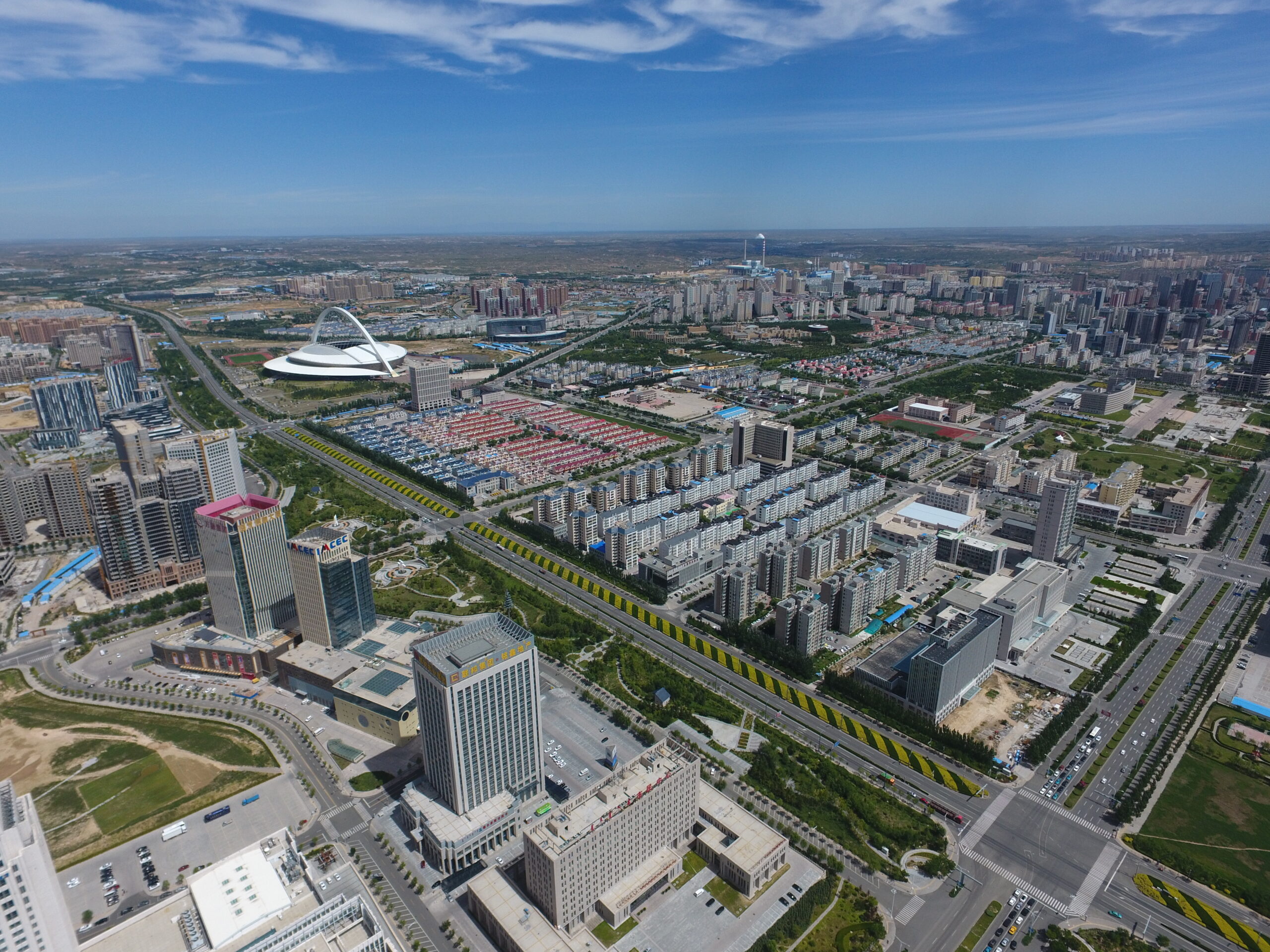


In Inner Mongolia, China Invested Billions to Build a City in the Desert, Urbanizing Over 350 km² with Infrastructure for More Than 1 Million People.
For decades, building entire cities in desert regions has always been seen as economically risky. Lack of water, hostile climate, fragile soils, and high infrastructure costs often make such large-scale projects unfeasible. Still, in the early 2000s, China decided to do just that: build a new city from scratch in the heart of the Inner Mongolian desert. The Ordos Kangbashi project did not start small. It was planned to function as a new administrative, financial, and residential center, capable of accommodating over 1 million inhabitants in a region previously dominated by semi-arid areas and low population density.
The Project Name: Ordos Kangbashi


The city is Ordos Kangbashi, a planned district of the city of Ordos in the Inner Mongolia Autonomous Region. The development gained international notoriety for its scale and the speed with which it was constructed.
More than 350 km² were urbanized, with wide avenues, complete residential neighborhoods, administrative centers, museums, libraries, hospitals, and commercial zones, all implemented in just a few years.
-
The city of Santa Catarina has begun excavating a nearly 1 km underground tunnel using controlled explosives to address the flooding problem that has plagued residents for years, with an investment of over R$ 20 million.

-
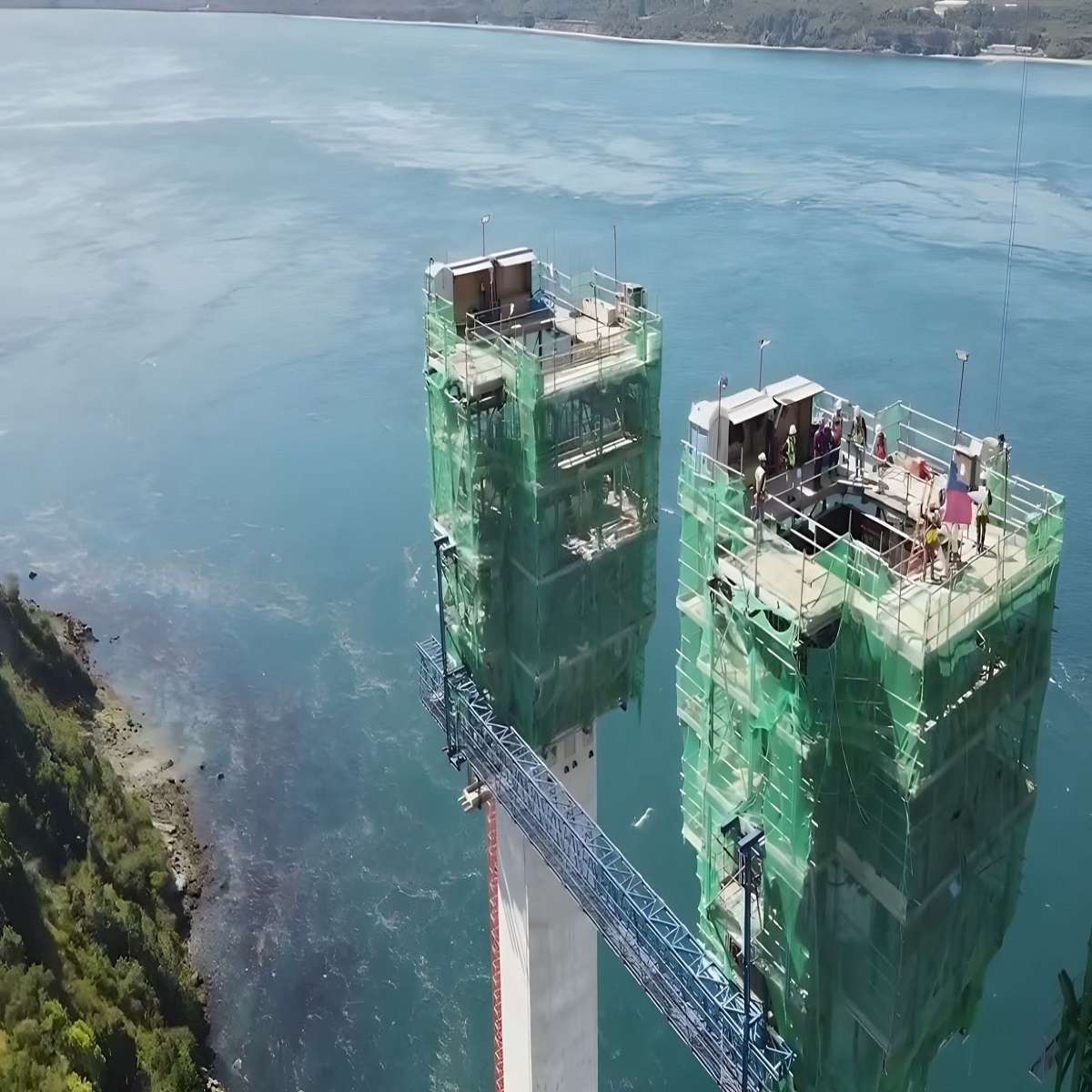
A 2,750-meter bridge begins to defy winds and currents in southern Chile, costs more than 1 trillion pesos, and promises to end the reliance on ferries by connecting Chiloé to the mainland for the first time in history.
-
The $630 million tunnel that nobody in Los Angeles knew existed collapsed 137 meters deep and trapped 31 workers — all climbed out of the rubble and emerged alive in less than an hour

-
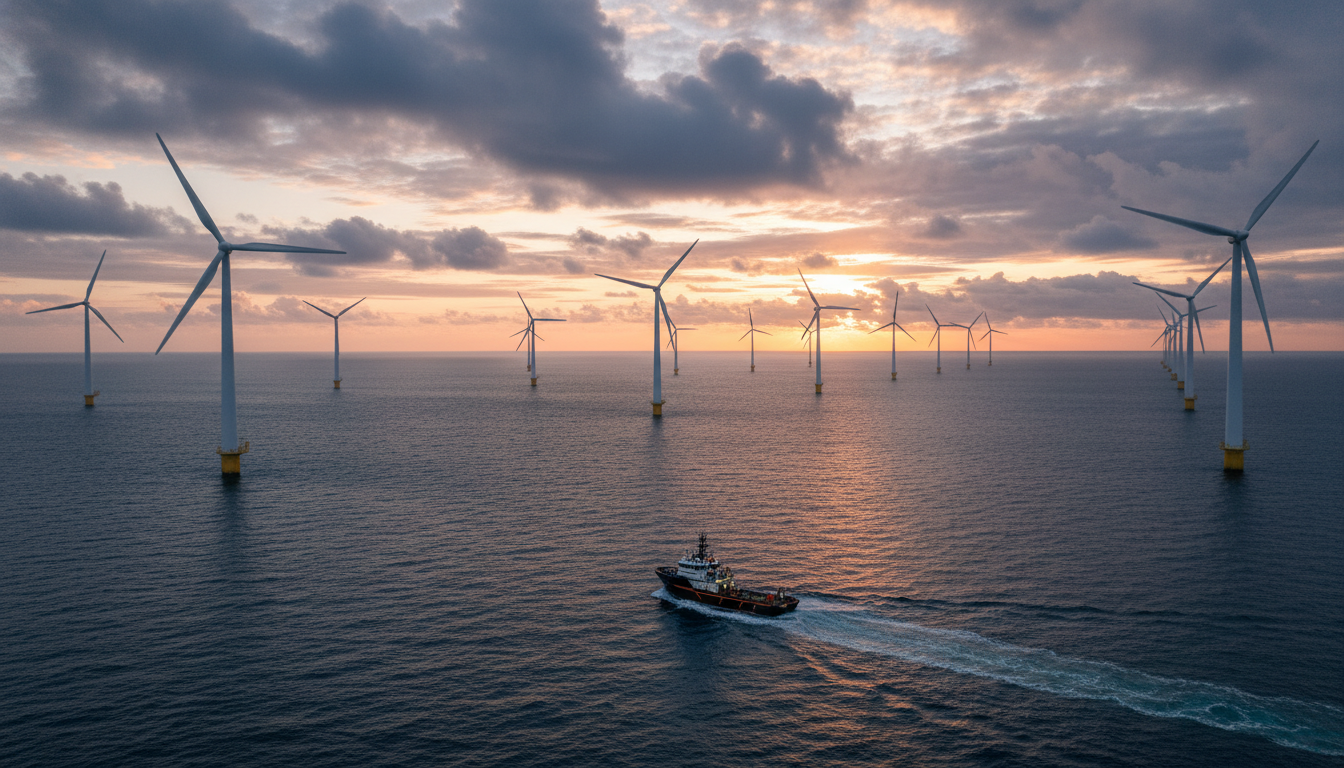
130 kilometers off the coast and with 260-meter-tall turbines, the world’s largest offshore wind farm is being assembled on the bottom of the North Sea — when complete, its 277 turbines will generate energy for 6 million homes in the United Kingdom.



Tens of Billions of Dollars in Heavy Infrastructure
The total investment in the project is estimated at tens of billions of dollars, considering roadworks, water, energy, sewage networks, public buildings, and housing.
The financial backing primarily came from regional revenues through coal and natural gas mining, activities that made Ordos one of the wealthiest cities in China in terms of per capita income at the peak of the energy boom.
These resources allowed for something rare: build first, occupy later.
Urban Engineering in a Hostile Environment
The technical challenge was enormous. The soil in the region has sandy and unstable areas, requiring base treatment, compaction, and deep foundations in many sections.
The paving of avenues and the construction of large buildings required engineering solutions similar to those used in desert areas of the Middle East.
Moreover, the extreme climate, featuring harsh winters and dry summers, required urban systems capable of operating in a wide temperature range.
Water: The Biggest Bottleneck of the Project
No city can be born in the desert without addressing the water issue. In Ordos Kangbashi, the water supply relies on controlled capture of regional water resources, reservoir systems, reuse, and transfer of water from nearby areas.
Water management became a central element of urban planning, as without it, large-scale occupation would be unfeasible.
Skyscrapers, Avenues, and Entire Neighborhoods Before the People
One of the most impressive aspects of the project was the order of factors. Residential skyscrapers, monumental public buildings, and expressways were built before the mass arrival of the population.
This created the image of a “ghost city,” frequently portrayed by international media. However, from a technical standpoint, the city operated exactly as planned: infrastructure ready awaiting progressive occupation.
Projected Capacity for More Than 1 Million Inhabitants
The urban plan anticipated a population of over 1 million residents, distributed across dense neighborhoods, with transportation, services, and public areas. This scale required the advance sizing of electrical networks, sanitation, mobility, and urban equipment.
Few cities in the world have been planned to grow in this way, with almost all infrastructure implemented before actual demand.
The Clash Between Planning and Demographic Reality
Despite its grandeur, initial occupancy was slow. Population migration did not keep pace with the pace of construction, and Ordos Kangbashi became a symbol of an urban model based on projected growth, not organic.
Over time, however, the population began to increase, fueled by resettlement policies, administrative expansion, and more affordable housing prices.
A City That Exists Even When It Seems Empty
Technically, Ordos Kangbashi has never been a “ghost town.” The systems work, the buildings are inhabited, and the services operate. What stands out is the discrepancy between the scale of infrastructure and actual population density.
From an engineering and urbanism perspective, the project remains one of the largest experiments of urbanization in a desert environment ever undertaken.
The case of Ordos Kangbashi raises important questions about the future of cities: to what extent is it viable to create giant urban centers before demand exists? And how far can engineering sustain cities in naturally hostile regions?
Regardless of the criticisms, the fact is that China achieved something rare: transforming hundreds of square kilometers of desert into a functional city, with complete infrastructure, monumental buildings, and capacity for more than one million people.
A Real-Scale Urban Laboratory
Ordos Kangbashi is not just a city. It is an urban laboratory, where engineering, state planning, and economic ambition meet. Just as Kuwait transformed desert into an urban oasis by the seaside, China attempted to do the same in the heart of the continental interior.
The result is one of the boldest urban experiences of the 21st century and a reminder that, when there are resources and engineering, even the desert can become a city.


It’s not entirely a “ghost town”. When it was completed after a few years the population was 20 to 30 thousand. Not the million it can support but by 2025 population rose to 130 thousand and slowly growing.
Chinese are always ahead of the game whatever you think of them. Look what they’re doing with the deserts. Also solar energy. Well it is an ancient and amazing culture. It’s not perfect but then again, look at the United States or should I say America because it’s definitely not United hopefully it will be at some point once again make America United again cuz it’s definitely not making America great just the opposite. Of course if it was up to the president he could get rid of the whole other party who he calls evil. So I don’t think we can really talk about Xi ping the president or prime minister of China at this point!
Seems last president allowed millions of unvented people in , allowed statues of American history destroyed, allowed inflation to spike , allowed the energy sectors prices including gas to spike,allowed a machine to pardon people’s crimes b4 charges were even brought…….T.D.S.
A one million population city sounds big to those of us who live in the west, but in China it’s a small town.
Whilst some criticise Chinese policy, western cities are littered with people living in tents or in cardboard boxes.