





 Portuguese
  English
  Spanish
  5 min of reading
  1 comment


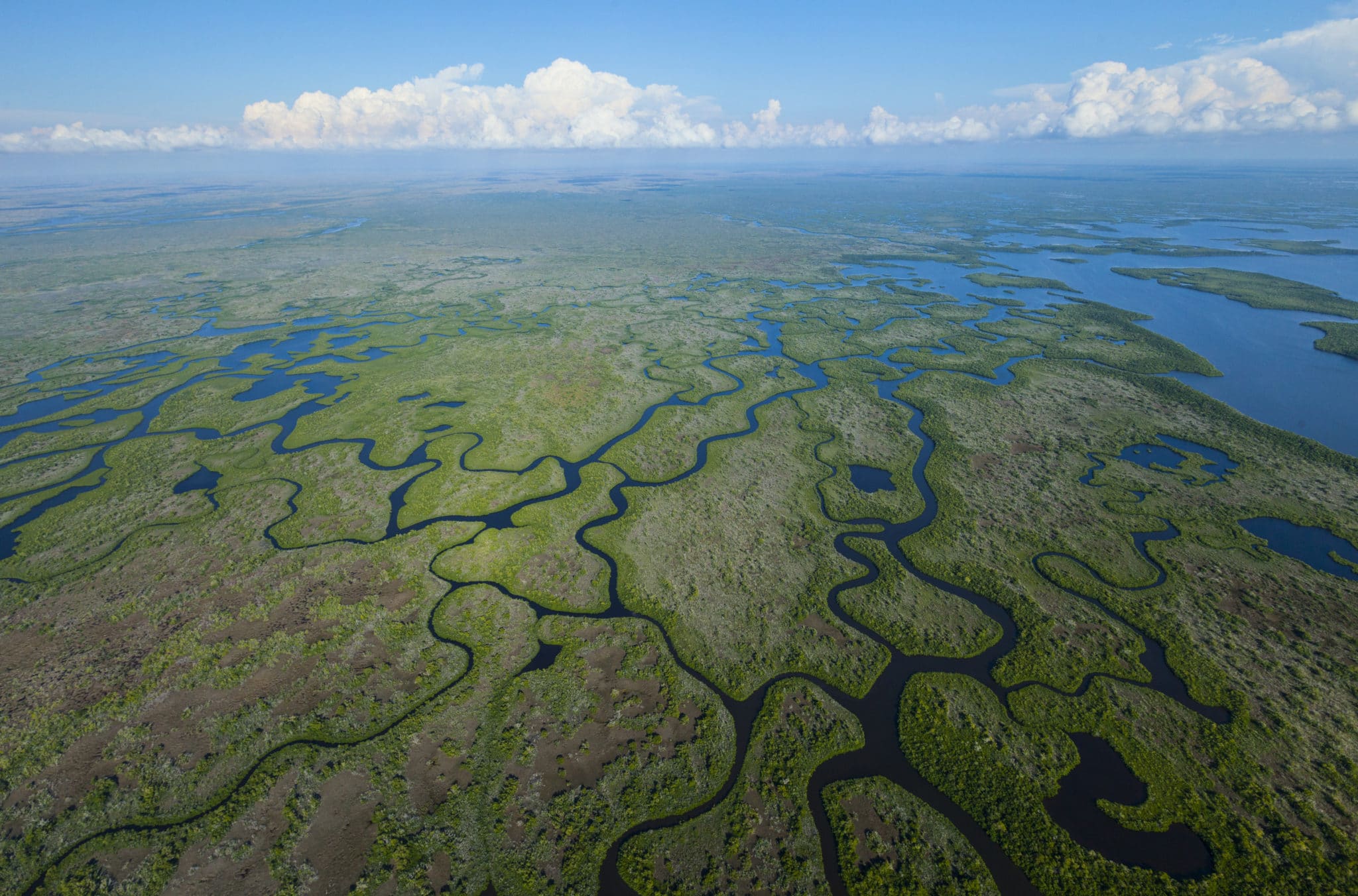


Excavators Close Thousands Of Km Of Channels, Move Millions Of M³ Of Earth And Try To Restore The Natural Flow Of Water In The Everglades After More Than 100 Years Of Aggressive Drainage.
For more than a century, South Florida treated water as an enemy. To contain flooding, expand cities, and make room for agriculture, a vast network of artificial channels, levees, and gates was excavated and operated continuously. The result was the progressive drainage of one of the planet’s most complex ecosystems: the Everglades. Now, in a historic reversal, excavators and heavy machines are working to undo the engineering of the past and return water to the path it has followed for millennia.
The effort is known as the Comprehensive Everglades Restoration Plan, one of the largest and most expensive environmental restoration projects ever undertaken.
The Largest Artificial Drainage System Ever Built In Swamps
The transformation of the Everglades began in the early 20th century. Over the decades, thousands of kilometers of channels were excavated, accompanied by hundreds of kilometers of levees and dozens of pumping stations. The goal was simple: accelerate the flow of fresh water to the ocean.
-
A new airport will be built with an investment of R$ 1.8 billion, will have a 3.5 km runway, a 35,000 m² terminal, and will occupy a gigantic area of 30,000 hectares to transform logistics, tourism, and air transport in Gabon.

-
A 90-day modular home goes viral in Brazil with the promise of a kit starting from R$ 20 thousand, less waste, and a catch that many people only discover after starting construction on their own land.

-
656 apartments and units starting from R$ 234 thousand will build a new vertical neighborhood in Blumenau, transform Velha Grande in three years, and expand the Minha Casa, Minha Vida program’s investment in the city’s expansion.
-
WEG created a battery storage system that is transforming an old mine in Finland into a renewable energy hub. The project is one of the first hybrids in the Nordic country to combine solar generation with storage and helps stabilize the national electricity grid.




Technically, the system worked. Hydrologically, it was a disaster. Water began to flow too fast, in erratic volumes, leaving vast areas permanently dry while others experienced abrupt flooding. The slow and continuous flow — an essential characteristic of the ecosystem — was disrupted.
The Physical Impact: When The Swamp Begins To Sink


Prolonged drainage not only dried entire areas but also lowered the soil. Peat exposed to air oxidized, compacted, and literally disappeared. In some regions, the ground sank more than 1 meter over the century.
This sinking further aggravated the problem: areas that once stored water can no longer hold it, creating a cycle of degradation that is hard to reverse.
The Turning Point: Engineering To Restore, Not To Drain
The CERP is born from a logic opposite to that which dominated the last century. Instead of accelerating water out of the system, the plan seeks to retain, redistribute, and slow down the flow.
This involves large-scale physical actions:
- closing and filling artificial channels
- removing or lowering levees
- reconstructing natural beds
- controlled lowering of the soil to restore original hydrology
- annual redirection of billions of m³ of fresh water
Each stage requires millions of cubic meters of earth movement, done with excavators, tractors, trucks, and dredges operating continuously.
Thousands Of Kilometers Being “Wiped Off The Map”
One of the most symbolic actions of the CERP is the definitive closure of channels excavated throughout the 20th century. These channels, responsible for sucking water from the swamps, are being sealed with local material, reconfigured, or completely eliminated.
In cumulative terms, the plan envisions direct interventions in thousands of kilometers of hydraulic infrastructure, something rare even in large civil engineering projects.
Lowering The Soil To Save The Ecosystem
In many areas, it is not enough to close channels. The already lowered soil needs to be remolded to allow water spreading. Machines remove compacted layers, create micro-reliefs, and restore subtle height differences that determine where the water stays, for how long, and at what speed it moves.
This precision work on a continental scale is one of the less visible — and most critical — aspects of restoration.
Sufficient Water For A Metropolis, Redirected To Nature
The CERP involves the redirection of billion of cubic meters of fresh water per year. Part of this water, which was previously quickly discharged into the ocean, is now stored in natural areas and gradually released, mimicking the historical hydrological pulse.
This redesign also protects human supply. By keeping fresh water in the system longer, the project helps to prevent saltwater intrusion into the aquifers that supply millions of people in South Florida.
Measurable Ecological Benefits
Where water begins to flow slowly again, the effects are visible. Areas that were once dry begin to support typical swamp vegetation. Species of aquatic birds return. Fish and invertebrates regain reproductive cycles interrupted decades ago.
The increased retention of water improves habitat quality, reduces peat fires, and restores entire food chains.
Besides biodiversity, the CERP serves as protection against extreme events. Restored swamps absorb heavy rains, reduce flood peaks, and cushion prolonged droughts. In a climate change scenario, this capacity for natural regulation becomes a strategic asset.
Unlike rigid levees, swamps do not fail abruptly: they dissipate energy gradually.
Unprecedented Cost, Time, And Scale
The Comprehensive Everglades Restoration Plan is a decades-long project, with estimated costs of tens of billions of dollars over its entire execution. It involves federal, state, and local agencies, as well as continuous adjustments as results are monitored.
It is not about “completing” the restoration, but restarting the system and keeping it operating.
One of the central lessons from the CERP is that removing old infrastructure is often more complex than building it. Channels, levees, and pumps created agricultural and urban dependencies that need to be carefully compensated to avoid new risks.
Therefore, each closed channel is accompanied by alternative drainage and storage solutions, maintaining water security while the ecosystem recovers.
A Global Laboratory For Large-Scale Restoration
What is being done in the Everglades is being closely observed by engineers and environmental managers from all over the world. Few places have attempted to reverse more than 100 years of aggressive engineering with such extensive physical actions.
The CERP has become a reference for projects seeking to correct historical mistakes without completely abandoning existing infrastructure.
The excavators that today close channels are direct descendants of those that opened them decades ago. The difference is the objective. Instead of expelling water, they now work to hold it, spread it, and slow it down.
By moving millions of cubic meters of earth to erase artificial pathways and lower the soil, the project seeks to return to the Everglades what should never have been taken: time and space for water to do its job.






Um abençoado trabalho