





 Portuguese
  English
  Spanish
  4 min of reading
  0 comments


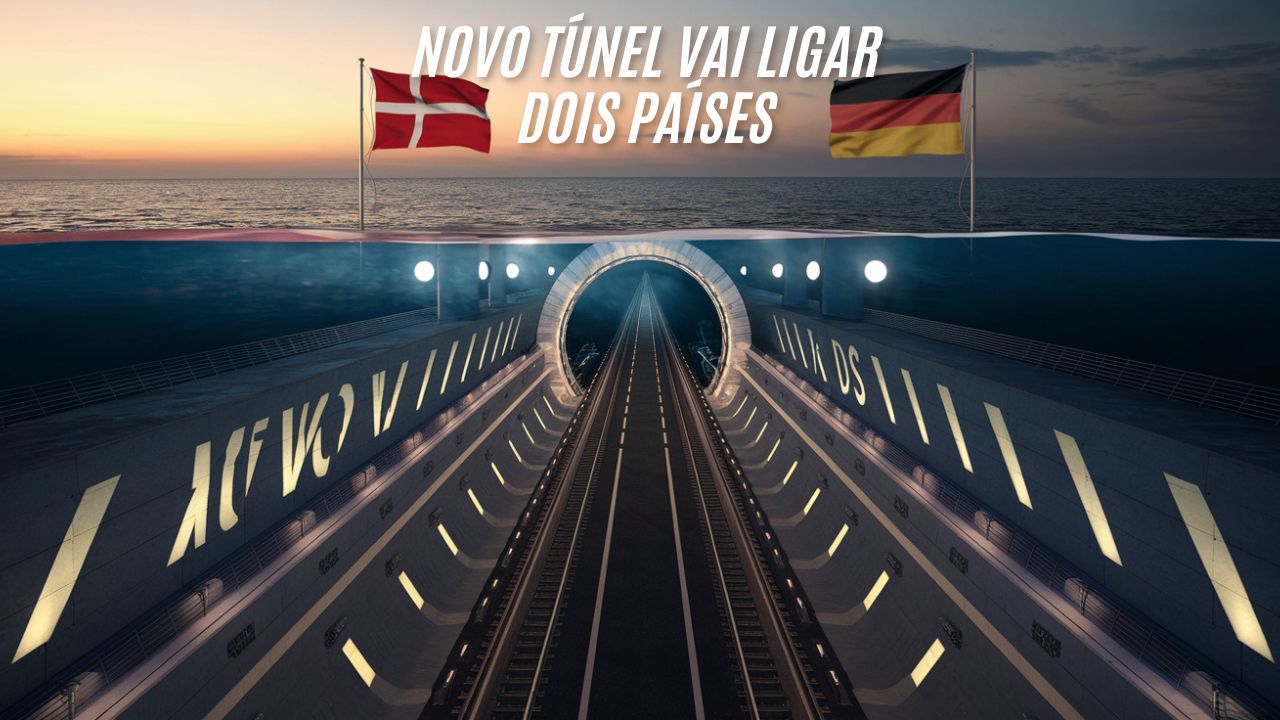
With 17 Km in Length and Expected to Be Completed by 2029, the New Underwater Tunnel Will Reduce Travel Time from 45 Minutes to Just 7, Revolutionizing Transport Between Denmark and Germany.
Imagine traveling between two countries in just seven minutes by train or ten minutes by car. This is no longer a distant dream! The new Fehmarnbelt underwater tunnel, connecting southern Denmark to northern Germany, promises to revolutionize European transport. Valued at €6.2 billion, this epic engineering project will change the way tourists and workers travel through the region.
The Revolution in Transport Between Denmark and Germany
Currently, the journey between Lolland, Denmark, and Fehmarn, Germany, requires a long ferry crossing that takes about 45 minutes. With the new underwater tunnel, the time will be reduced to just 10 minutes by car and seven minutes by train. That’s enough time for a quick coffee!
In addition to facilitating travel, the tunnel will be an attraction for tourism in both nations. Residents and visitors will be able to explore new destinations with ease, stimulating the local economy and making everyday life simpler. Imagine a Dane going to Germany for a casual lunch or a German visiting Copenhagen without spending the whole day on the road.
-
A man takes a simple farm cattle trough and transforms it into a fully motorized boat by lining the tank with plywood, sealing everything with epoxy, and installing an outboard motor.

-
In just 24 days, China erected 7,733 foldable houses alongside nearly 10,000 tents and sheltered over 47,000 residents in one of the highest and most inhospitable regions on the planet, in what is considered the fastest housing deployment in history.
-
With an eye on consumers from Santa Catarina, Paraná, Rio Grande do Sul, and Argentina, Havan is launching a mega store worth R$ 90 million on the side of a busy highway, in an investment that Luciano Hang classifies as one of the most important in the expansion.
-
Thousands of houses in Brazil have slabs and pillars concreted with construction site mixers, and most owners are unaware that, without strict control of the dosage, this can compromise the structure’s strength and create risks that only appear years later, according to engineers and technical standards.


Impressive Details of the New Underwater Tunnel
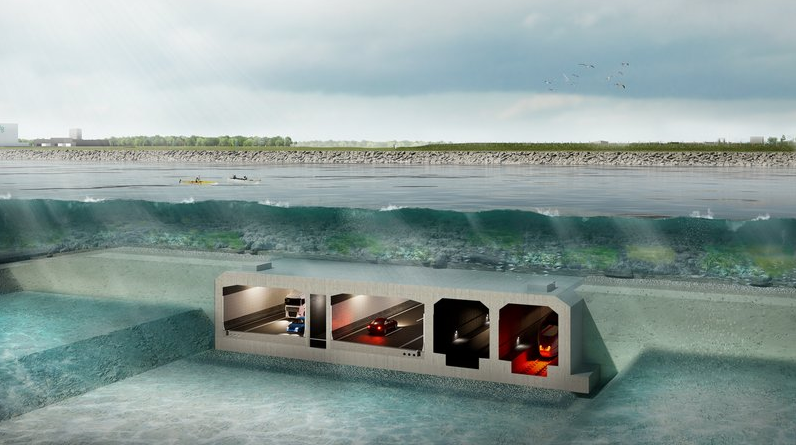
With 17 kilometers in length, the Fehmarnbelt will be the longest underwater tunnel in the world. It is designed to accommodate both a modern highway and high-speed rail lines, facilitating mobility for cars, trucks, and trains.
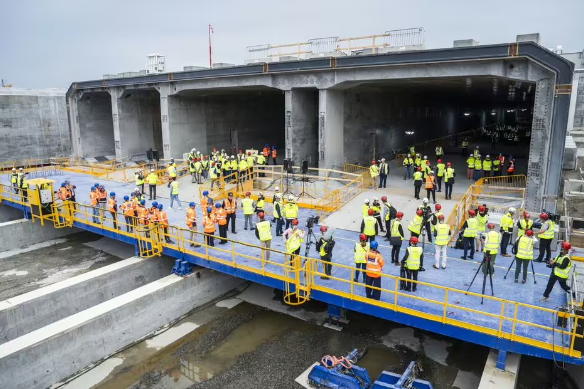
The construction follows strict environmental standards, seeking minimal impact on marine ecosystems. Specialized ships monitor every stage of the work, ensuring that adverse effects are compensated by the creation of new natural areas. This is a true combination of cutting-edge technology and commitment to the environment.
Environmental Benefits and Sustainability of the New Tunnel
In addition to connecting two countries, the new underwater tunnel will have a direct impact on the fight against climate change. By providing a shorter route for rail and road transport, the tunnel saves 160 kilometers of travel, reducing fuel consumption and CO2 emissions.
The expectation is that rail transport will become the preferred choice due to its efficiency and sustainability. Electric trains, which are significantly less polluting, will help reduce the number of trucks on the roads, benefiting both the environment and mobility.
As highlighted by Michael Løvendal Kruse from the Danish Society for Nature Conservation, the project represents a significant advancement in climate terms: “It will strengthen the transport of goods and passengers in an ecological way.”
The Economic and Social Impact
The Fehmarnbelt is more than just a link between two points on the map. It will be an economic development corridor for Scandinavia and Central Europe. Companies will be able to transport goods more quickly, facilitating international trade and stimulating the local economy.
The project will be financed by Denmark, with costs being amortized by the tolls that will be charged in the future. Over time, the tunnel will pay for itself and still benefit millions of people.
It practically integrates Europe, connecting Copenhagen in Denmark to the road and rail network of Germany. This interconnection will make transport more accessible and efficient.
Expectations for the Future
With completion expected in 2029, the Fehmarnbelt will be a game-changer for transport in Europe. As the tunnel takes shape, it reinforces the importance of sustainable and innovative infrastructure solutions. The coming years will be crucial to ensure that each stage is completed with quality and safety.
Once finalized, the tunnel will become a global benchmark in connectivity, efficiency, and sustainability.
A Milestone for Europe
The new Fehmarnbelt underwater tunnel is not just an engineering feat; it is a revolution in European transport. Reducing travel time from 45 minutes to just 7, it promises to transform the daily lives of millions of people and strengthen the economy and tourism between Denmark and Germany.
The project shows how it is possible to combine technology and sustainability, ensuring a greener future for all. If you plan to travel through the region soon, get ready for a much faster and more efficient experience.







-

-

11 people reacted to this.