





 Portuguese
  English
  Spanish
  3 min of reading
  15 comments


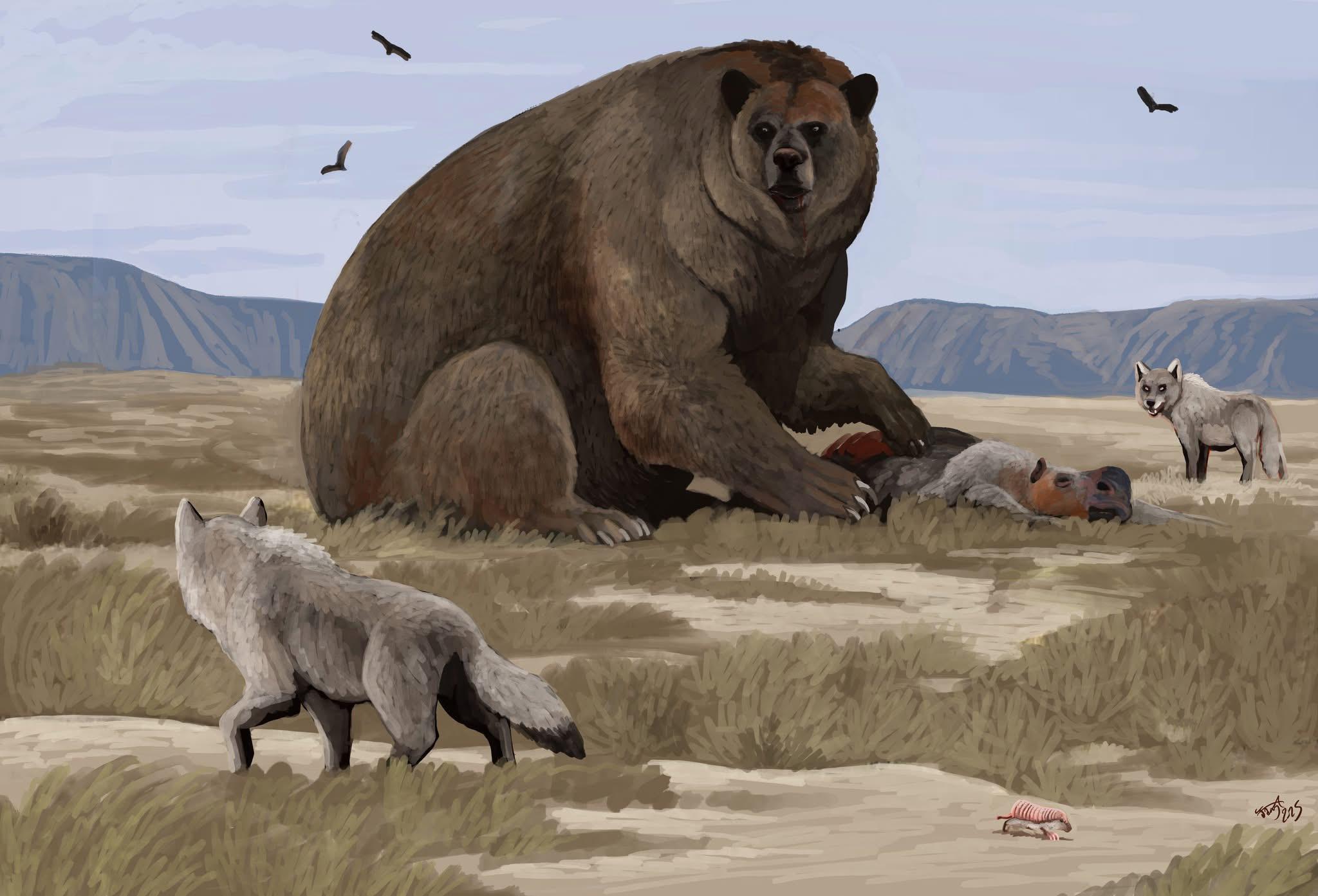


With Up to 3.5 Meters Tall and Weighing Over 1.5 Tons, the Arctotherium Angustidens Was the Largest Bear Ever Recorded and One of the Largest Terrestrial Carnivores in History.
Long before polar and brown bears dominated forests and frozen regions, a terrestrial colossus walked through South America and completely redefined the limits of size among terrestrial carnivores. The Arctotherium angustidens, a prehistoric short-faced bear, is now recognized by science as the largest bear that ever existed — surpassing any living or extinct species in body mass.
The largest fossils attributed to the Arctotherium angustidens indicate an animal capable of reaching between 3.4 and 3.5 meters in height when standing on its hind legs. Its weight is estimated to be between 1,300 and 1,600 kilograms, and it may have exceeded 1.5 tons in the most extreme individuals.
For comparison, an adult male polar bear rarely weighs more than 700 kg. This means that the Arctotherium could have been more than double the weight of the largest living bear today.
-
A surgical gel that costs cents restored the vision of 7 out of 8 patients who had lost their ability to see due to the collapse of their own eyes.

-
A Brazilian lost his job to artificial intelligence, moved to a 28-square-meter styrofoam house in a slum in China, pays R$ 30 in rent per month, and says he feels like he is traveling every day.
-
Archaeologists were exploring a cave in Alabama when they identified a giant drawing on the ceiling that had remained invisible for centuries, and upon reconstructing it in 3D, they discovered a sacred 3-meter snake that changes the history of indigenous art in the USA.

-
Every year, artists from around the world travel to Sweden to sculpt 100 hotel rooms made entirely of ice and snow, with an internal temperature of minus 5 degrees, and guests sleep in sleeping bags on ice beds.




Where It Lived and When It Dominated the Continent
The Arctotherium angustidens lived during the Lower Pleistocene, roughly 2 million to 1 million years ago, a period marked by large giant mammals, such as giant ground sloths and mastodons.
Its fossils have been found mainly in Argentina, Uruguay, and parts of Brazil, indicating that it occupied vast areas of South America in a prey-rich environment.
The Anatomy of a Superpredator


Despite its colossal size, the Arctotherium was neither slow nor clumsy. Its anatomy combined:
- wide and short skull, typical of short-faced bears;
- extremely robust jaw, capable of crushing bones;
- long and muscular limbs, ideal for quick movement in open terrain;
- large claws, useful for both hunting and competing for carcasses.
This combination placed it at the absolute top of the terrestrial food chain at the time.
Dominant Hunter or Scavenger?
Studies indicate that the Arctotherium angustidens was an opportunistic omnivore, but with a strong tendency toward hypercarnivory. It likely:
- hunted weakened large herbivores;
- easily expelled other predators from carcasses;
- competed with saber-toothed cats and large prehistoric canids — almost always gaining the advantage due to size.
The mere presence of an adult individual would be enough to scare off any other carnivore from the territory.
Why It Reached Such Extreme Size
The gigantism of the Arctotherium is explained by a rare combination of factors:
- abundance of herbivorous megafauna;
- absence of similarly sized competitors;
- favorable climate and vast open plains;
- evolutionary advantage of size for territorial dominance.
This set allowed the species to surpass all known limits for bears.
The Extinction of the Largest Bear in History
The Arctotherium angustidens disappeared long before the end of the Pleistocene. Climate changes, reduction of megafauna, and rapid environmental alterations made the survival of such a large carnivore that depended on bulky prey unviable.
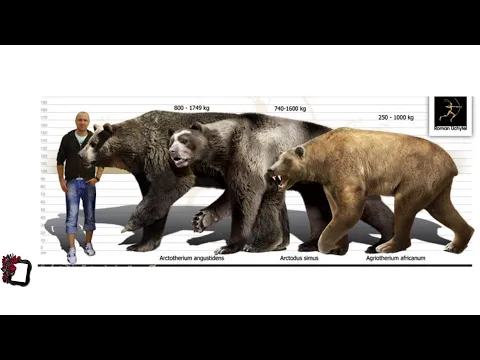
With its extinction, no other bear has ever reached similar proportions, not even the largest modern bears.
The Arctotherium angustidens represents the absolute pinnacle of gigantism among bears. It was not only the largest of its group but also one of the largest terrestrial carnivores that ever walked the Earth.
Its existence proves that, at certain moments in natural history, evolution pushed size to the extreme — creating creatures that today seem almost impossible.





Meu vizinho tem uma criação desses monstros são uns 15 muito maiores
Leave a comment. ????? A, hey 👋👋♂️. Put on my Facebook, Twitter; and Instagram pages…plus. .. interesting 🤔 story to me ..
Hey guys, text me in telegram: Nacdown