Portuguese
  Spanish


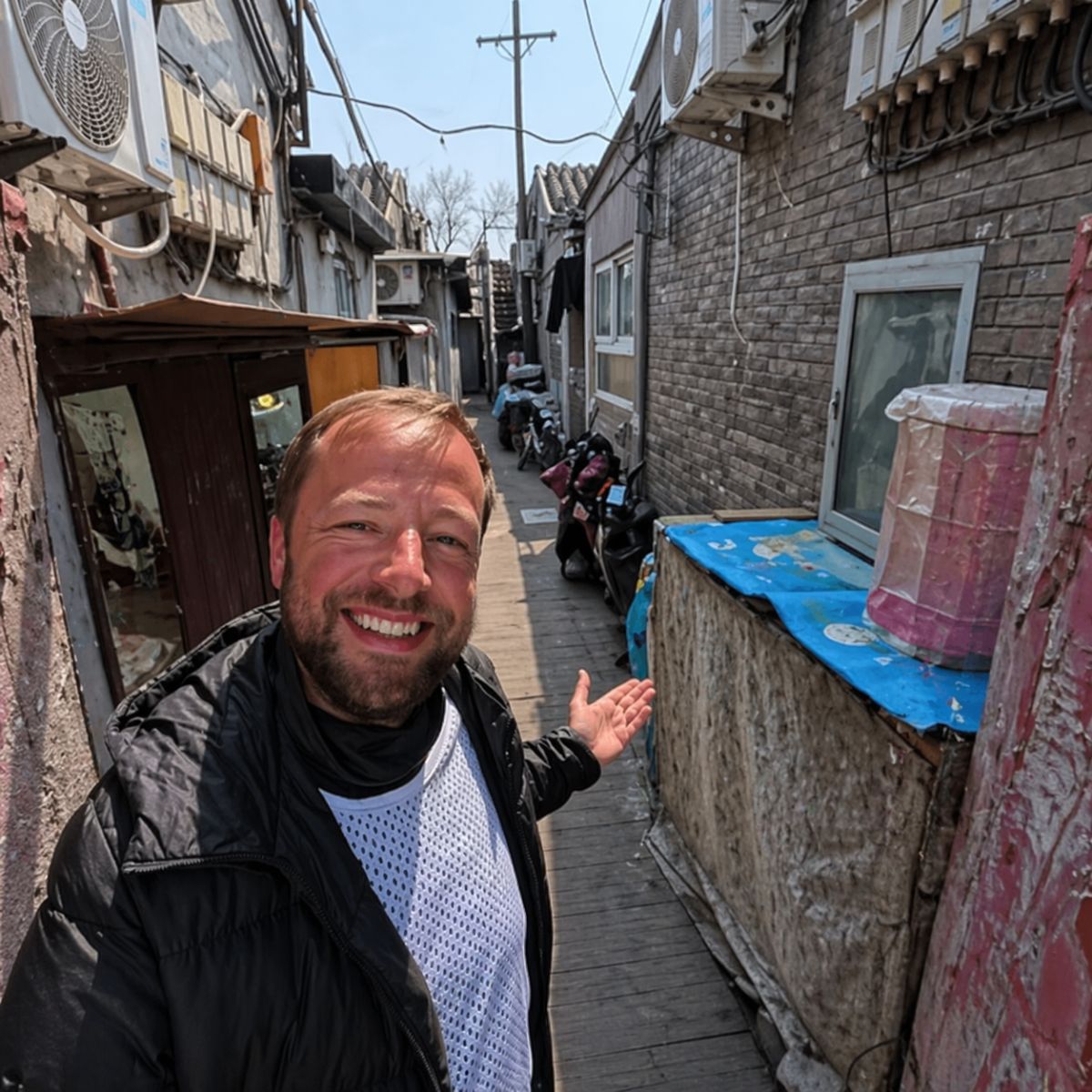

Maurício da Cruz, 37 years old, lived in Beijing and worked as a translator of electronic games from Mandarin to Portuguese until artificial intelligence eliminated his job. Without income, he moved to a 28 square meter house made of Styrofoam in a historic courtyard in China, where he pays the equivalent of R$ 30 in rent per month and today lives by creating content about the country for over 1 million followers.
Maurício da Cruz’s story with China began when he was 11 years old and his father was transferred for work to Beijing. It was the 2000s, and the Brazilian boy was so fascinated by the country that, upon returning to southern Brazil two years later, he decided that one day he would return to stay. In 2012, he packed his bags for good. He studied Mandarin, was hired as a translator for electronic games, and built a stable life in the Chinese capital. Until artificial intelligence took his place.
Without a job and unable to afford the costs of Beijing, Maurício found a solution that seems straight out of another era. He moved to a Styrofoam house of 28 square meters in one of the city’s historic courtyards, where the rent costs the equivalent of R$ 30 per month. The property is in an area that Brazilians would recognize as a slum, but in China it has roots in a housing system created during the communist period. Today, the man from Rio Grande do Sul lives there with his Chinese wife, produces videos about daily life in the country, and has over 1 million followers on social media.
How a rent of R$ 30 is possible in downtown Beijing

The amount of rent is not a result of luck or negotiation. The house where Maurício lives is part of a system called danwei, the old “work units” that organized employment and housing in China until the economic reforms of the late 20th century. State-owned companies and public agencies distributed apartments or rooms to employees as a benefit, with symbolic or subsidized rents. The right to live in the property belongs to Maurício’s wife’s mother, who worked for a state-owned company in the 1990s.
-
Japanese Botanist Akira Miyawaki Plants 30,000 Trees on a Tennis Court-Sized Plot, Intentionally Sacrificing Many to Accelerate Forest Growth; Miyawaki Method Has Spread Over 40 Million Trees Across 15 Countries

-
Couple Converts Retired U.S. Navy Research Barge into Off-Grid Floating Home on Idaho Lake with DIY 3-Stage Water Filtration System Using UV Light
-
Brazilian Military Police Officer Turns Family Farm into Internationally Certified Guava Producer, Eyes Exports to UK, Portugal, and Canada After Cooperative Boosts Sales by 580%

-
Man Builds Entire Treehouse in 21 Days Without Spending a Cent, Using Free Wood Collected from the Forest, and Creates a Structure That Slowly Rotates Around Its Own Trunk




In practice, the employment link provided access to housing, and in many cases, this right has been maintained within families over the decades. The state-owned company continues to be the “owner” of the space and allows rent to be charged at a price far below the market rate. In a city where the square meter is worth a fortune, Maurício pays R$ 30 per month for 28 square meters in the city center, a contrast that seems absurd but exists thanks to this legacy of the Chinese socialist system.
Inside the foam house: 28 square meters with air conditioning

According to information released by the G1 portal, the foam house is a portrait of the contrasts that define urban life in China. On the outside, the foam coating reveals the age and precariousness of the original construction. On the inside, Maurício and his wife made a complete renovation: they installed air conditioning, renewed the finishes, and transformed the space into a functional studio. It is 28 square meters that house everything the couple needs for daily living.

The bathroom is a recent achievement. Maurício’s wife lived without her own bathroom until she was 20 years old, using the public restroom near the courtyard, as many neighbors still do. The construction of the bathroom was done as an informal extension, a common practice in this type of area. According to Maurício, occupying an empty space and putting up a wall is not legalized, but it has been tolerated for decades in the historic courtyards of Beijing. Some residents have managed to expand their properties this way, while others continue to live in rooms of 10 to 15 square meters without basic infrastructure.
Life in a historic courtyard where wealth and poverty meet
The courtyards where Maurício lives are called siheyuan, groups of rooms organized around a common space that, before the communist revolution, belonged to wealthy families. After the Communist Party took power, the properties were confiscated and redistributed among various families. Over time, the courtyards were further subdivided to accommodate new residents, many linked to state-owned enterprises.
The result is an intense coexistence among neighbors with very different profiles. There are those who have witnessed China’s economic growth and live comfortably, and there are those who still collect recyclables to supplement their income. Maurício says that privacy is limited: when he leaves his house, he comes face to face with his neighbor’s door. But the security makes up for it. According to him, packages are left at the door and no one touches them, a level of trust that the Brazilian says he has not experienced anywhere else.
How artificial intelligence took Maurício from translation to digital content
The loss of his job as a translator was the turning point. The evolution of artificial intelligence made human translation of video games unnecessary, and Maurício found himself without the main source of income that had supported his life in China for years. Moving to the styrofoam house was a way to cut costs to a minimum and gain time to find a new activity.
The solution came from social media. Maurício began producing videos showcasing daily life in the historic courtyards and cultural curiosities of China, and the interest from Brazilians was immediate. In just one month, he gained 300,000 followers on Instagram. On Facebook, there were another 120,000 in just a few weeks. Monetization began generating revenue: almost $500 in less than two weeks just from views. Today, he has over 1 million followers and is already planning to create a travel agency called “Endless China” to bring groups of Brazilians to the country.
The sensation of someone who has lived in China for 13 years and is still surprised
Even after more than a decade living in the country, Maurício says that China keeps alive a feeling that rarely survives routine: that of being on a journey. The flavors, the people, the culture, and the constant transformation of the country renew the charm every day. In smaller cities, he says that people notice him, want to take pictures, and show an open curiosity that makes him feel welcome.
The rapid growth of China also fuels this feeling of permanent novelty. Maurício says that when he travels to Brazil and returns, he always finds changes in the country, things that have emerged during his absence. For him, living in China is like having bought a ticket for a journey that never ends, with the advantage of paying R$ 30 in rent and living in one of the most dynamic urban centers on the planet, even if it’s in a styrofoam house of 28 square meters.
Would you live in a 28 square meter house paying R$ 30 in rent in exchange for living in China, or would the lack of space and privacy be too much for you? Tell us in the comments what you think of Maurício’s story and whether his lifestyle seems like an adventure or a sacrifice.