Portuguese
  Spanish


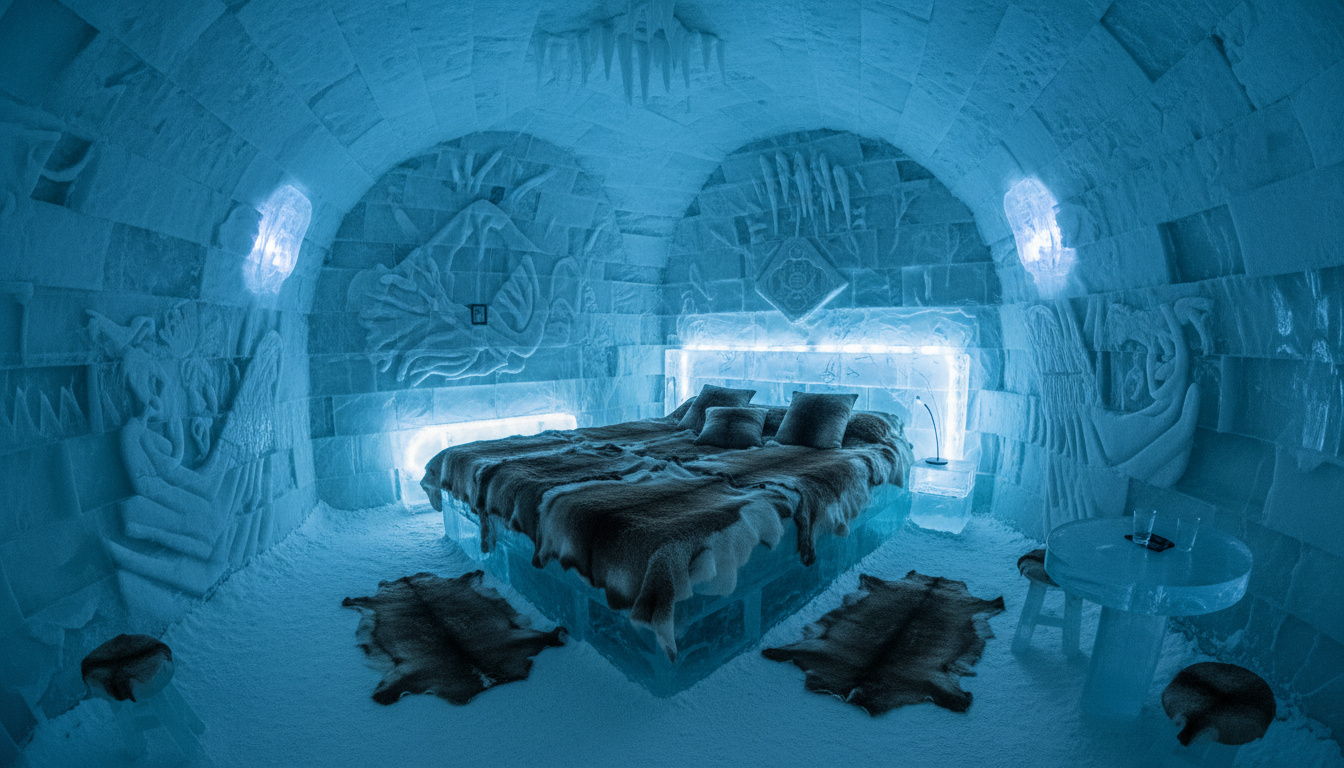

The hotel is built starting in November, receives guests from December to April, and in May it starts to melt, the ice returns to the Torne River, and the following winter everything starts over from scratch
Every autumn, when the temperature in Jukkasjärvi drops to -20 degrees, a team of workers begins to harvest ice from the Torne River.
There are approximately 5,000 tons of crystal-clear ice, cut into huge blocks.
With these blocks and more compacted snow, they build an entire hotel: walls, ceiling, columns, beds, tables, chandeliers.
-
Son of farmers, he started at the age of 12 working in a pharmacy in the countryside of Paraná, saw his partner declare the company “bankrupt” and leave, and today he runs a supplement brand present in 83,000 pharmacies, investing R$ 67 million towards R$ 500 million.

-
From a motorcycle sold for R$ 146 million: he used to blend açaí in his home kitchen, left informal work, and now runs a network of 140 stores in 12 states.

-
He almost went bankrupt during the pandemic and drove his own delivery truck to keep the ice cream shop open, created the “ice cream wholesale” and now sells 1.3 million popsicles per month starting at R$ 1, with 32 stores and a goal of R$ 100 million.

-
A couple living in Australia missed natural baby food from Brazil, created a brand that dominates 93% of the baby food category, and now launches a cookie and chocolate drink “without being junk” to double in size and earn R$ 360 million.


Even the glasses at the bar are made of ice.
The Icehotel has existed since 1989 and is rebuilt from scratch every year.
No edition is the same as the previous one. Each room is designed and sculpted by different artists.
And when spring arrives, in May, the hotel simply melts and returns to the river from where it came.
The room temperature is -5 degrees and guests sleep in thermal sleeping bags on blocks of ice
The temperature inside the Icehotel is kept between -5 and -8 degrees Celsius.
It seems absurd to sleep in these conditions, but it works.
Guests receive thermal sleeping bags designed to withstand temperatures as low as -30 degrees.
The bed is a block of ice covered with reindeer skins and an insulating mattress.
Before sleeping, the staff gives a quick lesson: how to close the sleeping bag, how to position the body, what to wear.
No one sleeps in pajamas. The recommendation is thermal underwear and thick socks.
In the morning, the staff wakes the guests with a cup of hot lingonberry juice.

Artists from around the world sculpt the rooms as works of art
Every year, the Icehotel opens an international competition for artists and designers.
The selected ones travel to Jukkasjärvi to sculpt their rooms.
Each room is a unique work of art: some have organic shapes like caves, others look like baroque palaces, others are abstract and geometric.
The tools are chainsaws, chisels, and special ice blades.
They work in temperatures of -20 degrees, sometimes for weeks.
The result is about 100 rooms, divided between artist suites (unique) and standard ice rooms.
The ice bar with ice glasses and Absolut vodka
Absolut Vodka, the globally famous Swedish brand, is a historic sponsor of the Icehotel.
In the Icebar, all glasses are sculpted from ice.
The drinks are served cold by definition, literally.
The bar is one of the most popular attractions, even for those who do not stay at the hotel.
Tourists pay to enter, wear a coat provided by the hotel, and drink vodka from a glass that melts in their hand.
Icehotel 365: the version that never melts
In 2016, the Icehotel inaugurated a novelty: Icehotel 365.
It is a permanent wing with 20 ice suites that operates year-round.
The temperature is maintained by solar energy — yes, the Arctic summer sun powers the compressors that keep the ice from melting.
The paradox is poetic: the sun that would melt the hotel is the same energy source that keeps it frozen.
Now it is possible to sleep in an ice room in the middle of July, when Sweden has 24 hours of sunlight.
How much does a night in the ice cost
A standard ice room costs from 2,500 Swedish kronor, about R$ 1,200.
Artist suites cost double or more.
The price includes the sleeping bag, survival class, and hot breakfast.
Many guests combine a night in the ice with another in a conventional heated room — the hotel offers both types.
The perfect cycle: from the river to the hotel and back to the river
What makes the Icehotel unique is not just the ice.
It is the cycle.
The ice comes from the Torne River, one of the last wild rivers in Europe.
It is cut, transported, sculpted, and transformed into a hotel.
Thousands of people sleep in it, take photos, drink vodka from ice glasses.
When spring arrives, the hotel melts and the water returns to the river.
No waste. No trash. No permanent foundation.
It is the most sustainable hotel in the world because when it ends, it simply disappears.