






 Portuguese
  Spanish


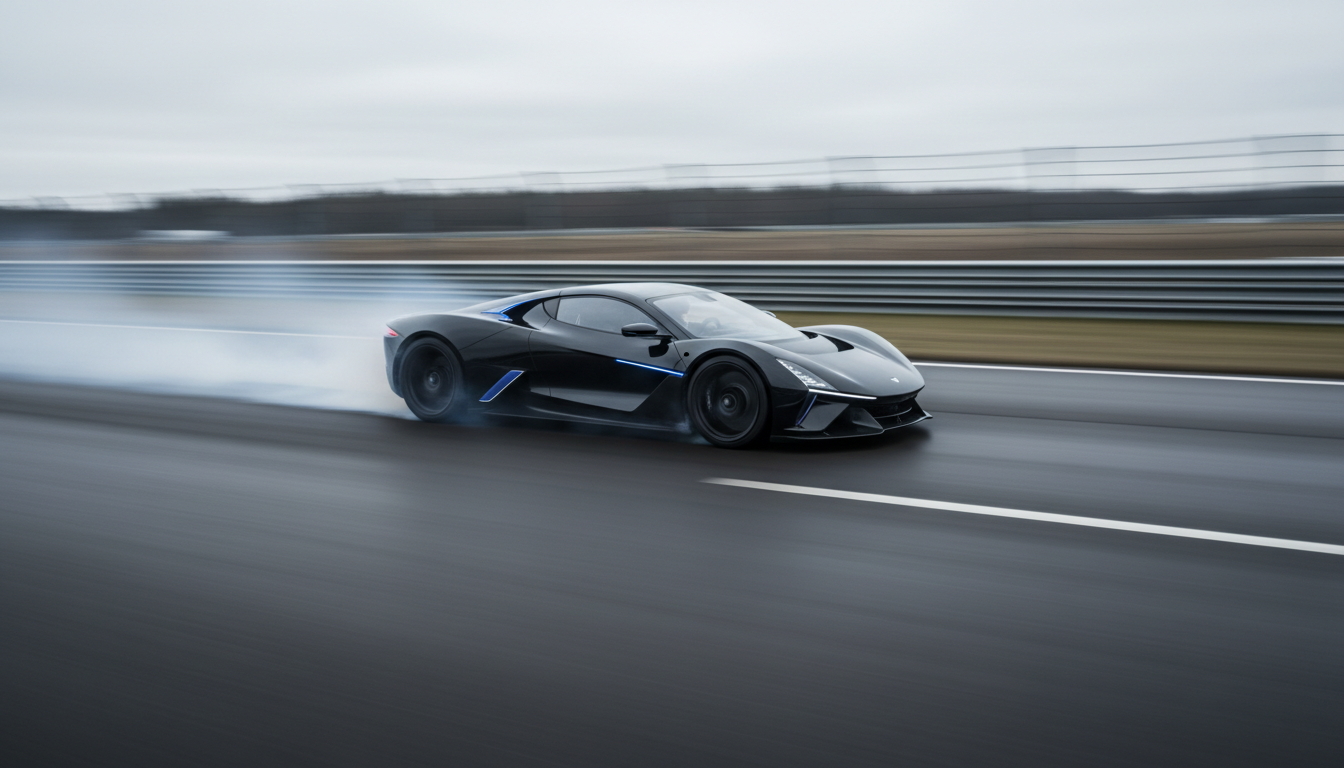


BYD’s electric supercar reached 472 km/h in Germany with over 3,000 horsepower and became the fastest production electric car in the world, surpassing the Rimac Nevera by a margin of 60 km/h
A Chinese electric car has just set the new world speed record for production vehicles. The BYD Yangwang U9 Track Edition reached 472.41 km/h at the Papenburg test track in Germany.
The previous record belonged to the Rimac Nevera from Croatia, which had 412 km/h. The Chinese car surpassed it by a margin of over 60 km/h.
The U9 Track Edition produces over 3,000 horsepower thanks to four independent electric motors. Each motor reaches up to 30,000 revolutions per minute.
-
A fossil kept for years in a small museum in Montreal concealed 450-million-year-old soft tissue, a discovery that has only happened once before in history.

-
Three teenagers transform cut cardboard into Japanese origami-style packaging that promises to retire styrofoam and bubble wrap, win a $12,500 prize, and target giants like Amazon, FedEx, and Home Depot after a robot motor arrived broken.

-
The large jar blender has a rival: Oster Ultra Power bets on 1,000 W, six stainless steel blades, and two portable cups with leak-proof lids.

-
Tesla injected an additional $250 million into the German factory, doubled the battery cell target, and opened its own production line for startups.



Marc Basseng, the German professional driver responsible for the test, stated: “Last year, I thought I had reached the peak. I never expected to break my own record so soon.”
BYD U9 Specifications: 1,200 volts architecture and 555 kW per motor
The U9 Track Edition is the first mass-produced car with 1,200 volts electric architecture. The total power of 2,200 kW surpasses any active electric hypercar.

Each of the four TZ240XYA motors delivers 555 kW. The power density reaches 16.4 kW per kilogram. Silicon carbide (SiC) chips allow operation at high voltage.
The power-to-weight ratio reaches 1,217 horsepower per ton. The torque vectoring system adjusts each wheel more than 100 times per second.
According to the official Yangwang website, the car features a fixed wing, adjustable diffuser, and 325 mm tires.
BYD U9 versus Rimac Nevera and Bugatti Chiron: how the Chinese compares to the Europeans

The U9 Track Edition surpasses the Rimac Nevera (412 km/h, 1,914 hp) by a wide margin in speed and power. However, it still falls short of the Bugatti Chiron Super Sport 300+ (490 km/h), which uses a combustion engine.
In purely electric vehicles, the absolute record belongs to the Venturi Buckeye Bullet 3 with 549 km/h — but it is a racing prototype, not a production car.
The standard U9 reaches 309 km/h and accelerates from 0 to 100 km/h in 2.36 seconds. The Track Edition has been optimized exclusively for maximum speed.
China advances in luxury electric vehicles and worries European manufacturers

BYD, led by founder Lei Jun, is already the largest global manufacturer of electric vehicles. The U9’s record reinforces that China is not only competing in popular cars.
According to DuPont Registry, the test was conducted on the 12.3 km oval track in Papenburg with approved equipment.
However, it is worth noting that the test took place under controlled conditions, without real traffic. The Track Edition’s weight is slightly higher than the standard model, affecting daily drivability. Additionally, the price has not been disclosed and initial availability is limited to China.





Time for the European to close shop.
The competition is fierce, Yuen. Chinese EVs are pushing European automakers to innovate faster than ever — but companies like Porsche, BMW and Mercedes are investing heavily in next-gen electric platforms. Rather than closing shop, some European brands are pivoting toward premium segments where engineering and brand heritage still matter. The real question is whether mid-range European cars can survive the price war. Thanks for reading!