






 Portuguese
  Spanish


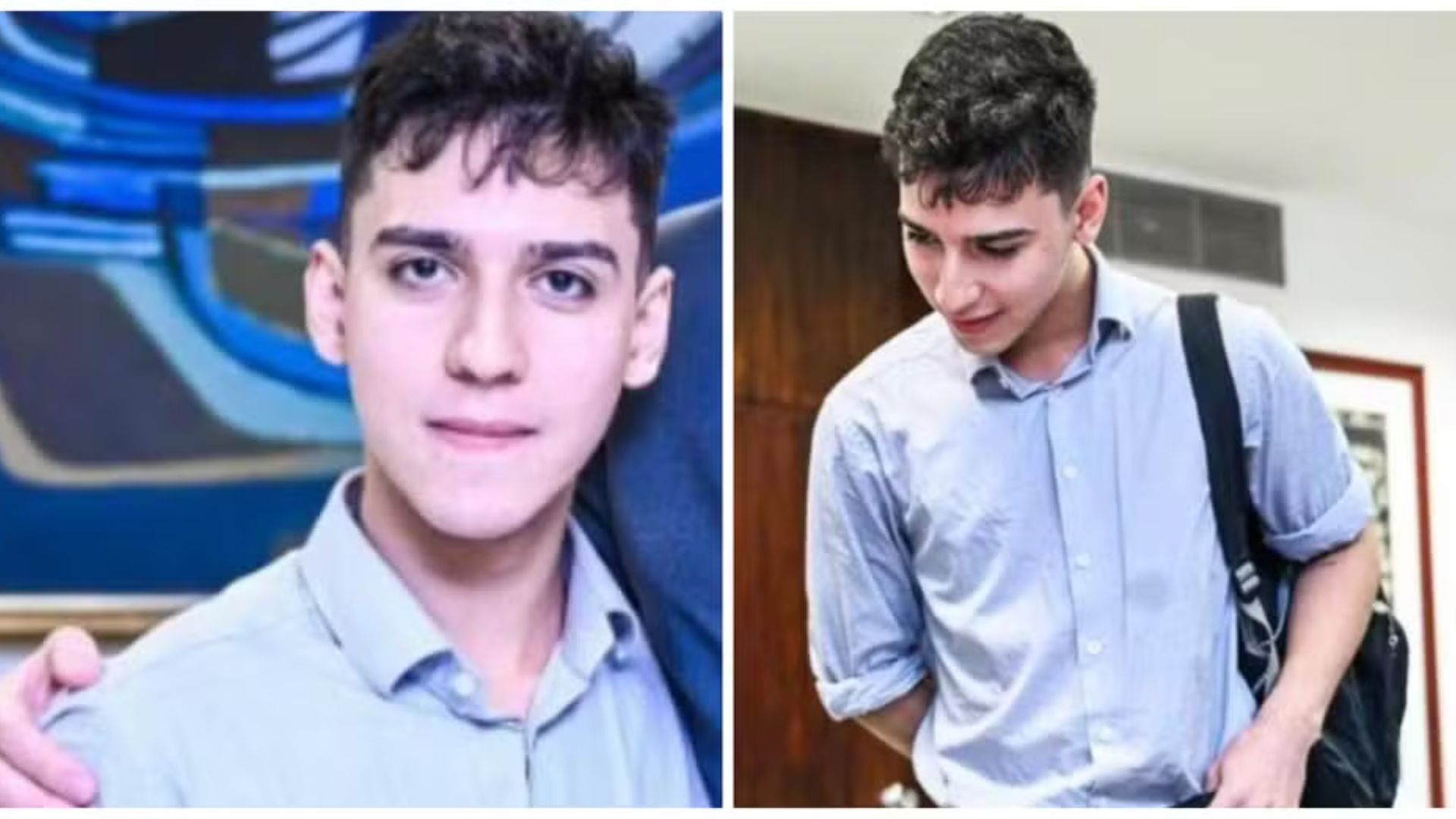

Young Brazilian university student leaves promising career in law, enlists in international conflict and disappears after months on the front, triggering diplomatic authorities and mobilizing family and university amid the war that still attracts foreigners.
The law student Igor de Aguiar Amazonas, from the University of São Paulo, was reported as missing in action after serving in the war in Ukraine.
According to information publicly confirmed by the Ministry of Foreign Affairs, the notification came from Ukrainian authorities, and the Brazilian Embassy in Kiev began to maintain contact with the family of the Brazilian, who resides in Santana do Parnaíba, in Greater São Paulo.
The diplomatic mobilization involves, in addition to the Itamaraty, the Brazilian representation in the Ukrainian capital, responsible for consular assistance and communication with the local government.
-
Billionaire says the most valuable skill will help overcome job elimination caused by AI, following Bill Gates’ fears

-
A Dutchman created a ‘box’ that makes trees grow in the desert almost without water and without irrigation: the invention has already brought seedlings to dozens of countries and achieves up to 90% survival where common planting did not exceed 10%.

-
Abandoned warehouse hid a giant collection of rare computers, with over 2,000 artifacts from the 1930s to the 1980s.
-
Scientists warn that melting ice is triggering an alarming chemical transformation in preserved areas, and the first signs are already concerning researchers worldwide.




In cases of confirmed death or disappearance in a combat area, the prescribed procedure includes notifying relatives and forwarding documents issued by Ukrainian authorities with guidance on the formal procedures applicable in that country.
Igor left Brazil in July 2025 to join the Ukrainian forces, at a time when the war had already lasted over three years and showed no prospect of a quick resolution.
The disappearance was situated, in reports published in April 2026, from a combat that occurred at the beginning of that month, which ended months of the student’s service on the front.
Trajectory at USP and involvement in Nexo Governamental XI de Agosto
According to the G1 portal, before traveling, Igor was studying law at USP and participated in the Nexo Governamental XI de Agosto, an extension and research project linked to the college aimed at bridging the gap between students and the public sector.

The academic trajectory, according to people connected to the group, was marked by active participation, good performance, and interest in institutional politics, a profile far removed from the military environment he chose to pursue months later.
In a statement released to g1 and reproduced by other outlets, Nexo stated that the student joined the project “with the dream of working in politics and contributing to transforming Brazil.”
The group also highlighted that, since the selection process, he was among the students with the best results and confirmed throughout his time in the extension “the intelligence, dedication, and generosity that caught attention from the beginning.”
The same statement adds that Igor worked in the Political Relations area, collaborated in organizing events, and showed enthusiasm for initiatives like Nexo in Schools.
According to the note, he was genuinely involved in the activities he undertook, a characteristic emphasized by the project when expressing solidarity to the family, friends, and colleagues.
There was also a public statement from the Law School of USP, which reported that it is monitoring the case and expressed solidarity with the family and those close to the student.
Amid uncertainty about the outcome, the repercussions inside and outside the university increased the pressure for official information, especially because disappearance in combat does not always allow for immediate confirmation about location, rescue, or death.
Itamaraty’s Action and Limits of Consular Assistance
Itamaraty’s action in these cases focuses on the consular and diplomatic field.
The Brazilian Embassy in Kyiv maintains an emergency channel for situations such as disappearance, death, imprisonment, and violence, and publicly informs that it provides assistance to Brazilians in Ukraine in critical contexts.
This support, however, does not equate to control over military operations nor guarantees quick access to combat areas, especially when there is active confrontation.
The Ministry of Foreign Affairs itself reinforced, in a consular alert updated in May 2025, that Brazilians should avoid traveling to Ukraine during the war, due to frequent attacks throughout the territory.
The ministry also recommends that citizens outside safe areas strictly follow the guidance of local authorities and avoid regions close to combat fronts, where the risk is described as high.
Moreover, Itamaraty published specific guidance for Brazilians to refuse invitations or offers to participate in foreign armies.
In the statement, the ministry claims to have recorded an increase in cases of nationals killed in such conflicts and warns that consular assistance may be severely limited by the terms of contracts signed with foreign armed forces.
The Brazilian government’s warning also mentions the possibility of difficulties in stopping military participation after enlistment and reminds that there is no state obligation to cover the return to the country.
The note adds that Brazilians engaged in foreign forces may even be subject to criminal liability, depending on the conduct practiced and the international commitments assumed by Brazil.
Brazilians in the war in Ukraine and international recruitment
Even after more than four years since the start of the large-scale Russian invasion, Ukraine continues to accept foreign volunteers into its Armed Forces.
The official website of the International Legion for the Defense of Ukraine states, in Portuguese, that citizens from other countries can sign a military service contract for a period of six months, provided they meet requirements such as minimum age, physical fitness, and absence of criminal records.
The same official platform claims that foreigners have the same rights and duties as other members of the Ukrainian Armed Forces and openly promotes international recruitment.
On another page in Portuguese, the portal even informs about the existence of a unit composed “mostly” of Brazilians with military experience, which helps explain why the flow of volunteers from the country has not disappeared even with the prolongation of the conflict.
This scenario remains while the war continues actively on an extensive front.
In April 2026, President Volodymyr Zelensky stated that the situation on the front line had improved compared to previous months, but fighting continued along more than 1,200 kilometers, with offensives and counteroffensives in different sectors.
It was in this context that Igor’s case began to mobilize family members, university, and Brazilian diplomatic authorities.
On one side, the family awaits official clarifications amid the uncertainty typical of disappearances in a war zone.
On the other hand, the episode again exposes the limits of consular action and rekindles the Brazilian government’s alert about the risks faced by citizens who decide to enter armed conflicts abroad on their own.





