






 Portuguese
  Spanish
  5 min of reading
  0 comments


The 4,000-ton crane from Zoomlion traveled more than 2,000 km from Hunan to the Gobi Desert in China, accompanied by 28 support equipment, to install 6.25 megawatt wind turbines with a 186-meter boom, in a machine so tall that it has an internal elevator to access the cabin.
The largest all-terrain crane ever built completed its inaugural operation in the Gobi Desert, an uninhabited region in northwest China where constant winds feed a growing forest of wind turbines. The 4,000-ton machine, manufactured by Zoomlion in the city of Changsha, Hunan province, traveled more than 2,000 kilometers to the work site accompanied by a convoy of 28 support equipment, marking the beginning of its mission as the centerpiece of China’s wind energy expansion strategy. The base structure of the crane reaches approximately six meters, and unlike smaller machines, where the operator climbs to the cabin, this one is equipped with an internal elevator that spans two floors, a detail that reflects the unprecedented scale of the machine.
The operation in the Gobi Desert required the crane to lift components of a 6.25 megawatt wind turbine, including the generator weighing over 150 tons and 108-meter blades transported by special vehicles with dozens of meters of wheelbase. The main boom has seven sections that, combined with the extension of the auxiliary boom for wind turbines, reach a total height of 186.4 meters, a reach that allows the crane to position pieces weighing hundreds of tons at the top of towers exceeding 170 meters. When fully operational, each turbine installed by this machine generates more than 6,000 kilowatt-hours per hour at full capacity.
How the 4,000-ton crane was assembled in the middle of the desert

The assembly of the crane in the Gobi Desert is an operation that takes days and mobilizes dozens of professionals. Two support equipment worked together to lift the 65-ton turntable and position it over the crane’s base, aligning the two circular structures with millimeter precision before connecting the hydraulic lines that integrate the system. Each installed component requires coordination among multiple teams, as even pieces considered smaller at this scale, like a pair of hydraulic cylinders, weigh 32 tons.
-
As the polar cold wave freezes the South this week, archaeology reminds us how the Kaingang dug underground houses on the Santa Catarina plateau to survive frosts millennia ago.

-
Federal Police involved in the case to identify the person responsible for hacking the Civil Defense system, which sent ten false alerts, frightened residents of different capitals, and turned messages about real risks into notifications with “misanthropy” and even alien attacks.

-
Extreme drought causes ghost village to reappear at the bottom of the reservoir that supplies Athens, revealing houses, a school, and ruins swallowed since the 1980s as the lake shrinks and exposes the water crisis threatening the capital of Greece.

-
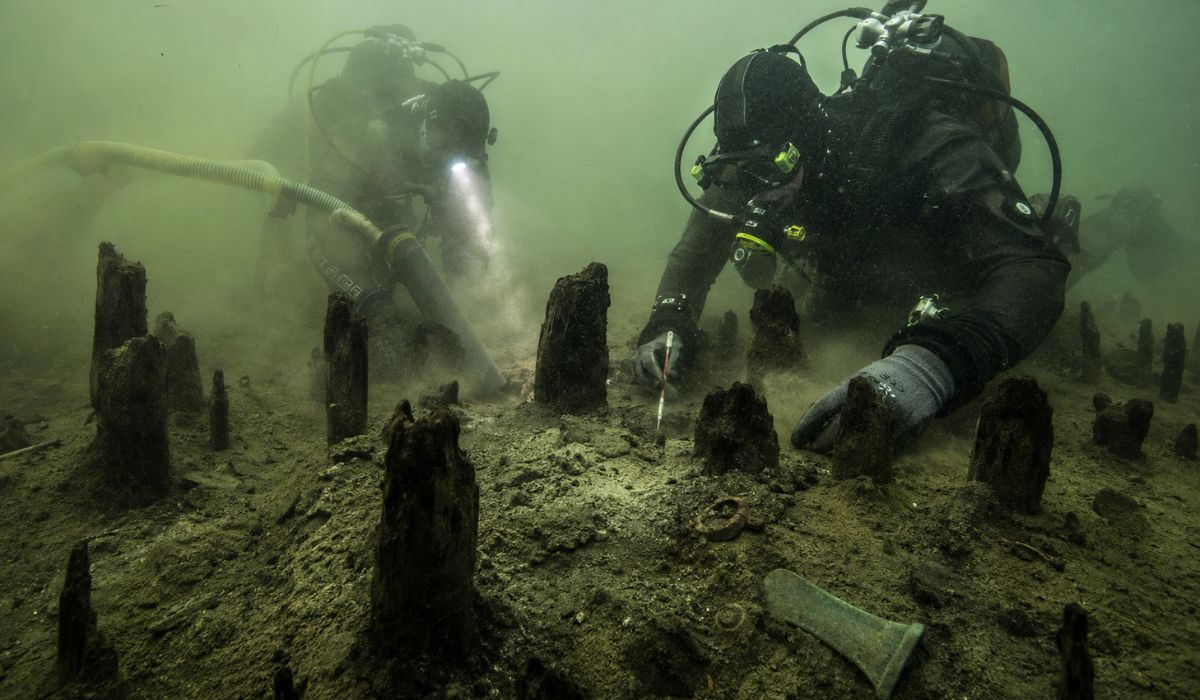
An entire village lay asleep at the bottom of a lake for 3,000 years: divers suction sediments in Italy and reveal more than 600 wooden stakes, bronze tools, and traces of a Bronze Age settlement hidden underwater.


The main boom is composed of seven modules, and only the two base sections weigh 66 tons each. The support cranes rotated and positioned each module in the opening of the main structure, while the 4,000-ton crane used its hydraulic cylinder to retract and fit the sections autonomously. The entire fastening system is powered by hydraulic pressure, replacing the traditional method of manual hammering with heavy tools. After the complete assembly of the boom, the crane performed verification spins in all directions before starting the lifting.
The installation of the wind turbine that only this crane can do

The assembly of a 6.25 megawatt wind turbine in the Gobi Desert requires three lifting phases executed by machines of different capacities. First, a 900-ton piece of equipment positions the concrete base ring. Then, another 1,800-ton crane lifts and secures the central section of the tower. The 4,000-ton crane comes into action in the final, most challenging stage: lifting and positioning the upper components at the top of the tower, which exceeds 170 meters in height.
The generator is the heaviest piece of the entire process, weighing over 150 tons. Workers positioned at the four corners of the operation hold stabilization cables that prevent the load from spinning under the wind’s action while the crane lifts it to the connection point. Once connected, only the hub and three blades remain. Each blade is 108 meters long and weighs 30 tons, transported by special vehicles whose total weight reaches 160 tons to avoid swaying during travel on mountainous roads. On the day of the blade lifting, strong winds forced the team to wait the entire night until conditions allowed for the operation.
The extreme logistics of getting the crane to the Gobi Desert


Transporting a 4,000-ton machine over more than 2,000 kilometers is not a conventional journey. The Zoomlion crane departed from the company’s facilities in Changsha and crossed entire provinces until it reached northwestern China, accompanied by 28 auxiliary vehicles transporting sections of the boom, counterweights, stabilizers, and hydraulic components. The convoy of machines traveling through roads and desert terrain represents, in itself, a demonstration of logistical capability.
The four lateral stabilizers of the crane receive oversized pads that expand the ground support area, ensuring that the machine remains stable during operations on sandy and uneven terrain. When fully installed, the stabilizers practically conceal the crane’s tires, and each rear unit weighs 20 tons. The counterweight used in the Gobi Desert operation reached 260 tons, a volume that, combined with the rear positioning system, was more than sufficient to install the 6.25-megawatt turbine without the need for maximum load.
What the 4,000-ton crane represents for wind energy in China
China is heavily investing in the construction of wind farms in desert regions of the northwest, where constant winds and open terrain provide ideal conditions for large turbines. The Zoomlion crane was specifically designed for this scenario: increasingly taller towers and heavier generators require lifting capacity that conventional machines, limited to 900 or a thousand tons, simply cannot provide. The arrival of a 4,000-ton piece of equipment in the Gobi Desert signals that the Chinese industry has prepared for the next generation of wind turbines even before they become standard.
Behind the crane, dozens of already installed turbines spin incessantly, transforming the northwest winds into energy that powers homes spread across vast territories. For the workers who spend weeks assembling these structures in extreme conditions, the most familiar landscape is not that of cities, but of sunrises and sunsets over the desert, interspersed with the glow of stars and the constant roar of the wind. The 4,000-ton crane from Zoomlion is a colossal machine, but in the hands of the teams operating it, it is just a tool, the largest and most powerful that lifting engineering has ever produced.
And you, did you imagine there was a crane so large that it needed an internal elevator? Do you think China is ahead of the world in building infrastructure for wind energy? Leave your opinion in the comments.





Be the first to react!