






 Portuguese
  Spanish
  6 min of reading
  0 comments


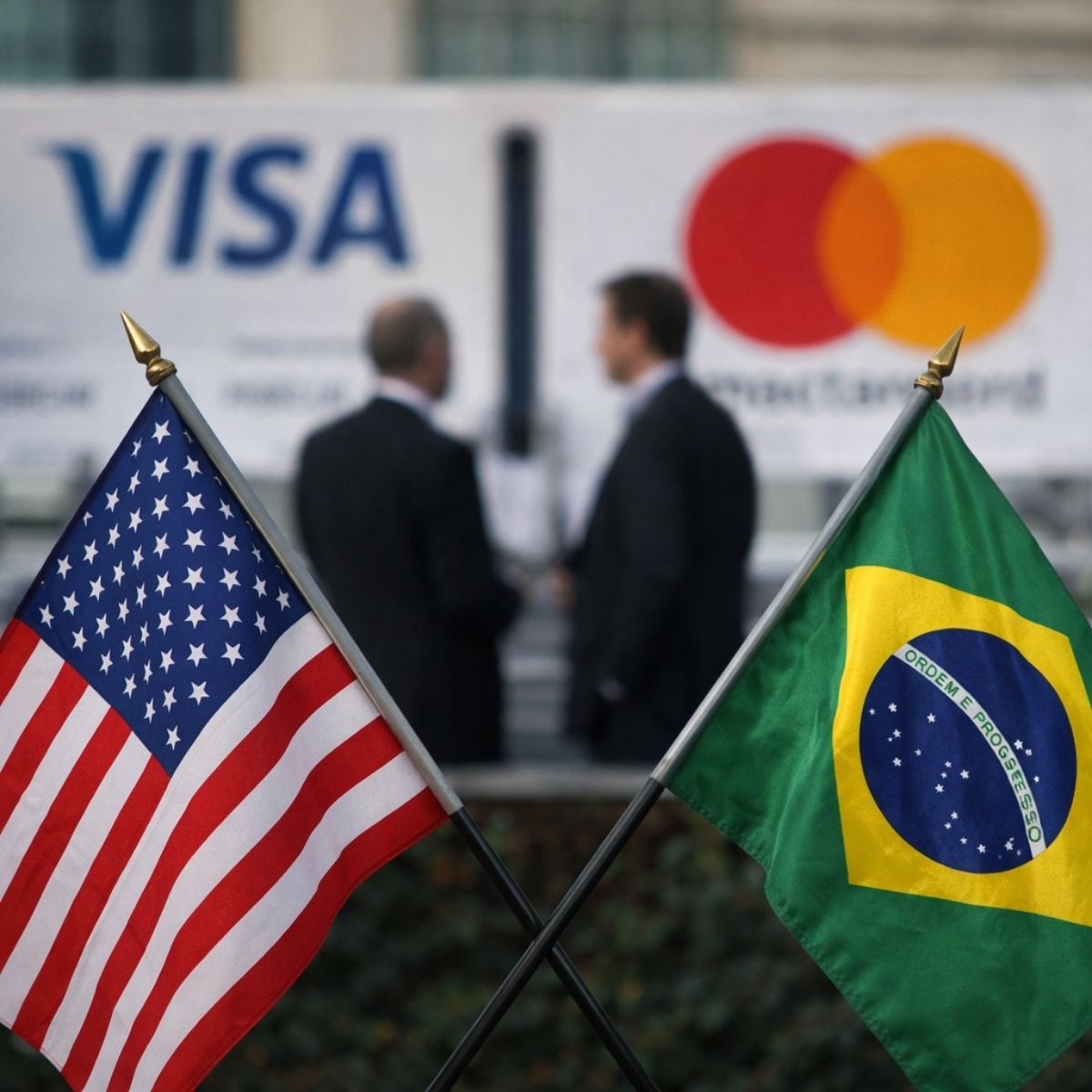
Visa and Mastercard filed complaints with the USTR alleging that the Brazilian Central Bank grants Pix an unfair advantage over cards, and Washington opened an investigation that could lead to sanctions against Brazil, a scenario that led both countries to negotiate in April 2026 without reaching an agreement.
The American payment giants Visa and Mastercard brought their complaints to the USTR, the U.S. trade agency, accusing the Brazilian government of creating conditions that benefit Pix at the direct expense of card systems operated by foreign companies. The central argument is that the Central Bank’s determination requiring banks and fintechs with over 500,000 account holders to make Pix available constitutes a competitive advantage that distorts the digital payment market in Brazil. Following these complaints, the USTR opened a formal investigation into Brazilian practices, paving the way for the eventual imposition of trade sanctions if the allegations are confirmed.
The case escalates tensions between the two countries at a time already marked by divergences on other fronts. In April 2026, Brazilian and American delegations met in Washington to discuss the accusations, aiming to clarify the reasons behind the policies adopted by the Central Bank and to prevent the conflict from escalating into punitive measures. So far, the talks have not produced concrete results, and the possibility of sanctions remains on the table. The Brazilian government argues that Pix is an essential tool for financial inclusion and the economic development of the country, a position that directly clashes with the commercial interests of American card operators.
What Visa and Mastercard allege against Pix

The accusation from the two largest card brands in the world focuses on how the Central Bank structured the adoption of Pix in the Brazilian financial system. Visa and Mastercard argue that the rule requiring all financial institutions with over half a million account holders to make Pix available creates an environment in which the instant system, operated by the Central Bank itself at no cost to the consumer, competes unfairly with card services that rely on fees to compensate the entire processing chain. In practice, the argument is that the Brazilian government indirectly subsidizes Pix by imposing its adoption and by not charging fees equivalent to those that apply to card transactions.
-
The urgent need to implement a severe cut in public spending and a massive increase in taxes, in addition to drastically compromising the quality of basic services and the purchasing power of the population, could result in social unrest in the country, with the population leading protests, strikes, and frequent disturbances.

-
FIRJAN’s mega plan of R$ 526.3 billion for Rio de Janeiro aims to revive Brazil’s largest industry, with two-thirds of the investments going to oil and gas.

-
China signals an increase in beef imports, Brazil has already consumed 70% of the 1.106 million ton quota and seeks to renegotiate the tariff that jumps from 12% to 55%, while demand from the US also skyrockets.
-
Food inflation rose 302% in 20 years in Brazil, but the supermarket changed: purchasing power yielded 87% more mortadella and 31% less fruit, and ultra-processed foods took over the cart.




The impact on the revenue of operators is the engine of the complaint. Since Pix has consolidated as the preferred payment method for Brazilians, transfers and purchases that previously went through card machines have migrated to the instant system, reducing the revenue of Visa and Mastercard in the Brazilian market. For American companies, the issue is not the existence of Pix itself, but the fact that the rules of the game were designed by the same body that operates the competing system, which they view as a conflict of interest that harms free competition.
Why the United States Opened an Investigation into Pix

The USTR is the branch of the American government responsible for protecting U.S. commercial interests in foreign markets. When American companies file formal complaints about practices they consider unfair, the office has the authority to open investigations and, if it confirms the allegations, recommend the application of trade sanctions, tariffs, or restrictions on the investigated country. In the case of Pix, the investigation assesses whether the policies of the Brazilian Central Bank violate principles of equitable access to the financial market.
The opening of the investigation does not mean that sanctions will be automatically applied. The process involves collecting evidence, consulting with the Brazilian government, and analyzing the impact that any measures would have on bilateral trade between the two countries. However, the mere fact that the USTR has accepted the complaints and initiated the formal procedure already represents a signal that Washington considers the allegations of Visa and Mastercard worthy of investigation, which pressures Brazil to negotiate concessions before the process advances to more severe stages.
What Brazil Argues in Defense of Pix
The official position of the Brazilian government is that Pix was created to promote financial inclusion and efficiency in the payment system, not to harm foreign companies. The Central Bank argues that the instant system has reduced transaction costs for consumers and small merchants, expanded access to banking services for millions of people who previously operated exclusively with physical cash, and modernized the country’s payment infrastructure. From this perspective, any restriction on Pix would represent a setback in the policy of financial inclusion.
The Brazilian diplomacy also maintains that Pix does not impede the operation of credit cards in Brazil. Visa and Mastercard continue to operate normally in the market, and consumers have the freedom to choose their preferred payment method. The government points out that the migration of transactions to Pix reflects the public’s preference for a faster and cheaper system, and not a result of prohibition or restriction imposed on cards. The question Brazil needs to answer in the investigation is whether the mandatory adoption of Pix by large financial institutions constitutes discriminatory policy or merely legitimate regulation of the national financial system.
The risk of commercial sanctions against Brazil due to Pix
The possibility of sanctions worries sectors that depend on trade relations with the United States. Punitive measures could affect Brazilian exports to the American market, trigger retaliations on other fronts, and pressure an economy that is already facing internal challenges. The United States is one of Brazil’s main trading partners, and any restriction on the flow of goods and services between the two countries would impact multiple sectors, from agribusiness to technology.
For Pix, the sanctions scenario would create a paradox. A system created to benefit the Brazilian population could become the spark for measures that would indirectly harm that same population, through increased import costs or loss of competitiveness of Brazilian products abroad. American pressure places the Brazilian government in the position of having to balance the defense of a successful public policy domestically with the need to preserve trade relations with the largest economy on the planet.
What is at stake in the next rounds of negotiation about Pix
Discussions between Brazil and the United States are expected to continue in the coming weeks, and the outcome will depend on both parties’ ability to find a solution that accommodates conflicting interests. Brazil may be pressured to relax the rules for joining Pix or to offer compensations that reduce the impact on American card operators, while the United States needs to calculate whether an escalation of sanctions against a relevant trading partner offsets the benefit for Visa and Mastercard. The USTR investigation is ongoing, and there is still no defined deadline for completion.
The case of Pix transcends the dispute between two payment systems and exposes a structural tension between regulatory sovereignty and international free trade. If Brazil has the right to create and promote its own instant payment system, what is the limit of that promotion before it is considered unfair trade practice by partners? The answer that comes from this negotiation could set a precedent for other countries that have developed or plan to develop systems similar to Pix, making the outcome relevant far beyond Brazilian borders.
And you, do you think that Pix should be defended by the government or should Brazil yield to American pressure? Do card operators have a point in complaining about unfair competition? Leave your opinion in the comments.





Be the first to react!