Portuguese
  Spanish


Concrete paving technology advances in Santa Catarina and draws attention for its high resistance, greater thickness, and long lifespan in mountain regions, where road wear is often intensified by heavy traffic and demanding terrain conditions.
Santa Catarina has expanded the use of concrete pavement in mountain stretches with the aim of increasing road resistance and reducing frequent interventions, especially in areas marked by sharp curves, prolonged ascents, and intense circulation of heavy vehicles.
In this context, the solution already appears in strategic points such as Serra Dona Francisca, located in the North of the State, where usage conditions demand greater structural performance from the road over time.
Concrete gains ground on mountain roads
According to engineer André Torrens, regional infrastructure coordinator in northern Santa Catarina, concrete can achieve up to five times greater resistance than conventional asphalt, depending on the application conditions and the predominant traffic type on the stretch.
-
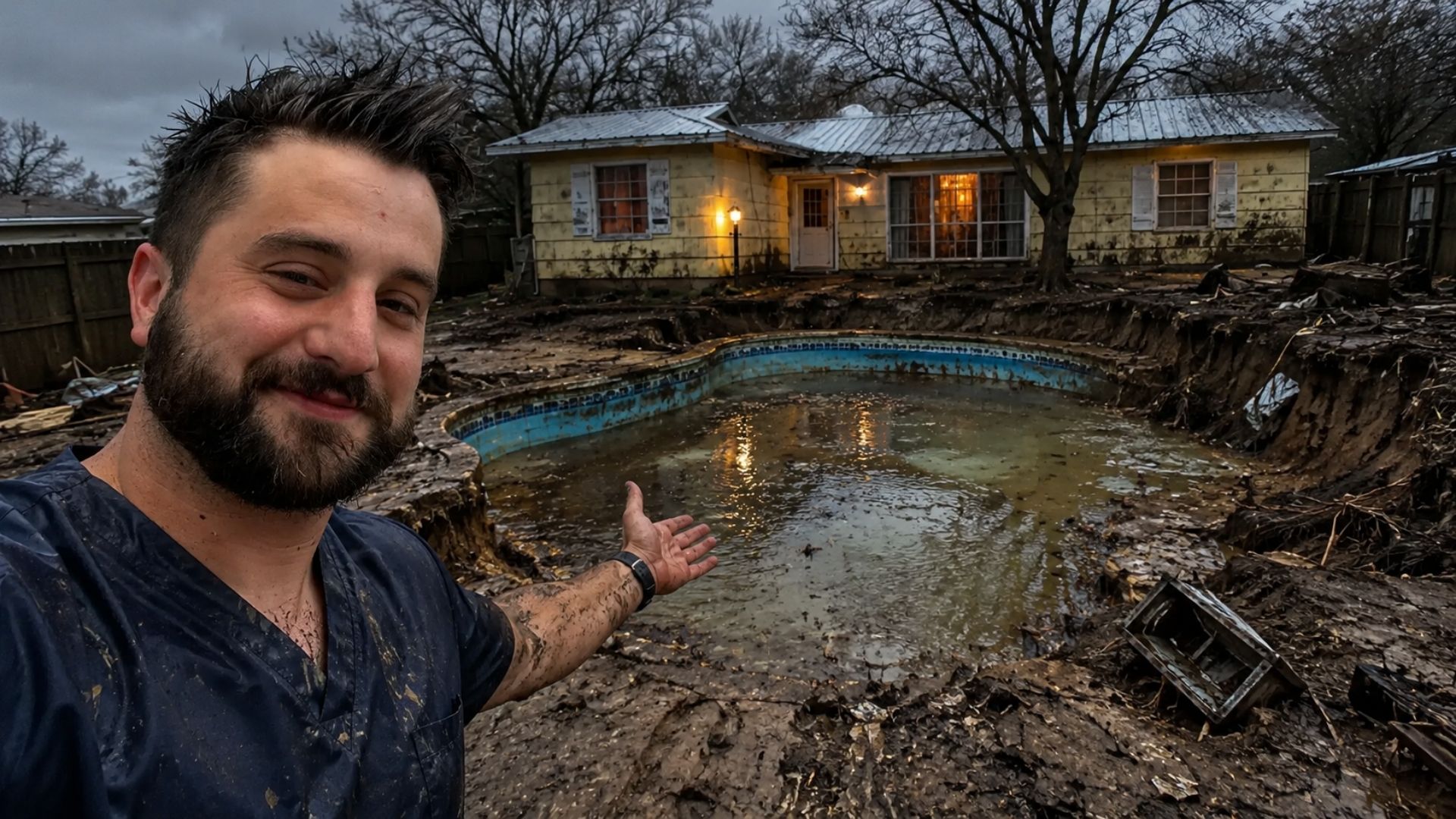
A nurse bought for 20,000 a 1955 house abandoned by a hoarder in Texas, and months later, rain revealed a buried pool in the backyard valued at $160,000, which he restored himself for about $10,000, a fraction of the cost of building a new one.

-
The United Kingdom is transforming dog feces left on trails into gas to light a streetlamp through an unlikely and surprising project that shows how even one of the most rejected wastes in cities can generate energy.
-
Goodbye traditional Air Fryer: Philips surprises with a version featuring two baskets, steam cooking, self-cleaning, 9-liter capacity, recipe synchronization, and technology that makes food crispy on the outside and soft on the inside.
-
Russia has built a colossal radio telescope nearly 600 meters in size, composed of 895 metal panels in a gigantic ring, which uses the Earth’s rotation to capture invisible signals coming from the Sun and the most distant regions of the universe.


According to him, the main difference lies in the composition of the materials and, above all, in the thickness used in the pavement structure, a determining factor for withstanding more intense mechanical stresses over the years.
While a common asphalt layer is about 6 centimeters thick, concrete pavement can reach approximately 26 centimeters in thickness, forming a significantly more robust base prepared to face continuous wear.
With this thicker structure, the road can better withstand the impact caused by heavy vehicles, constant braking on descents, and thermal variations, common in regions with rugged terrain and unstable climates.
Performance on curves and in heavy traffic
In mountainous areas, where trucks reduce speed, navigate sharp curves, and require greater pavement grip, concrete tends to show more stable performance over time, reducing deformations and structural failures.
One example cited is Serra Dona Francisca itself, where curves built with concrete have been in use for about 46 years, frequently serving as a reference for durability in road infrastructure projects.
Even so, the adoption of concrete does not eliminate the use of asphalt on Santa Catarina’s roads, as the choice between materials depends on factors such as traffic volume, terrain characteristics, initial cost, and future maintenance planning.
Difference between rigid pavement and white topping
Regarding application, there are two main ways to use concrete on roads, each suitable for different structural conditions and intervention needs.
When the material is applied over an existing pavement, the technique known as white topping is used, which consists of a rigid layer over the previous structure, extending its lifespan without the need for complete reconstruction.
On the other hand, when the execution occurs directly on the prepared soil base, the method is called rigid pavement, being designed from the outset to withstand high loads and greater durability.
In both cases, Portland cement concrete is used, different from what is called asphalt concrete, which has distinct composition and structural behavior over time.
As Torrens explains, asphalt concrete uses a petroleum-derived binder, known as asphalt cement, while Portland cement concrete employs the same type of material used in sidewalks, slabs, and other civil construction structures.
Higher initial cost, but reduced maintenance
Although rigid pavement has a higher initial cost compared to asphalt, its adoption can prove advantageous over time, especially due to the reduced frequency of interventions and greater structural durability.
In mountain regions, this characteristic gains additional relevance, as maintenance work often requires partial blockages, operational detours, and a direct impact on vehicle flow, affecting both cargo transport and daily commuting.
Even in hypothetical scenarios where asphalt had a similar thickness, technical evaluation indicates that it would not achieve the same level of resistance as concrete and could result in higher costs over the road’s lifecycle.
For this reason, the use of concrete has advanced in sections considered critical, where structural demand is higher and durability becomes a decisive factor in material selection.
The expected service life of over 40 years reinforces interest in this type of solution on highways with challenging terrain, provided that execution follows rigorous technical criteria and includes adequate base preparation.
Within this scenario, the discussion between asphalt and concrete remains present in Santa Catarina, especially in mountain road projects, where the choice of pavement directly influences road safety, operational costs, and the longevity of the infrastructure.