Portuguese
  Spanish


Fernando de Noronha, one of the most famous natural paradises in Brazil, hides a reality that few tourists know: by administrative determination, babies cannot be born on the island. Since 2004, only four births have taken place in the archipelago. But why does this happen?
Located about 545 km from Recife, the island of Fernando de Noronha is known worldwide for its paradise beaches, unique biodiversity, and highly controlled tourism. However, an aspect invisible to visitors draws attention from those who live there: no baby can be born in the archipelago.
The decision is not formalized by law, but functions as an administrative and medical recommendation applied for nearly two decades. Since 2004, the guidance from the government of Pernambuco is that all pregnant women leave the island around the seventh month of pregnancy, being directed to the capital to give birth.
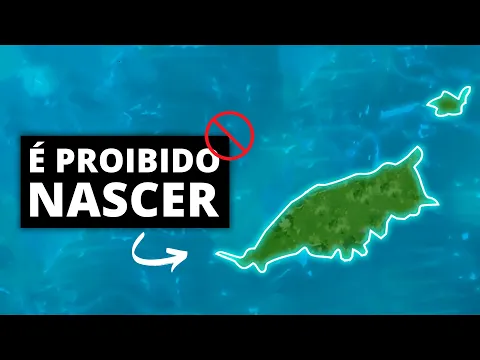

This measure, according to the State Department of Health, aims to ensure the safety of the mother and baby, due to the lack of hospital structure on the island to handle births and possible complications.
-
Off-Duty Firefighter Rescues Three Children Trapped Under Overturned Boat in Brazilian Lake

-
Workers near the Vatican uncover lead pipe revealing Emperor Caligula’s name and site of his opulent garden from nearly 2,000 years ago

-
Workers renovating a playground in northern England uncover 176 World War II bombs buried underground; training artifacts still contained explosives.

-
Brazilian Architect Transforms Waste into Sustainable Homes with Solar Power and Rainwater Systems for 40 Years



Why Can’t Children Be Born in Fernando de Noronha?
The most straightforward answer is: lack of medical infrastructure. The island has a small hospital, geared towards basic care and stabilization of emergencies until external support arrives. In the case of serious accidents or obstetric complications, specialized care can take hours to arrive or require air evacuation to the mainland — which can take up to six hours.
The Health Department of Pernambuco itself declared that maintaining a complete obstetric team and a functioning maternity ward in Noronha would cost R$ 3.6 million per year. With an average of only 30 annual pregnancies, the estimated cost would be about R$ 120,000 per baby born on the island, compared to R$ 8,900 per pregnant woman cared for over 90 days in Recife.
The Recommendation That Became a Rule in Fernando de Noronha
In practice, every pregnant woman living in Fernando de Noronha knows, from the first months of pregnancy, that she will have to leave the island in the third trimester to give birth on the mainland. This is the case of Ione Leal, a social worker born and raised in Noronha, who felt compelled to leave the island during her second pregnancy:
“From the moment you are pregnant, you already know that when you reach seven months, they will insist that you travel.”
For her, the problem goes beyond logistics. There are emotional, family, and social difficulties, such as separation from other children, isolation away from home, and the absence of local support during such a delicate moment.
The Pain of Separation: Stories That Move
Ione left her oldest daughter, Melanie, then 10 years old, on the island. The girl recalls that she spoke to her mother every day by phone and dreamed of meeting her newborn sister:
“It was very difficult to be away from my mother for so long. I knew she was out there with my sister in her belly. It was just another reason for me to want to be together.”
Despite the guaranteed right to a companion, the father could not travel with Ione. According to her, it would be unfeasible to take paternity leave during the pregnancy and after the birth. The decision was for him to stay and wait for her return.
Cases like this are not exceptions. Several pregnant women report similar experiences: lack of support network, insecurity during labor in an unknown city, and emotional solitude in a moment that should be welcoming.
Only Four Births in 20 Years
Since the recommendation began to be applied, only four women have managed to give birth in Noronha. The exception occurs when the birth happens unexpectedly, before the pregnant woman is transferred to the mainland.
These situations, however, are treated as medical emergencies, without adequate structural guarantees. The Health Department emphasizes that the measure aims to protect life and that there is no legal impediment for births in Noronha — only a firm recommendation for it not to happen.
“Forbidden to Be Born in Paradise”: The Documentary That Gave Voice to Mothers
The reality of pregnant women in Noronha was portrayed in the documentary “Forbidden to Be Born in Paradise”, filmed between 2017 and 2019. The director narrates the emotional and institutional complexity behind the policy of transferring to the mainland.
For her, the debate is not limited to the absence of a maternity ward but to what she calls the denial of the right to be born in one’s homeland:
“It is not just about infrastructure. It is about identity, belonging, memory. For many, not being able to be born where they live is an erasure.”
The film exposes the behind-the-scenes of public management, the women’s accounts, and the dilemmas surrounding whether or not to allow pregnant women to remain on the island.
How Much Does It Cost to Prevent a Local Birth?
According to the Health Department, the transfer of pregnant women to Recife includes:
- Accommodation
- Food
- Air and land transport
- Exams and prenatal care
- Hospital assistance during childbirth
- Return to Noronha with the newborn
All these costs are covered by the Government of Pernambuco. Although it may seem costly, the managers claim that the expenses are still lower than what would be necessary to maintain a complete team of obstetrics, anesthesia, neonatology, and intensive support 24 hours on the island.
The Pregnant Women of the Island: Between Resignation and Resistance
Many women from Noronha accept the recommendation as inevitable, but others question the lack of alternatives and the absence of discussions with the community. Some advocate for the creation of an emergency protocol, with births assisted by temporary teams, especially in cases of high logistical risk.
There are also those who argue that, even with high costs, the guarantee of the right to be born in one’s homeland should be treated as a matter of dignity and cultural identity.
There are currently no concrete projects to reactivate births in Fernando de Noronha. The local hospital continues to operate focused on first aid, general clinics, and basic support.
The island, which receives thousands of tourists each year, remains one of the few places in Brazil where it is officially “not allowed to be born,” which keeps the curiosity — and discomfort — about this little-known reality alive.
The case of Fernando de Noronha reveals a tension between the right to health and the right to origin. The policy of transferring pregnant women to Recife is a practical measure given the local limitations.
The baby born on the mainland, child of a Noronha mother, will not have in their documents the mark of the archipelago where they were conceived. And, for some families, this represents a difficult-to-fill symbolic void.