Portuguese
  Spanish


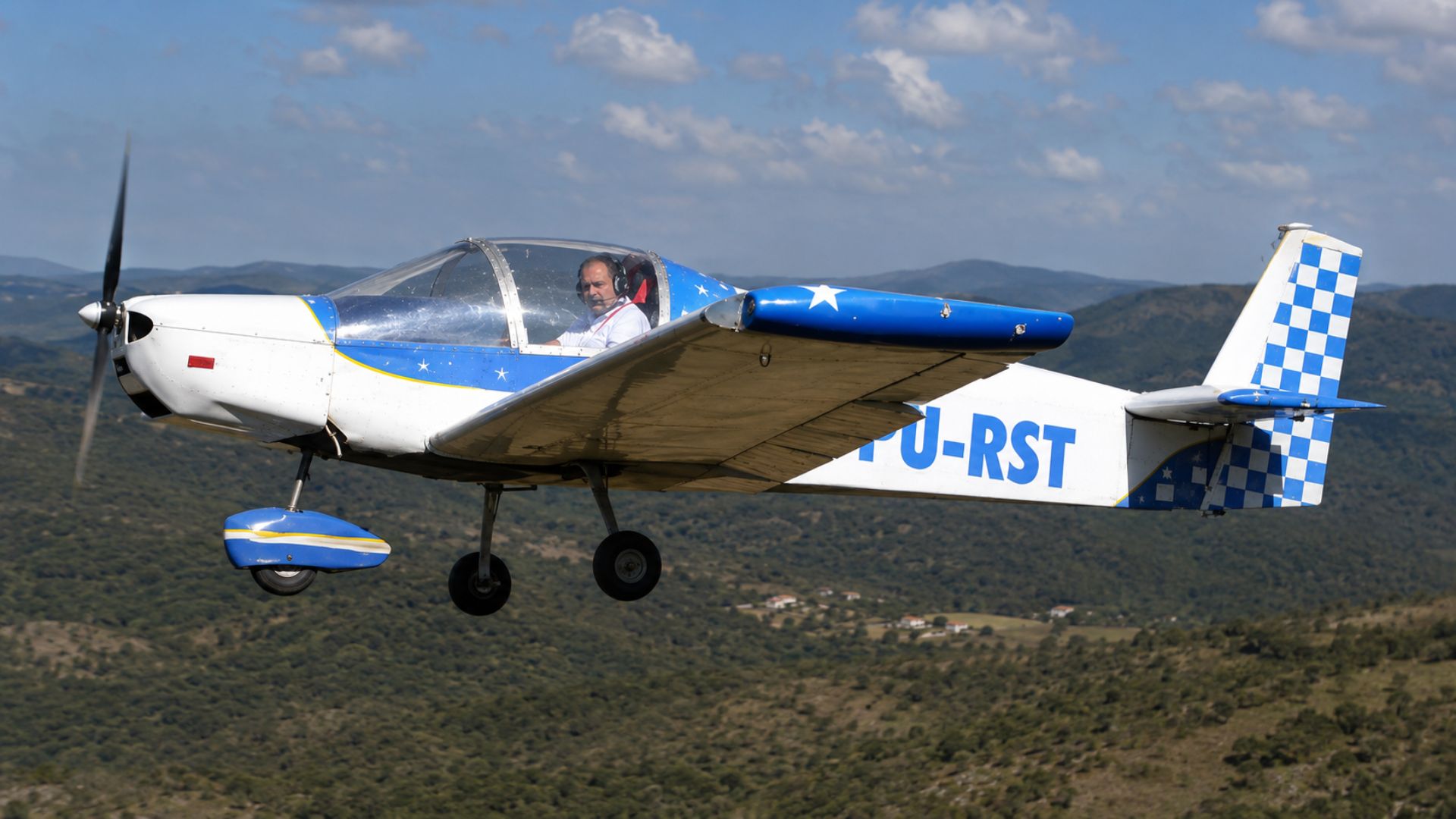


A mechanical engineer from Contagem, in Greater BH, built an experimental airplane in his backyard using car parts, such as an electric window motor for the flaps and a tachometer on the panel. The project took six years, received official registration from Anac, has autonomy to fly up to seven hours non-stop, and has already taken the pilot on vacation to Espírito Santo and Bahia.
According to information released in 2012 by the Vrum portal, the story of this airplane begins with a frustration. Mechanical engineer Ronaldo Santiago Silveira needed to visit clients in several cities on the same day and thought about buying a single-engine plane to optimize travel. He enrolled in an aviation course, but in the middle of the classes, he realized that flying for work would not be feasible and that hiring a pilot would raise costs too much. The problem was that, by then, Ronaldo was already passionate about aviation. Instead of giving up, he made a decision that would change the next six years of his life: buy the design for an experimental airplane from an American company and build the aircraft with his own hands, piece by piece, in the backyard of his house in Contagem.
The result is the Zodiac, a two-seater experimental single-engine plane that takes off from a 450-meter grass runway within a condominium in Nova Lima, in the Metropolitan Region of Belo Horizonte. The airplane has registration PU-RST granted by the National Civil Aviation Agency (Anac), autonomy to fly up to seven hours non-stop, and has already transported Ronaldo on leisure trips to Guarapari, in Espírito Santo, and Porto Seguro, in Bahia. The aircraft flies at a maximum ceiling of 14,500 feet, equivalent to about 5,000 meters in altitude, and does not require a pressurized cabin.
Car parts inside an airplane: the ingenuity of a solo builder
One of the most curious characteristics of Ronaldo’s airplane is the use of automotive components in aeronautical functions. The flaps, which are the movable surfaces on the wings responsible for providing lift to the airplane during landings and takeoffs, are actuated by a car’s electric window motor. The same mechanism used to raise and lower car windows was adapted to move critical parts of the aircraft. The ailerons, which control the airplane’s lateral inclination, also use automotive components.
-
$12 Billion Invested in AI Data Centers in Semi-Desert Mexican State, But 17 of 18 Municipalities Now Face Water Shortages, Residents Receive Water Only 3 Days a Week

-
How Much Does Starlink Satellite Internet Cost for Cars, Trucks, and RVs? Prices for Antenna, Accessories, and Plans

-
Scientists Convert Food Waste into Aviation Fuel, Successfully Test 50% Blend with Conventional Kerosene to Cut Emissions and Promote Sustainable Flights
-
OnePlus N6 Smartphone to Launch in India with 8,000mAh Battery and 45W SuperVOOC Charging, Lasting Up to Three Days




On the instrument panel, the engine’s tachometer is a part originally manufactured for automobiles, adapted to indicate the operating regime of the aeronautical engine. These solutions may seem improvised, but they reflect the logic of experimental aviation: using reliable and accessible components, adapting them to fulfill specific functions in the aircraft. Ronaldo recorded each stage of the construction, documenting the project’s evolution over the six years of assembly.

The engine that almost prevented the airplane from taking off
The original Zodiac design called for a 116-horsepower Volkswagen 2.0 engine, the same block used in models like the Golf and Santana. Ronaldo even installed the automotive engine in the aircraft, but discovered that the assembly was too heavy for the airplane to take off safely. The excessive weight of the block compromised the power-to-mass ratio, one of the most critical variables in aviation, especially for light aircraft operating on short runways.
The solution was to replace the Santana engine with a 100-horsepower Rotax, a propeller specifically designed for light aviation. The Rotax is significantly lighter than the Volkswagen block and offers adequate power for the Zodiac’s flight profile. With the new engine, the airplane met the necessary weight and performance parameters to take off and land safely on Nova Lima’s 450-meter runway. The engine change was one of the most important adjustments to the project and illustrates how building an experimental airplane requires a willingness to recalculate and correct decisions along the way.
Anac registration and what it means
Building an airplane at home in Brazil is not illegal, but it requires compliance with a series of regulatory requirements established by Anac. Ronaldo obtained the PU-RST registration for his Zodiac, which means the aircraft was inspected, tested, and approved by the regulatory agency to operate in Brazilian airspace. Experimental aircraft have a specific category in Anac’s system, with rules that include operational limits, restricted flight areas during the testing phase, and mandatory documented maintenance.
Before flying freely, Ronaldo took the plane to Divinópolis airport to perform low passes over the runway, a procedure that allows the pilot to get acquainted with the aircraft’s operational systems under controlled conditions without actually taking off. Only after this testing phase and obtaining official registration did the engineer begin to explore the Zodiac’s potential on longer flights. Currently, with an accumulated experience of 230 flight hours, Ronaldo now uses the plane for both leisure and trips that previously would have required hours on the road.
A runway between mountains: the daily challenge of taking off
Ronaldo’s plane does not take off from a conventional airport. The runway used is a 450-meter long grass field within an aeroclub located in a residential condominium in Nova Lima, at an altitude of 4,400 feet. Both ends of the runway are surrounded by mountains, which creates physical obstacles during approach and takeoff and favors the formation of turbulence caused by the rugged terrain.
Ronaldo considers this runway one of the most dangerous in Brazil due to the approach conditions at this altitude. Each landing and takeoff requires precise calculation of speed, wind, and trajectory to avoid the mountains surrounding the field. For a pilot with 230 hours of experience operating a plane he built himself, this routine adds a layer of demand that pilots at paved, flat airports rarely face. The combination of a short runway, high altitude, and mountainous terrain turns each operation into an exercise in precision.
Seven hours of autonomy and plans to cross borders

The Zodiac has an autonomy to fly up to seven hours non-stop, which allows it to cover distances like Belo Horizonte to Recife in a single leg without a stopover. Ronaldo has not yet explored the plane’s full autonomy, but he has already used the aircraft for leisure trips to Guarapari and Porto Seguro, proving that the home-built single-engine plane is capable of fulfilling real transport missions with comfort and safety for the pilot and one passenger.
The engineer’s future plans include a longer trip to Buenos Aires, with stopovers in the three capitals of Southern Brazil. After that, Ronaldo envisions an even more ambitious adventure: flying to Miami, in the United States, making stops in the Northeastern capitals and the Caribbean islands until reaching Florida. For a plane that started as a project bought online and was assembled in the backyard of a house in Contagem, the prospect of crossing international borders is definitive proof that the construction was successful.
A plane born of passion and flown by persistence


Ronaldo Santiago Silveira’s Zodiac is a plane that uses a car’s electric window part for its flaps, started with a Santana engine, took six years to complete, and takes off from a grass runway between mountains. The plane is registered with Anac, has a seven-hour autonomy, and has already taken its builder on vacation to two Brazilian states, proving that experimental aviation is accessible to those who combine technical knowledge with persistence and passion.
Would you dare to fly in a home-built plane with car parts? Tell us in the comments what impressed you most about this story: the flaps operated by an electric window motor, the change from the Santana engine to the Rotax, the runway between mountains, or the plans to fly to Miami. We want to hear what you think about experimental aviation in Brazil.