






 Portuguese
  Spanish
  7 min of reading
  0 comments


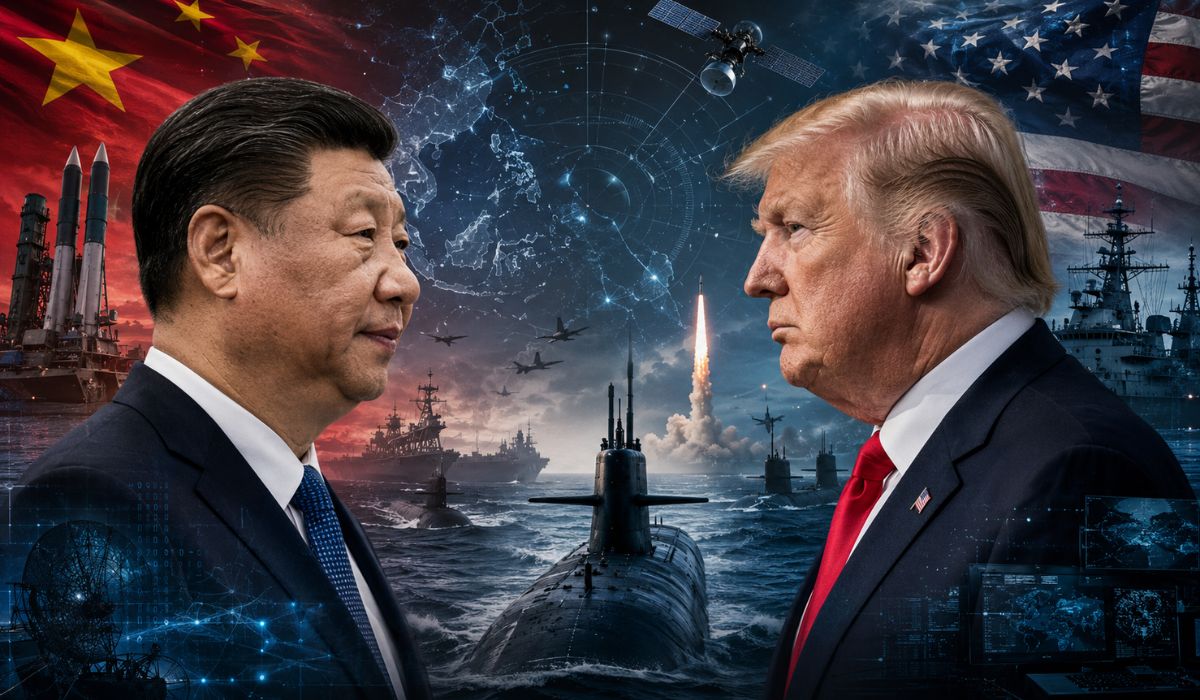
Assessment by former CIA analyst reignites debate on military technology, industrial capacity, and balance of power between China and the United States in a scenario of strategic dispute in the Pacific.
China’s military modernization has placed Beijing in a position of advantage or parity with the United States in relevant areas of contemporary warfare, according to an assessment by former CIA analyst John Culver in an interview published by Max Boot in the Washington Post.
In Culver’s view, Washington still maintains superiority in submarines and submarine warfare, but faces challenges in missiles, sensors, electronic warfare, cyber operations, industrial production, and logistics in the Pacific.
The assessment gained traction because Culver followed China for 35 years at the CIA, focusing on the People’s Liberation Army.
-
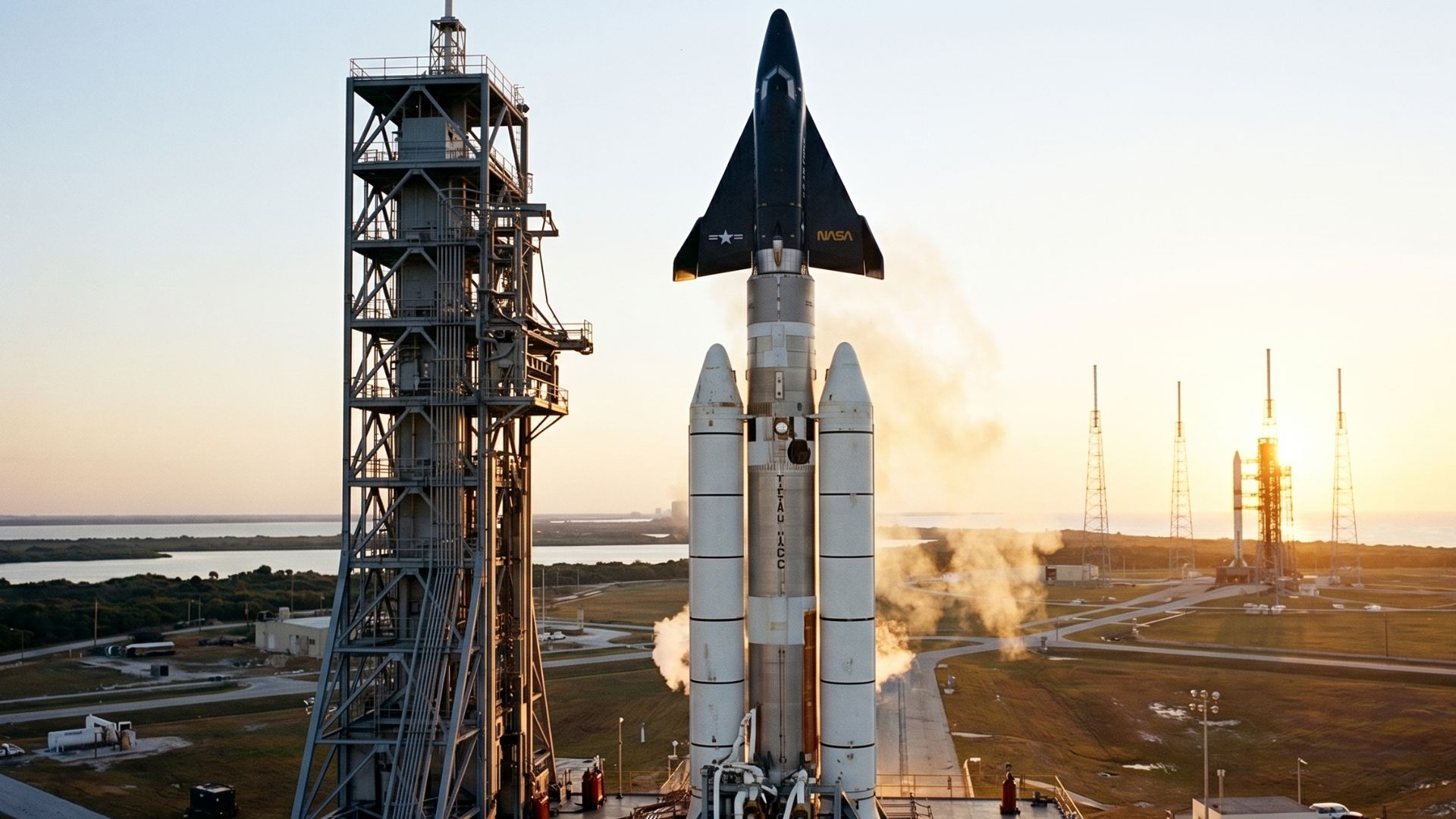
The military spaceplane that almost took the Cold War into orbit: Boeing X-20 Dyna-Soar was designed to re-enter above Mach 20, fly for up to 40 hours, land like a plane, and transform Titan rockets into a gateway to a new era of orbital warfare.

-
FAB bets on national drones and increases investments to strengthen the Brazilian aerospace industry

-
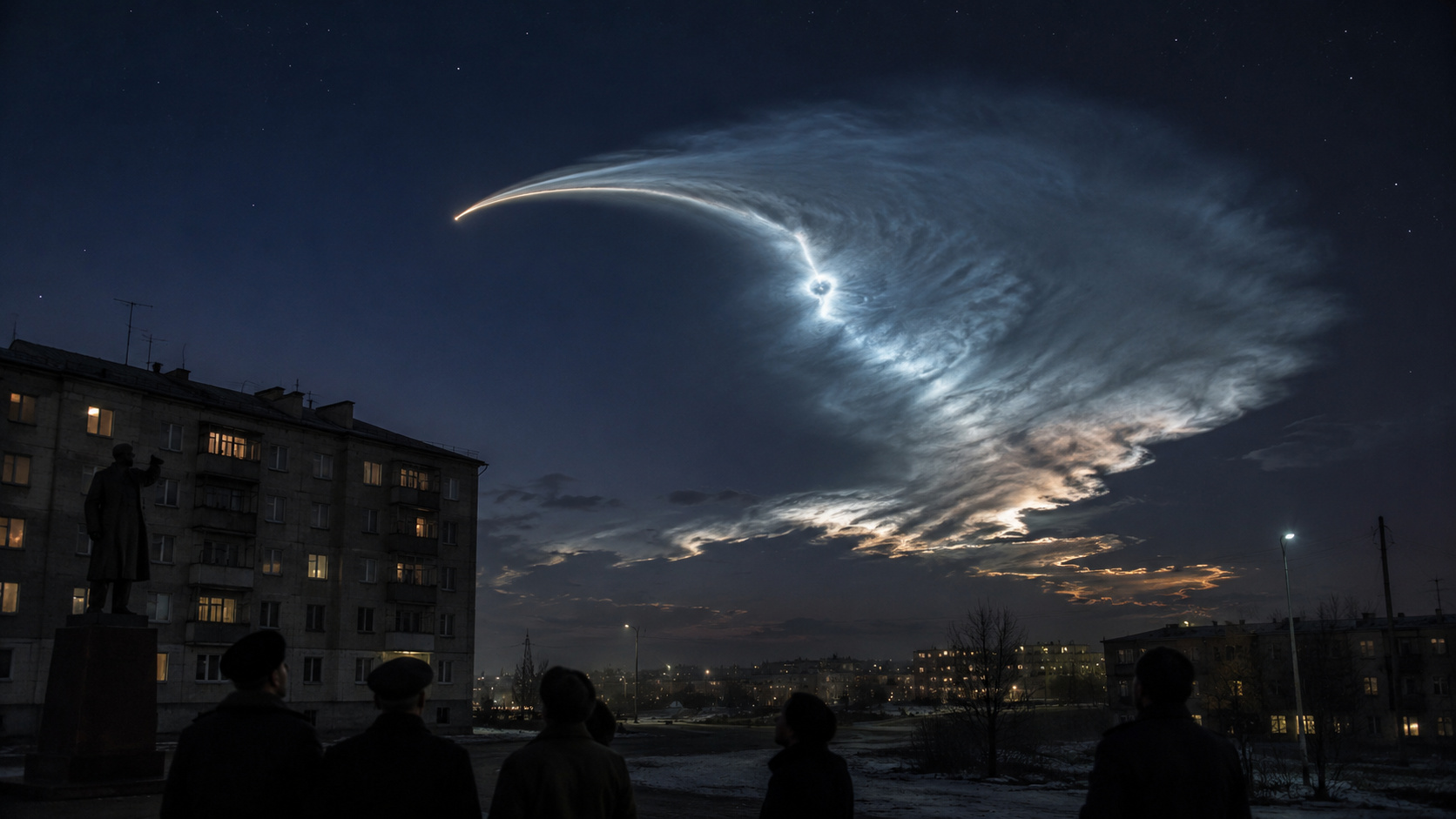
Six times, a luminous crescent the size of the Moon startled the Soviet sky at dusk: it seemed like a wave of UFOs, but it was a secret orbital weapon created to attack the United States via the South Pole and evade Cold War radars.

-
The United States government approved a potential sale of 100 portable Stinger anti-aircraft missiles to the Brazilian Army, in a package estimated at around 330 million dollars that still depends on negotiations between the two countries.


He studied the Chinese Armed Forces since 1985, served as national intelligence officer for East Asia between 2015 and 2018, and retired from the agency in 2020.
He currently appears at the Brookings Institution as a non-resident senior fellow.
The point presented by the former analyst is not limited to counting ships, planes, or missiles.
The discussion involves the ability to transform science, technology, and industry into sustained military power.
In a high-intensity conflict, the replacement of equipment, ammunition, and sensors can weigh as much as the performance of a specific weapon.
How technology changed the military balance between China and the United States
In the interview, Culver stated that the change in Chinese military power since the 1980s has been so extensive that “it’s hard not to be hyperbolic.”
The phrase was used to describe the contrast between China at the end of the Cold War, still dependent on older equipment, and the power that today operates satellites, radars, long-range missiles, drones, cyber warfare, and more integrated command systems.
According to the former analyst, the United States still has a clear advantage in the submarine dimension.
Nuclear attack submarines, acoustic discretion, experienced crews, and decades of global operation continue to be areas where Washington preserves superiority, in his assessment.
In other fields, however, Culver states that the gap has narrowed or reversed.
He cited air-to-air missiles, surface-to-air missiles, counter-space capabilities, electronic warfare, reconnaissance, cyber, and advanced munitions as areas where China already rivals or surpasses the US.
These sectors are considered relevant because modern warfare relies on networks capable of quickly detecting, tracking, and hitting targets.
Taiwan and the geography of risk in the Pacific
Taiwan occupies a central position in this debate as it lies at the intersection of strategic interests for Washington and Beijing.
The island is close to the Chinese coast, which creates a significant geographical difference compared to other scenarios of US military operations.
Culver said that part of the thinking at the Pentagon, at least until his retirement, envisioned withdrawing high-value naval assets from the region before the start of a war and then trying to “fight their way back” into the theater of operations.
This formulation, he said, reflected concern about the vulnerability of US aircraft carriers, forward bases, and aircraft to long-range Chinese missiles.
The analysis shows how sensors, satellites, radars, and precision weapons have altered the military use of maritime space.
For decades, the presence of US aircraft carriers near a crisis was used as a demonstration of intervention capability.
In the Western Pacific, these vessels would have to operate in an area monitored and covered by Chinese attack systems, according to Culver’s assessment.
The former analyst stated that there are no “safe spaces” in the region.
He said that US forces positioned in Japan, South Korea, or Australia could be reached by Chinese attacks in a way that adversaries like Iran could not replicate in the Middle East with the same depth.
Chinese shipyards enter the center of military dispute
The comparison between the United States and China also extends to shipyards.
In a 2024 report, the Center for Strategic and International Studies stated that the Jiangnan shipyard, near Shanghai, alone has more capacity than all American shipyards combined.
The same study estimated that Chinese shipbuilding capacity is more than 230 times greater than that of the United States.
This industrial difference helps explain why defense experts treat production as part of the military balance.
In the event of material losses, the speed of replacing hulls, engines, radars, missiles, and ammunition can influence the duration and cost of a campaign.
CSIS also noted that an unclassified U.S. Navy presentation indicated Chinese shipbuilding capacity was about 230 times greater than that of the U.S.
According to the analysis, China has dozens of commercial shipyards larger and more productive than the largest shipyards in the United States.
When discussing advanced munitions, Culver summarized the problem in one sentence: “whoever runs out of ammunition first loses”.
The observation refers to the accelerated consumption of guided armaments, interceptors, sensors, and spare parts in high-intensity wars, a challenge that involves both military planning and industrial capacity.
Drones and autonomous systems in the Taiwan Strait
The strategy known as “Hellscape” aims to saturate the Taiwan Strait with drones, missiles, and autonomous systems to hinder a potential Chinese military operation.
The proposal seeks to create a high-cost environment for forces attempting to cross the strait.
Culver questioned the practical feasibility of this plan.
To function, these systems would have to be pre-positioned in Taiwan, in Luzon, in the northern Philippines, or in the southwestern islands of Japan.
All these areas, according to him, are within range of Chinese attacks, which would create a problem for the survival of the equipment before or during a campaign.
The debate indicates a shift in how technology is incorporated into military planning.
Drones and autonomous systems can expand surveillance and attack capabilities, but still depend on stockpiles, energy, communication, maintenance, protected bases, and supply routes.
Culver’s criticism also extends to investments in large surface ships.
Asked about the U.S. insistence on funding aircraft carriers and other traditional platforms, he attributed part of this preference to the institutional culture of the Armed Forces, which values programs associated with careers, commands, and promotions.
In his assessment, expanding the budget without addressing structural bottlenecks could preserve choices that no longer fully respond to the Pacific scenario.
Beijing’s calculation on Taiwan
Despite the warning, Culver did not state that a war over Taiwan is inevitable.
His assessment points to another scenario: the expansion of China’s advantage could reduce the incentive for immediate military action, should Beijing conclude that it is possible to alter the political calculus of the U.S. and Taiwan without launching a large-scale amphibious invasion.
In this reading, Taiwan would be a crisis that Xi Jinping would seek to manage, and not necessarily a military opportunity to be exploited in the short term.
Pressure could occur through military exercises, blockades, economic coercion, cyber operations, and political attrition, without this meaning an automatic decision for invasion.
This interpretation differs from common analyses in Washington that cite 2027 as a possible window of attention for Chinese action.
Culver acknowledges that China has developed capabilities to blockade, punish, or attack Taiwan, but believes that Beijing may prefer to wait until the cost of intervention seems too high for the Americans.
The People’s Liberation Army itself also faces internal problems.
Culver mentioned recent purges and corruption cases in the high ranks of the Chinese military as signs of Xi Jinping’s concern with loyalty, discipline, and political control.
For him, these episodes do not necessarily indicate immediate preparation for war, but reveal uncertainties within the Chinese military structure.
The debate among analysts in the United States
Boot’s interview with Culver was published a few days after Robert Kagan argued, in The Atlantic, that Washington cannot reverse or control the strategic consequences of the war against Iran.
The sequence drew attention among analysts because Kagan and Boot are authors historically linked to a more interventionist view of American foreign policy.
Some critics of U.S. primacy interpreted the two texts as a sign of change in the Washington debate.
Commentator Arnaud Bertrand, for example, classified the publications as a kind of warning coming from names associated with the American foreign policy establishment.
This assessment, however, is an analyst’s interpretation and not a consensus among experts.
In the Indo-Pacific, the implications involve allies such as Japan, South Korea, Australia, the Philippines, and Taiwan.
These countries maintain varying degrees of dependence on the US military presence to deter Chinese actions.
If Culver’s assessment is correct, Washington would have to review base protection, force dispersion, missile defense, ammunition production, and logistical resilience.
The debate does not indicate that the United States has ceased to be a military superpower.
The argument presented by Culver is more specific: in a regional conflict near the Chinese coast, against an industrial power capable of producing missiles, ships, sensors, and drones on a large scale, the global superiority of the US might not automatically translate into a local advantage.






Be the first to react!