






 Portuguese
  Spanish
  3 min of reading
  1 comment


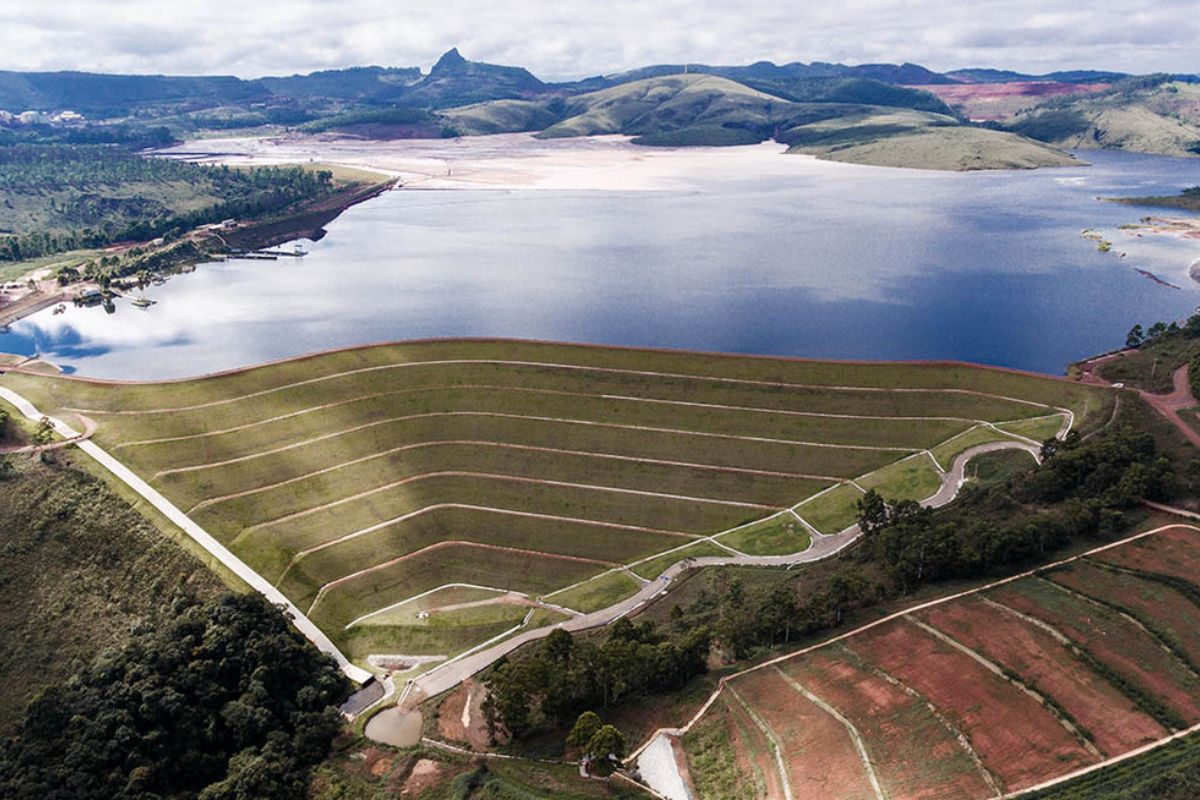


Minas Gerais, Heart of Mining in Brazil, Houses Hundreds of Tailings Dams, Many Dangerously Close to Urban Areas. This Article Investigates the Constant Danger Surrounding More Than One Brazilian City in the State and Questions Whether a New Tragedy Is on the Horizon.
Under the mountainous landscape of Minas Gerais, the state with the highest concentration of mining dams in Brazil, “sleeping giants” pose a constant danger to numerous communities. They are the tailings dams, essential structures for the industry, but which, when poorly managed or built using risky methods, such as upstream raising, can rupture, causing disasters of catastrophic proportions in Brazilian cities.
The recent and painful memories of Mariana and Brumadinho haunt every Brazilian city situated near these imposing yet vulnerable structures. This article analyzes the true extent of this risk in Minas Gerais, questioning whether the lessons have been effectively learned and whether the collapse of another one of these dams is a tragedy that could be unfolding again.
The Mining Scenario: A State on Top of Tailings Barrels
Minas Gerais is the epicenter of the risk of mining dams in Brazil. Approximately 1.8 million miners live within a 10-kilometer radius of dams at some level of alert. February 2025 data from the National Mining Agency (ANM) indicated 104 dams on alert or in emergency status in the country, with a significant concentration in Minas.
-
Survivor of 1966 SS Daniel J. Morrell Shipwreck in Lake Huron Recounts 38-Hour Ordeal in Extreme Cold

-
The Greatest Hoax in World Cup History? The Film That Denied Brazil’s 1958 Victory and Exposed How Fake Evidence Can Seem Convincing on TV
-
Fake South Korean Online Stores Offer Shopping Thrill Without Spending Money or Receiving Products
-
The War of Jenkins’ Ear: How a Severed Ear Sparked One of the 18th Century’s Most Unusual Conflicts


Two dams in the state were at Emergency Level 3 (imminent risk of rupture): Serra Azul of ArcelorMittal in Itatiaiuçu and Forquilha III of Vale S.A. in Ouro Preto. Four other Vale structures in Minas Gerais were at Level 2. Many of these structures use the dangerous upstream raising method, now prohibited, but whose legacy of risk persists.
The Deep Scars of Mariana and Brumadinho and the Persistence of Risk for Every Affected Brazilian City

The disasters of Mariana (2015) and Brumadinho (2019) are the largest in the history of Brazilian mining. In Mariana, the rupture of the Fundão Dam (Samarco/Vale/BHP) caused 19 deaths and devastated the Rio Doce basin. In Brumadinho, the collapse of Vale’s B1 Dam resulted in the death of 272 people and contaminated the Rio Paraopeba. Both were built upstream and had a history of instability alerts.
Experts assert that Brumadinho could have been avoided if the lessons from Mariana had been learned. Other incidents in Minas, such as in Itabirito (2014, three deaths) and the two ruptures in Miraí (2006 and 2007), reinforce the systemic vulnerability in more than one Brazilian city in the state.
Legislation, Oversight, and Emergency Plans to Protect Each Brazilian City in Minas Gerais
The National Dam Safety Policy (PNSB), tightened after Brumadinho by Law No. 14.066/2020, prohibits upstream raising and requires the decharacterization of these structures. The ANM is the main oversight body, classifying risks and demanding Safety Plans (PSB) and Emergency Action Plans (PAEBM).
The PAEBM must include rupture studies, flood maps, audible alert systems (sirens), and drills with communities. However, the oversight capacity of the ANM is a critical point, with personnel shortages and budget constraints highlighted by the TCU.
Life Under Constant Threat

Living under the shadow of a dam at risk generates profound suffering. A study in Barão de Cocais (MG), threatened by the Sul Superior dam of Vale, revealed that 88.7% of respondents reported health problems (anxiety, depression) after the collapse alert in 2019, even without the rupture.
Poor communication of risks and distrust in companies and authorities undermine the perception of safety. The “invisible sludge” of indirect impacts, such as increased crime in evacuated areas and social disintegration, worsens the trauma in each affected Brazilian city.





A Agência Nacional de Mineração está abandonada!
…Sem servidores para fiscalizar/orientar é certo acontecer novamente outras targédias…Morreram vários e ninguém foi responsabilizado, então é daí para pior!