Portuguese
  Spanish


At a lower cost than other compact housing, Conestoga huts offer fast, safe, and functional shelter to people experiencing homelessness in Oregon, connecting residents to psychological support, social assistance, and work opportunities
With an approximate cost of US$ 2,500, the low-cost houses, Conestoga huts, offer functional shelter to people experiencing homelessness in Oregon, with quick assembly, community support, and access to services that help rebuild their lives.
Community turned an idea into shelter
The initiative was born from the mobilization of residents who decided to act in the face of the lack of shelter, cold, rain, and insecurity experienced by people experiencing homelessness.
Without luxury or large structures, the project brought together donations of materials, volunteer work, and different forms of support to create simple, safe, and functional units.
-
Detroit Microhouse Village Offers Former Homeless Residents Ownership After 7 Years: First 3 Tenants Receive Deeds

-
Brazilian Factory in Ivoti Produces 500 Modular Steel and Fiberglass Concrete Homes Following 2024 Floods, Securing $13 Million Contract
-
Brazilian Startup Develops Recycled Plastic Bricks, Cutting Construction Costs by 40% and Speeding Up Building by 90%

-
Tarcísio Opens New São Paulo Metro Line After 18-Year Wait, Offering Free Rides at 6 Stations and Aiming to Cut Commute to 23 Minutes for 633,000 Daily Passengers
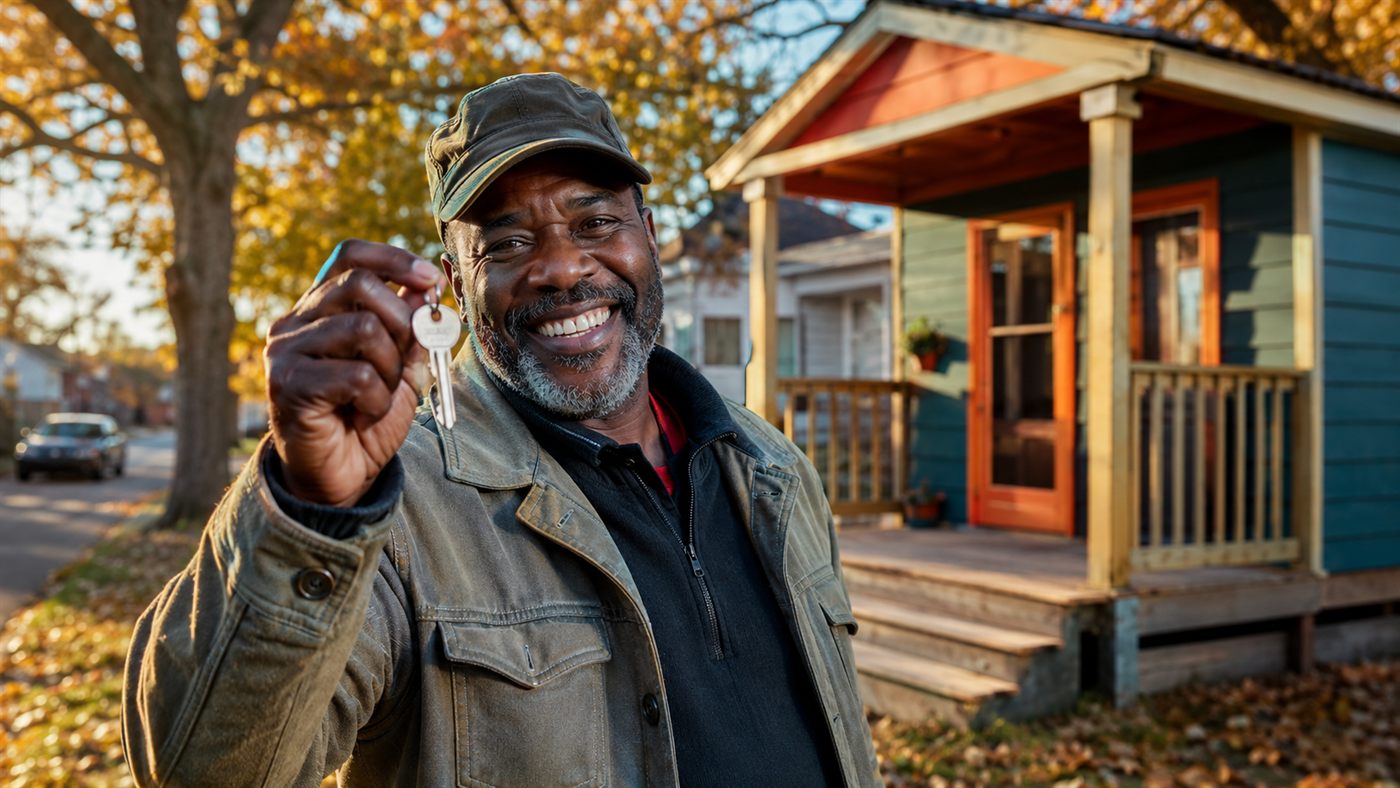


The idea for the huts was developed by Erik DeBurr, a member of Community Supported Shelters, an organization dedicated to serving people experiencing homelessness in the state of Oregon, in the United States.
From the beginning, the local community participated in both funding and implementation, allowing the proposal to move forward with the direct involvement of ordinary people.
Low-cost houses were inspired by old wagons
The structures were named Conestoga Huts because they were inspired by the old Conestoga wagons, historically used as shelter during travel.
The adaptation transformed this model into compact units for urban areas, with a focus on protection, privacy, and a practical response for those who need to start over.
The Conestoga huts are ready in a few hours, which makes it possible to quickly expand capacity when the demand for shelter increases.
The rapid assembly is one of the central points of the project, because it allows for the installation of new units without relying on long, expensive, or complex construction.
Reduced cost of low-cost houses expands reach
Each hut costs approximately US$ 2,500, a value equivalent to R$ 10,000 on average, according to the information presented by the initiative.
The cost is lower than other small housing alternatives, which can reach up to US$ 20,000, or about R$ 100,000.
This difference allows for the creation of more units with fewer resources, while maintaining the main objective: to offer basic shelter, protection from the weather, and an organized space.
Each structure is approximately 5.5 square meters and includes a raised bed, lighting, and an area to store personal belongings.
The locking door helps protect documents, clothes, and important objects, reducing losses and increasing the sense of security in daily life.
Shelter also connects residents to services
The villages were organized to function beyond emergency shelter. The format seeks to connect residents with psychological care, social assistance, and professional guidance.
The Conestoga huts act as transitional shelters, offering a point of support while residents try to regain stability and access new opportunities.
During their time in the units, teams support the residents and help them connect with public services, training programs, and job opportunities.
Throughout the day, residents participate in external activities, such as appointments and training, which helps to organize their routine and strengthen paths to reintegration.
Program seeks permanent housing
Some participants are able to move on to permanent housing after going through the program, while others move on to housing alternatives with public support.
The project shows a simple response to a complex situation, combining low cost, rapid assembly, and social support in a structure designed for new beginnings.
Even though they are compact, the units provide the essentials for those who have lost almost everything: shelter from cold and rain, privacy, security, and a place where life can be reorganized.
With collective support, the Conestoga huts have become a functional alternative for sheltering homeless people and creating minimum conditions of stability, care, and dignity.
With information from Só Notícia Boa.