






 Portuguese
  Spanish
  5 min of reading
  0 comments


With Sensors, Predictive Maps, and Unprecedented Automation, John Deere Launches the S7 Series, a Harvester That Promises to Increase Efficiency, Reduce Losses, and Ensure Higher Quality of the Final Product, Transforming the Harvest Experience in the Field.
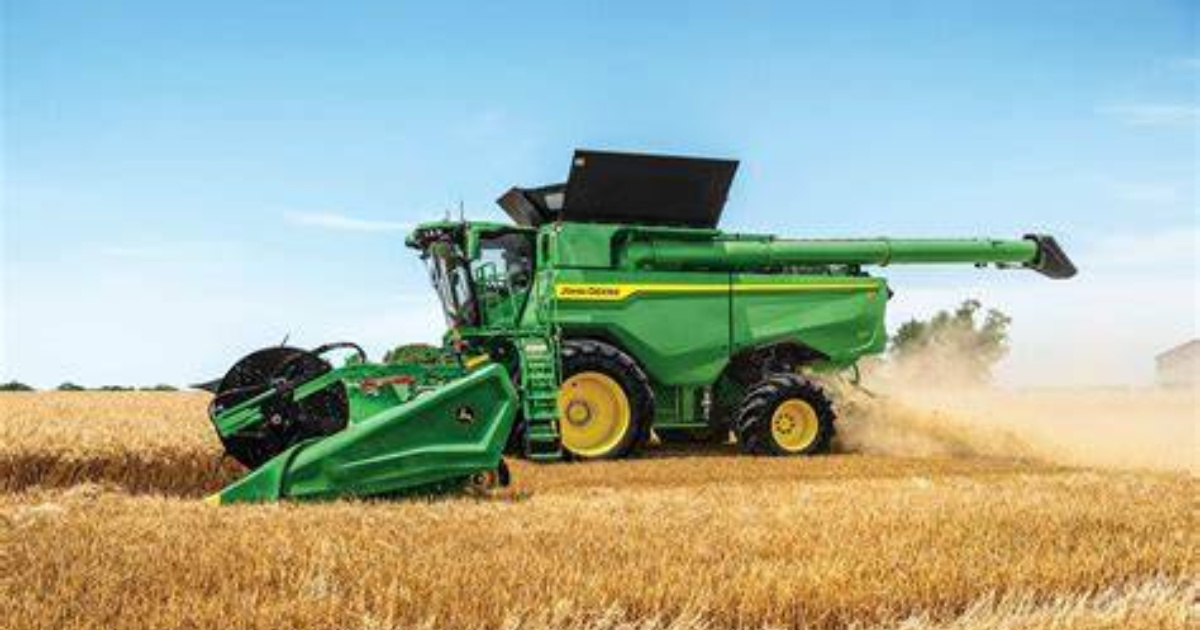
John Deere introduced the S7 Series focusing on predictive automation for grains.
The system reads the crop up to 8.5 meters ahead and, with the support of satellite imagery, anticipates the harvest scenario to automatically adjust speed and internal parameters.
According to the manufacturer, the combination of sensors and algorithms can increase operational efficiency by up to 20%, reduce losses by up to 10%, and cut consumption per hectare by up to 4.5%, while maintaining the quality of the harvested product.
-
Low-Demand Brazilian Beef Offal Gains Popularity Abroad: Indonesia Purchases $19.5 Million, Boosting Revenue and Reducing Waste

-
Soy Expansion in Former Brazilian Savanna Sparks Water and Land Conflicts in Major Agricultural Frontier
-
Mexican Pest Threatens U.S. Cattle Herds at Historic Lows, Potentially Boosting Brazilian Beef Exports as Burger Prices Soar

-
Avocado Boom for European and U.S. Markets Fuels Water Crisis in Drought-Stricken Chilean Region





Predictive Automation Anticipates Harvest Scenarios
Unlike reactive adjustments, the S7 works with predictive speed automation.
The embedded front cameras map the volume of mass that will reach the feed; in parallel, the Operations Center processes satellite data and generates a predictive yield map.
These layers of information feed the control algorithms so that the machine can adjust the pace and maintain a stable flow of material.
The architecture anticipates variations with up to 3.6 seconds advance, helping to avoid bottlenecks, keep the rotor in the ideal regime, and prevent fluctuations that impact the separator and screens.
In practice, constant feeding reduces load peaks and contributes to fewer broken grains, lower presence of impurities, and better uniformity.
Operational Gains Measured in the Field
The S7 Series proposal targets typical harvest management indicators: hectares per hour, losses, and liters per hectare.
By synchronizing speed with the condition of the crop, the machine better utilizes short weather windows and heterogeneous areas without requiring continuous operator intervention.
In addition, the automatic adjustment of internal systems affects cleaning quality, rotor efficiency, and concave opening according to predetermined goals.
The reduction of losses depends on calibration driven by objectives.
When the system detects a tendency to exceed the configured limit, it autonomously adjusts parameters and prioritizes grain integrity.
Still, the operator maintains strategic command of the process, defining performance priorities in each field.
Automatic Adjustments Under Operator Control
The G5 Plus monitor centralizes decisions. Here, the producer sets maximum limits for losses, impurities, and broken grains.
Based on these targets, the S7 makes adjustments to the rotor, concave, and sieves to keep the batch up to the established standard.
If there is a change in conditions — such as variation in humidity or cultivar — parameters can be quickly altered, maintaining the predictive logic.
The ISS (Intelligent Initial Settings) system speeds up machine preparation.
It compares data from other harvesters connected within a radius of up to 80 km and automatically suggests an appropriate starting point for the local context.
This initial reference reduces trial and error time and standardizes operation in larger fleets.
Cabin, Power, and Energy Efficiency
The S7 Series combines automation with comfort and mechanical performance. The new cabin adopts revised ergonomics and multimedia compatible with Android Auto and Apple CarPlay, as well as a 20% noise reduction.
The goal is to maintain attention levels during long shifts and improve communication among teams.
In the powertrain, the family features 13.6 L engines with a nominal speed of 2,000 rpm, prioritizing efficiency and stability.
In varying load scenarios, automation helps maintain the set within the highest efficiency range, favoring the relationship between productivity and consumption.
To reduce component wear, the automatic shutdown of the augers acts when there is no need for transfer, preserving the lifespan of the mechanisms.
Electronics, Data, and Real-Time Connectivity
The new 32-bit electronic architecture with Ethernet cable speeds up data exchange between modules and facilitates diagnostics.
In distributed operations, telemetry becomes central: the JDLink Boost connectivity comes factory-integrated, with satellite internet for real-time operation visibility.
Managers can track indicators on panels, adjust goals on the monitor, and align decisions between harvesting and transportation logistics.
The S7 is designed to operate as a node within a connected chain. Performance information feeds histories, supports harvest audits, and provides comparisons between areas and crops.
This aids in decision-making for future adjustments and in planning for the next season.


Platform, Spreading, and Material Flow
The S7 Series features the 50-foot HDF platform with flotation technology and height control, designed to maintain contact with the ground.
Next, the Premium Powercast evenly distributes straw, reducing backpressure and improving spreading across the full working width.
This set maintains uninterrupted material flow and aids in soil preparation for post-harvest operations.
The more stable the flow, the more accurate the algorithm’s response and the more consistent performance gains become.
Integrated Operation From Planting to Harvesting
The manufacturer positions the S7 as a partner from planting to harvesting, reinforcing the strategy of uniting hardware, software, and connectivity.
The Operations Center centralizes images and histories, JDLink ensures data traffic, and automation closes the cycle in the field.
In fleets with varying levels of experience, the standardization provided by the ISS and the targets defined in the G5 Plus reduces dependence on empirical adjustments and speeds up the learning curve.
The operational proposal of the S7 is to deliver consistent results during critical window hours, support logistics decisions, and simplify the operator’s workday, keeping control in the manager’s hands.
For your reality, which automatic adjustment would have the most immediate impact: the predictive speed control or the autonomous management of losses and quality?





Be the first to react!