Portuguese
  Spanish


Learn More About The Construction Of The Svalbard Vault In Norway That Stores 1 Million Seeds To Protect Biodiversity
Sixteen years after its inauguration, after some repairs and expansions due to flooding, the Global Seed Vault of Svalbard can take pride in the feat of storing over one million seeds. A total of 60,000 distinct varieties of crops from all over the world have been added in recent years and remain frozen in the vault in the Arctic.
The Svalbard Vault is built on the slope of a mountain on the island of Spitsbergen, in the Svalbard archipelago, hence its name. It is halfway between Norway and the North Pole and was designed as a storage facility to protect vital crop seeds in the face of disasters.
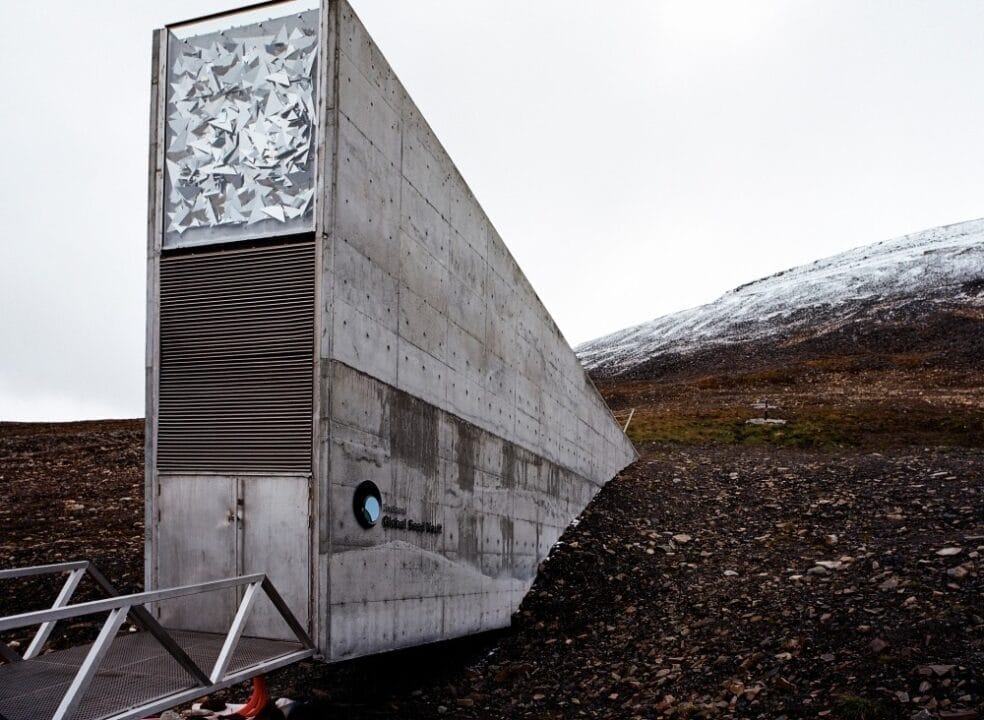
To preserve the seeds inside, the vault is only opened on specific occasions. Despite this and the meticulous way it was built, it can also be affected by external agents. In 2017, the construction experienced flooding due to the melting of the permafrost around it. Water entered the tunnel but did not damage the seeds.
-
Texas Teens Win $50,000 at World’s Largest Science Fair for Developing Non-Surgical Brain-Controlled Bionic Prosthesis with 98% Accuracy

-
Samsung Galaxy A27 Launches with 6.7-inch Super AMOLED Display, Full HD+ Resolution, Android 16, Six Years of Updates, Snapdragon 6 Gen 3, and Dust and Splash Resistance; Available for Pre-order in the US for $350

-
Five Brazilian Students Invent Drug Test Pen That Detects Date Rape Drugs in Seconds
-
Viedma Glacier Retreat in Patagonia Uncovers 900-Meter-Deep Basin, Making Viedma the Deepest Lake in the Americas


In its latest renovations, the vault was waterproofed and the refrigeration equipment that keeps it at -18ºC was moved to a nearby building to allow heat to dissipate better. Its creators believe it is designed to have an infinite lifespan. But this does not mean it does not need some maintenance from time to time.

Updating The Collection
With the vault’s update, seeds from 36 distinct banks and institutions from around the world were deposited a few years ago. Seeds of pumpkin deposited by the Cherokee Nation of the United States arrived, along with original wheat from the University of Haifa in Israel, potatoes from Peru, and all kinds of crops from Morocco, Mongolia, and New Zealand, among others. Each species introduced is a sample of approximately 500 seeds.
Norway had to invest 10 million euros to repair and improve the construction after a series of floods. Previously, to create the vault, the Norwegian government indicated they spent approximately 10 million dollars in 2008. Tens of millions of euros have been invested by the government with the sole purpose of preserving terrestrial biodiversity.
Global warming, natural disasters, or those caused by humans are some of the factors that gradually endanger nature’s diversity. In addition to eliminating this diversity, they can also destroy other seed banks around the world. This happened, for example, with the Aleppo seed bank during the war in Syria. Consequently, in 2015, the first withdrawal of seeds from the vault was made to replenish the Aleppo bank. The seeds were cultivated and redeposited in the Svalbard vault in 2017.