






 Portuguese
  Spanish


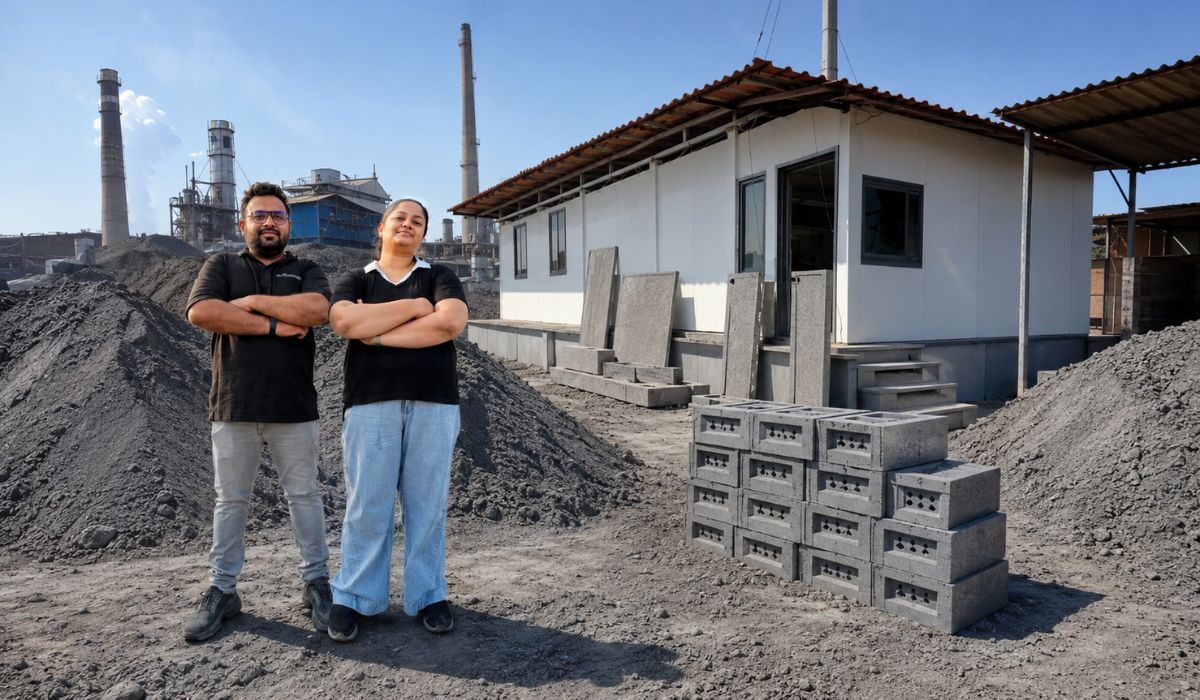

An initiative emerged in an Indian industrial hub combines factory waste, cement-free construction, and quick assembly to create housing with a proposal of lower environmental impact and better performance in regions of intense heat.
A startup located in Ankleshwar, an industrial hub in the state of Gujarat, western India, is using factory waste to produce blocks and components intended for the construction of prefabricated houses.
Founded by the couple Vedant and Aditi, Co2ncrete claims that its system dispenses with conventional cement and allows certain homes to be completed in about 30 days.
Among the reused raw materials are fly ash, lime sludge, silica sludge, and construction waste.
-
The oldest crime of humanity is 100,000 years old: a Homo sapiens was stabbed in the face with a stone blade in a cave in Israel, survived the blow, and became the oldest record of violence between people.

-
Walking with hands in pockets is not just shyness, says psychology: the gesture can hide signals that almost no one notices, involve at least 6 silent behaviors, and completely change your interpretation of those who do it.
-
Seen from space, an astronaut from the International Space Station points a Nikon D5 camera at Brazil and captures Porto Alegre shining at night from an altitude of 417 km, with avenues, highways, bridges, and cities of the metropolitan region outlined in light over Rio Grande do Sul.

-
230 AD mosaic attributed to Syria goes viral for possibly containing the inscription “Jesus is God”


These materials, which could be sent to disposal areas, become part of solid blocks, hollow pieces, and other elements used in building assembly.
The company also attributes thermal insulation characteristics to the components, capable of keeping indoor environments cooler during periods of intense heat in Gujarat.
According to information released by the startup itself and reproduced by the Indian press, the technology has already contributed to the construction of more than 450 homes in the state.
Idea emerged in one of the largest industrial hubs of Gujarat
Vedant and Aditi grew up in the Ankleshwar region, known for the concentration of chemical industries and other productive activities.
The presence of factory waste in daily life led the couple to research ways to transform part of this discarded material into input for construction.
The project resulted in the creation of Co2ncrete, a company focused on the development of cement-free construction materials.
Instead of relying solely on the extraction of new raw materials, the production incorporates industrial by-products that still have usable properties.
Fly ash, for example, is a fine residue mainly associated with coal burning.
Lime and silica sludges can arise in different industrial processes.
The composition and necessary treatment vary according to the origin of the material, which is why quality control is a relevant step before use in construction.
On the institutional site, Co2ncrete states that it manufactures blocks with compressive strength between 5 and 13 megapascals, density from 800 to 1,700 kilograms per cubic meter, and water absorption below 10% or 12%, depending on the piece.
The company also says that the products undergo laboratory checks and cites certificates and technical results, although the complete documentation was not detailed in the reports consulted.
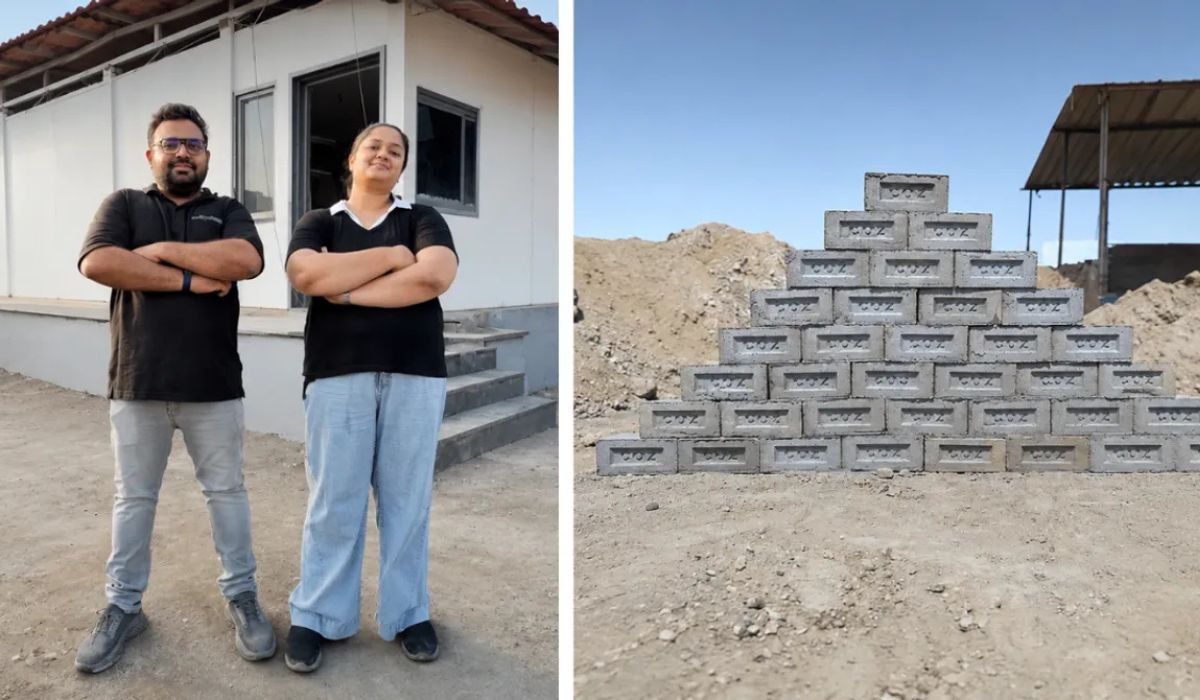
How the blocks are produced without cement
The company’s differential lies in the replacement of cement used in conventional blocks with a combination of industrial waste and curing processes.
The startup claims that carbon dioxide is involved in this stage and is retained in the material during the formation of the pieces.
The technique is associated with carbonation, a reaction in which CO₂ comes into contact with mineral compounds and can be converted into stable carbonates.
In the case of Co2ncrete, the company states that this mechanism helps consolidate the blocks and store carbon in their structure.
No independent life cycle analyses confirming the total emissions balance, including transportation, waste preparation, manufacturing, and assembly, were found in the sources consulted.
The absence of cement does not mean that all types of construction can adopt the pieces in the same way.
The company’s catalog differentiates blocks intended for non-structural walls from solid models presented for load-bearing applications.
Each project still needs to consider engineering calculations, foundations, local regulations, and site conditions.


Pre-fabrication reduces work done on site
In addition to the composition of the blocks, the announced speed depends on the pre-fabricated construction model.
In this system, part of the pieces is produced before arriving at the construction site.
The components are transported ready or partially prepared and then assembled on site.
This method reduces steps that would normally be executed directly on site, such as continuous mixing preparation, molding of certain structures, and some waiting periods between services.
Predictability can also facilitate the control of the amount of material used.
Co2ncrete claims that it can deliver houses in approximately 30 days.
Another report published in July 2026 mentions a range of 15 to 30 days, based on information presented by content creator Anuj Mohanty.
The timeframe should not be interpreted as a rule for any property, as built area, design, foundation, finishing, and infrastructure interfere with the schedule.
The reports do not detail whether the 30 days include licensing, land preparation, electrical installations, plumbing network, and all finishes.
Therefore, direct comparison with a conventional construction requires equivalent projects and equal measurement criteria.
Thermal performance is one of the main claims
The heat of Gujarat appears as another central point of the initiative.
The company and Indian publications claim that walls made with their blocks help keep interiors at lower temperatures, which could reduce the need for fans or cooling equipment.
The manufacturer’s website reports a thermal conductivity range of 0.90 to 1.05.
Comfort inside a house also depends on the roof, ventilation, solar orientation, windows, coating, and the location of the property, not just the type of block.
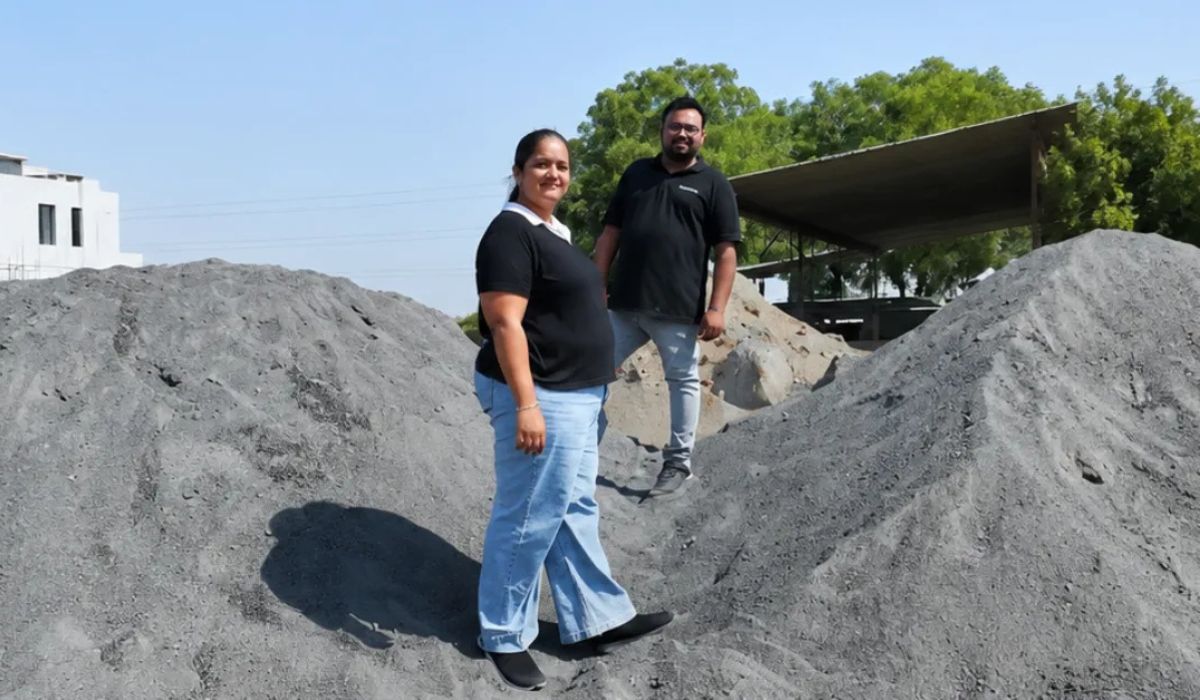
Industrial waste gains a new application
The proposal incorporates discarded materials into a reuse chain.
Co2ncrete claims to process between 500 and 600 kilograms of industrial waste per day and reports having completed residential, governmental, and healthcare-related projects.
In practice, the solution seeks to connect two activities: factories that need to dispose of their waste and the construction sector, which demands large volumes of raw materials.
For this flow to function continuously, the composition of the waste must be monitored, as materials from different processes may present variations or contaminants.
The technology gained attention in the press and on social media between May and July 2026.

Part of the attention came from the combination of rapid construction, waste reuse, and reduction of cement use, three relevant aspects in regions facing urban expansion, intense heat, and industrial concentration.
The possibility of expanding this model will depend on production capacity, regularity in the supply of raw materials, technical certifications, and adaptation to the regulations of each region.


