Portuguese
  Spanish


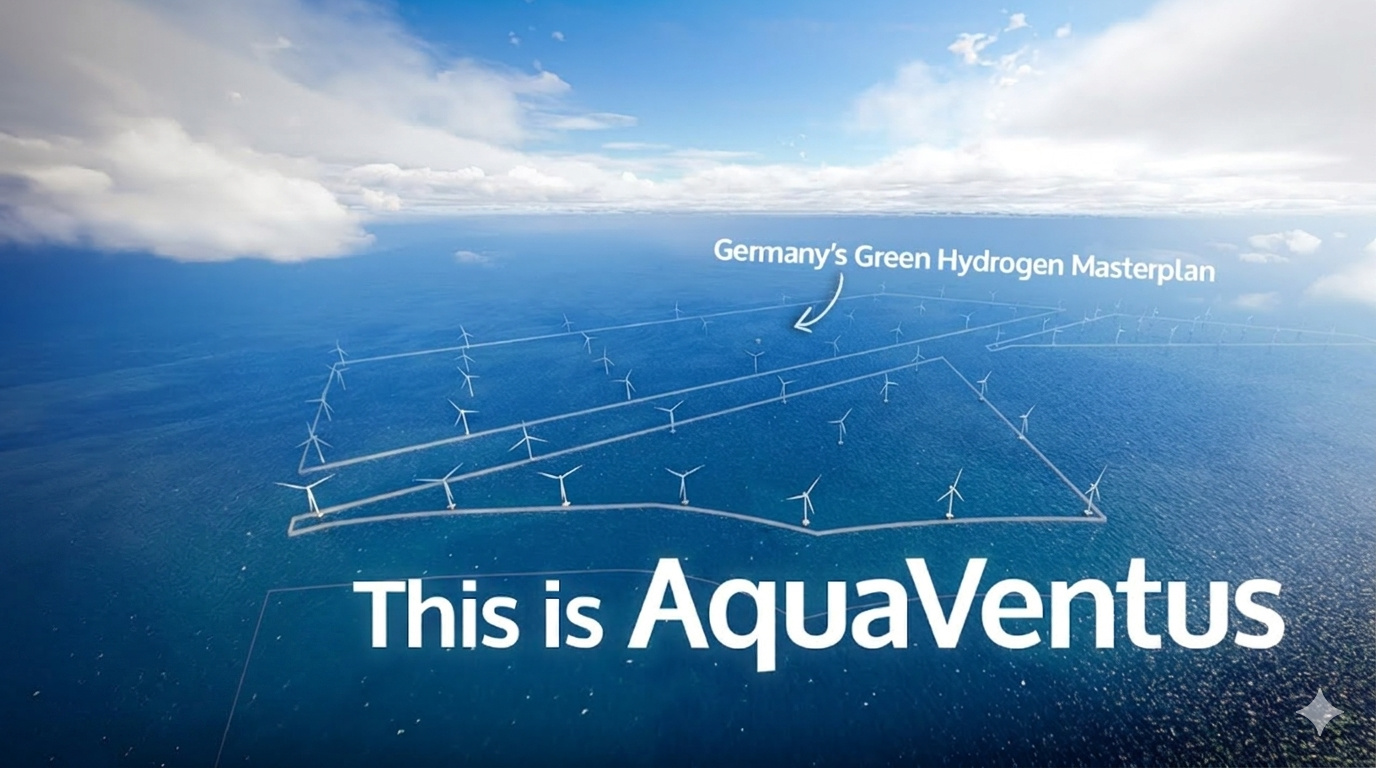

North Sea could become Europe’s largest green hydrogen hub with offshore plants and natural gas pipeline repurposing.
According to the AquaVentus consortium, the North Sea is transitioning from being merely Europe’s largest oil field to also becoming one of the continent’s main green hydrogen production hubs. The initiative brings together over a hundred companies, research institutes, and energy infrastructure operators, including Shell, RWE, Gasunie, and Equinor. The plan envisages the installation of up to 10 gigawatts of offshore electrolysis capacity between Helgoland island and the Dogger Bank by 2035.
Estimated production is up to 1 million tons of green hydrogen per year, with transport to the European continent via a dedicated pipeline named AquaDuctus, approved in October 2024 by Germany’s Federal Network Agency as part of the future national hydrogen network.
Excess wind in the North Sea boosts energy production and creates bottlenecks in electricity transmission
The North Sea has one of the highest wind availabilities on the planet in regions with suitable depth for offshore wind turbine installation.
-
USP researcher creates thesis to attract international funds for the country’s electric energy sector

-
Trafigura receives authorization from ANEEL to trade electricity in Brazil and expands its operations in the largest energy market in Latin America.
-
Mobile solar panels promised to share space with corn crops, but the 20% to 25% shade reduced production by an average of 7.7% and opened a new dispute between energy and food.
-
More than 80 million kilometers of wires need to be replaced by 2040: the energy transition doesn’t just depend on panels and electric cars, but on a colossal race for copper, aluminum, transformers, and recycling of old cables.


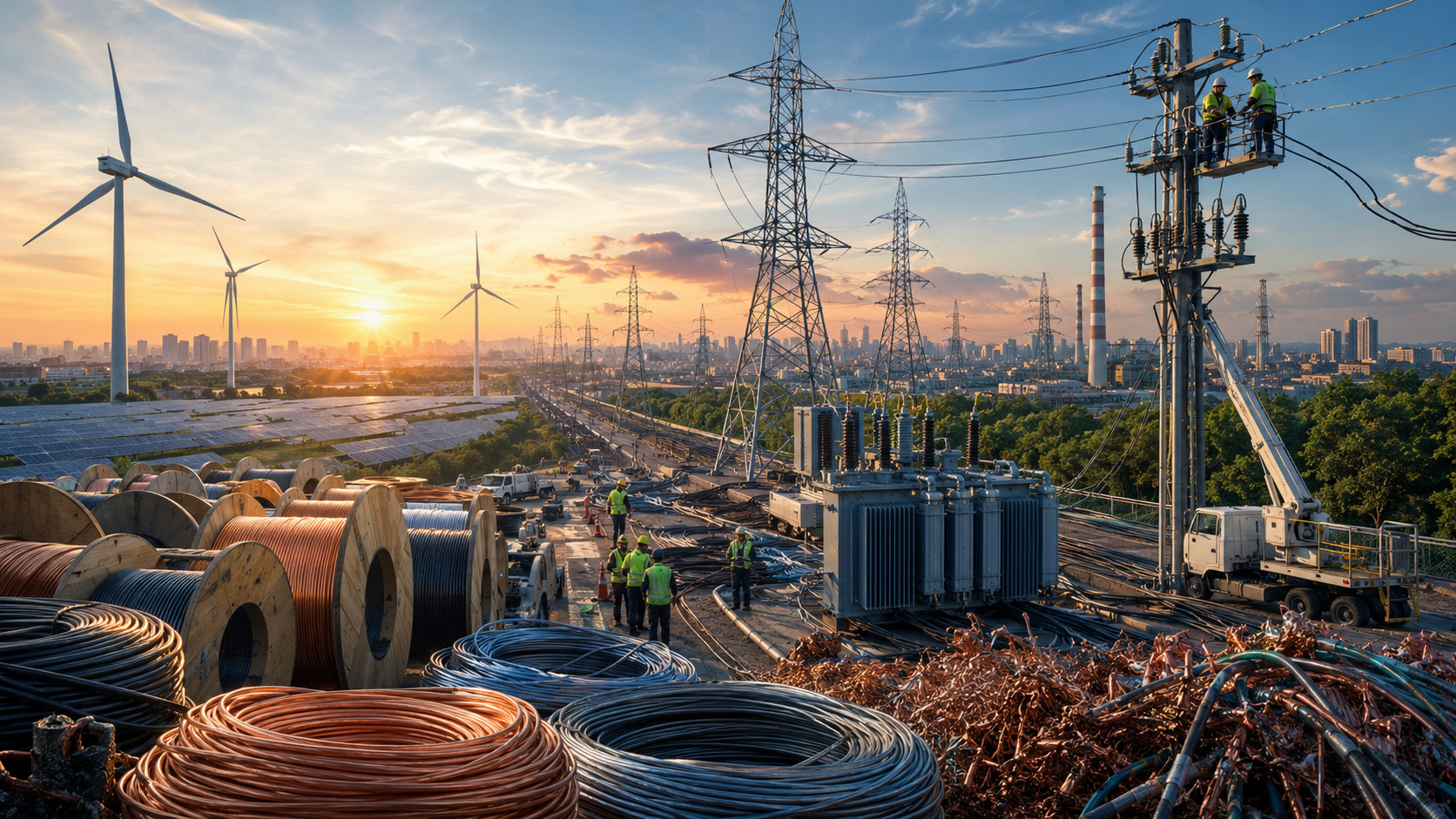
This combination allows for the generation of large volumes of electricity, but creates a structural problem: at certain times, production exceeds the transmission capacity of the European electricity grid.


Submarine cables have technical and economic limitations. High-voltage line projects spanning hundreds of kilometers require high investments and face complex regulatory barriers.
Energy transport via hydrogen pipelines can be up to five times more efficient than electrical cables
The conversion of electricity into hydrogen through electrolysis allows for alternative energy transport.
According to studies cited in the project, transporting energy in the form of hydrogen via gas pipelines can be between three and five times cheaper than using high-voltage cables over long distances.
A single pipeline can transport the energy equivalent of several offshore wind farms, reducing the need for additional electrical infrastructure.
North Sea oil and gas infrastructure can be repurposed for green hydrogen
The North Sea has an extensive network of pipelines built over more than fifty years of oil and gas exploration.
This infrastructure connects offshore fields in the British, Norwegian, Danish, German, and Dutch sectors to continental terminals.
With the depletion of oil fields, many of these pipelines are being decommissioned, creating an opportunity for repurposing them for hydrogen transport.
Technical challenges include adapting pipelines for high-concentration hydrogen transport
Despite partial compatibility, hydrogen transport presents significant technical challenges. The hydrogen molecule is smaller than methane and can cause embrittlement in certain types of steel, requiring a detailed assessment of pipeline integrity.
Mixtures with up to 20% hydrogen can be transported without major adaptations, but the use of pure hydrogen requires specific technical analysis.

The conversion of decommissioned offshore platforms into hydrogen production units represents an alternative to decommissioning.
Dismantling a platform can cost between US$500 million and US$2 billion. Instead of removing these structures, the project proposes transforming them into electrolysis hubs.
These platforms already have foundations, accommodation, support systems, and pipeline connections, which reduces deployment costs.
Offshore electrolysis uses wind energy to produce hydrogen directly at sea
The electrolysis process separates hydrogen and oxygen from water using electricity. In the offshore model, energy is generated by wind turbines near the platforms, reducing transmission losses.
Seawater undergoes desalination before entering the electrolyzers, a technology already consolidated in maritime operations.
The French company Lhyfe demonstrated the concept’s viability in 2023 with the SeaHyfe project. The system used a floating platform equipped with an electrolyzer connected to an offshore wind turbine, producing hydrogen from desalinated water.
Even in adverse conditions, with waves up to 13 meters, the system operated successfully after adaptations to the sensors and water treatment processes.
AquaDuctus will be the backbone of hydrogen transport with over 400 kilometers in length
The AquaDuctus project envisions a pipeline over 400 kilometers long to transport hydrogen from the North Sea to the European continent.
The estimated capacity is equivalent to 20 gigawatts, economically replacing several high-voltage electrical transmission lines.
The project has been classified as a European Project of Common Interest, which facilitates funding and integration with the bloc’s energy policies.
Norway leads studies on hydrogen storage in submarine reservoirs
Norway has strategic advantages in this energy transition. Institutions like NORCE are studying hydrogen storage in submarine geological formations, including salt caverns and porous reservoirs.
These structures have already been used for natural gas storage and can play an important role in stabilizing energy supply.
Despite technological advancements, production costs remain high. BloombergNEF estimates indicate values around US$7 per kilogram in 2025, with a projected drop to about US$1 per kilogram by 2050.
Economic viability depends on subsidies, regulatory incentives, and technological cost reductions.
European energy transition depends on industrial scale and overcoming regulatory barriers
The large-scale implementation of offshore hydrogen still faces regulatory, logistical, and technical challenges.
These include the definition of specific standards, the availability of specialized vessels, and the adaptation of existing infrastructure. The North Sea could transform from one of the world’s largest oil hubs into one of the main bases for clean energy production.
In your view, will this transition be able to occur at the necessary speed, or are the technical and economic challenges still too great?