Portuguese
  Spanish


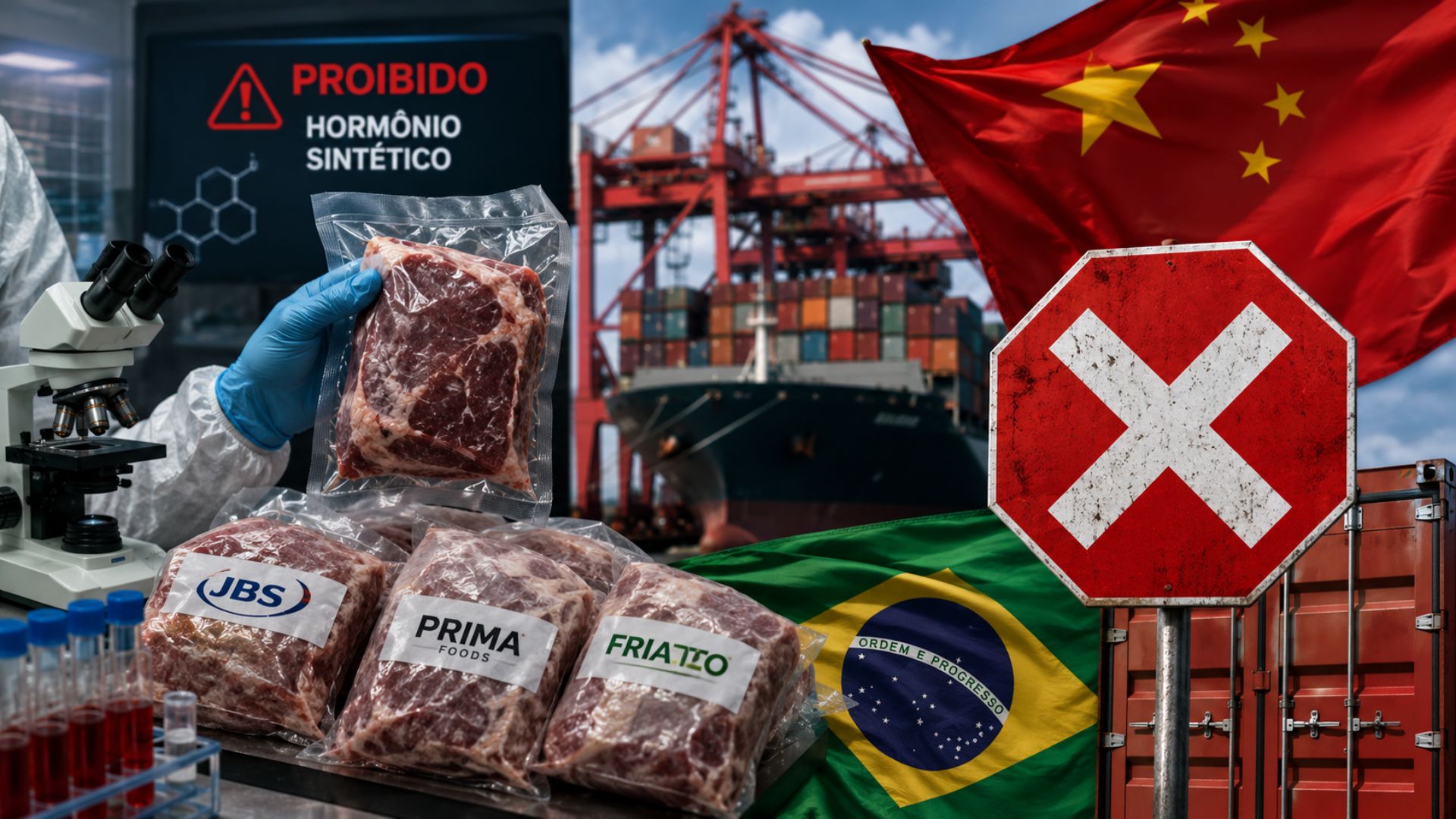

The substance found was medroxyprogesterone acetate, a hormone banned by Chinese sanitary legislation, found in a batch of frozen meat. The timing is noteworthy: the blockade came while the Minister of Agriculture, André de Paula, was on an official mission in China itself, and just 48 hours after the country released three other units.
China suspended beef purchases from three Brazilian slaughterhouses, belonging to JBS, Prima Foods, and Frialto, after finding residues of a prohibited synthetic hormone in tests conducted on meat exported to the country. The measure, announced by China’s General Administration of Customs, the GACC, came into effect on May 20, 2026, a Wednesday, and affected plants located in Minas Gerais and Mato Grosso, the main beef protein export hubs of Brazil.
What makes the case even more remarkable is the timing: the suspension came just two days after China itself reauthorized three other Brazilian slaughterhouses that had been embargoed since March 2025. The delegation of the Minister of Agriculture and Livestock, André de Paula, who was on an official mission in China, had been informed by the Chinese authorities on Tuesday, May 19, about the implementation of the measure, which was already expected by Brazilian exporters.
Which slaughterhouses did China suspend and why
The GACC suspended the export licenses of three specific units: the Prima Foods plant registered under number SIF 157, in Araguari, in the Triângulo Mineiro, Frialto under SIF 4490, in Matupá, Mato Grosso, and JBS under SIF 51, in Pontes e Lacerda, also in Mato Grosso. The three are among the beef exporters linked to the Asian market, and the JBS in Pontes e Lacerda is one of the main plants in the western Mato Grosso region.
-
Researchers Turn Discarded Mango Pits into Hydrogel That Absorbs 400% of Its Weight in Water, Offering Agricultural Solution for Droughts and Waste Reuse

-
Flower strips in Brazilian farms become pest control strategy, attracting predator insects and reducing the need for chemical pesticides.

-
Yara acquires Texas ammonia plant for $1.3 billion, boosting global fertilizer competition with 1.3 million tons annual capacity
-
At 35, Lawyer Leaves Corporate Career to Turn 1-Hectare Farm into Organic Supplier for Schools in Southern Brazil


The reason for the suspension was the identification of synthetic hormones used as veterinary medicine in cattle, a practice prohibited by China’s sanitary legislation. According to investigations, the substance found in a batch of frozen beef was medroxyprogesterone acetate, a hormonal compound banned by Chinese rules. The presence of this residue was detected in tests that the Asian country routinely conducts on meat shipments it receives from abroad.
The curious timing of China’s decision
The sequence of events draws attention due to its speed and contrast. Just 48 hours before applying the suspension to the three new plants, China had rehabilitated three Brazilian meatpacking plants that had been banned from selling to the country since March 2025. In other words, within a few days, the Asian country released three units and blocked another three, in moves that show how dynamic and strict Chinese sanitary control is.
This back-and-forth happened precisely during the official mission of Minister André de Paula to China, which included meetings with the Chinese Ministry of Commerce, MOFCOM, and the Ministry of Agriculture and Rural Affairs, MARA, as well as participation in the SIAL food fair in Shanghai. The prior communication to Brazilian authorities, still during the trip, indicates that there was dialogue between the two countries before the formalization of the measure, even though it was already anticipated by the sector.
The reaction of the Brazilian export sector
The Brazilian Association of Meat Exporting Industries, ABIEC, stated in a note that it is monitoring the case together with the Ministry of Agriculture and is confident in the rapid normalization of shipments from the affected plants. The entity highlighted that Brazil has one of the most rigorous and internationally recognized sanitary control systems, with continuous monitoring of the entire production chain and permanent action by the Federal Inspection Service, SIF.
According to the association, the shipments pointed out by the Chinese authorities are already being treated according to the sanitary protocols established between the two countries. ABIEC classified the measure as temporary and preventive, with the aim of allowing the traceability of the raw material and the adoption of necessary technical measures by the companies involved and the authorities. The Ministry of Agriculture, when contacted, did not respond to the request for comment on the case.
Why the Chinese market is so strategic
The commercial relationship between Brazil and China in the meat sector is of enormous importance for the national agribusiness. Brazil is the largest supplier of beef to China, which in turn is the main destination for Brazilian protein exports. Any interruption, even if occasional and involving few plants, raises an alert in the sector, given the dependence on the Asian market for the flow of production.
Therefore, suspensions like this are usually treated as a priority by the authorities of both countries. History shows that these blockages, when linked to specific technical issues and not systemic problems, tend to be resolved through negotiation and adaptation to sanitary protocols. The sector’s expectation is that the technical dialogue between Brazil and China, already underway, will lead to the normalization of shipments from the three units in a relatively short time.
What are the hormones banned by China
The central point of the case is the use of synthetic hormones in livestock. Substances like medroxyprogesterone acetate can be used in some countries as growth promoters or for other veterinary purposes in cattle, but they are prohibited by China’s health legislation, which maintains strict rules on residues in imported food. The detection of these compounds in shipments automatically triggers suspension mechanisms.
It is worth noting that China’s measure is directed at specific plants and certain batches, and does not represent an embargo on Brazilian beef as a whole. The Brazilian inspection system, through the SIF, is responsible for monitoring product compliance, and cases like this usually lead to an investigation of the raw material’s origin and reinforcement of controls, precisely to prevent the problem from recurring and compromising confidence in the national product.
The suspension of three Brazilian slaughterhouses by China exposes the sensitivity and rigor of the commercial relationship between the two countries in the meat sector. Although the measure is considered temporary and preventive, and affects only specific plants and batches, it reinforces the importance of strict sanitary control throughout the production chain, especially when the destination is the demanding and strategic Chinese market. The sector’s expectation is for a quick normalization, but the episode serves as a warning for the care with international standards.
Do you think cases like this can undermine China’s confidence in Brazilian beef, or are they just a natural part of the rigor of international trade? Do you believe Brazil has sufficient sanitary control to prevent new episodes? Leave your comment, tell us what you think about the commercial relationship between Brazil and China in agribusiness, and share the article with those who follow livestock, export, and economy.