Portuguese
  Spanish


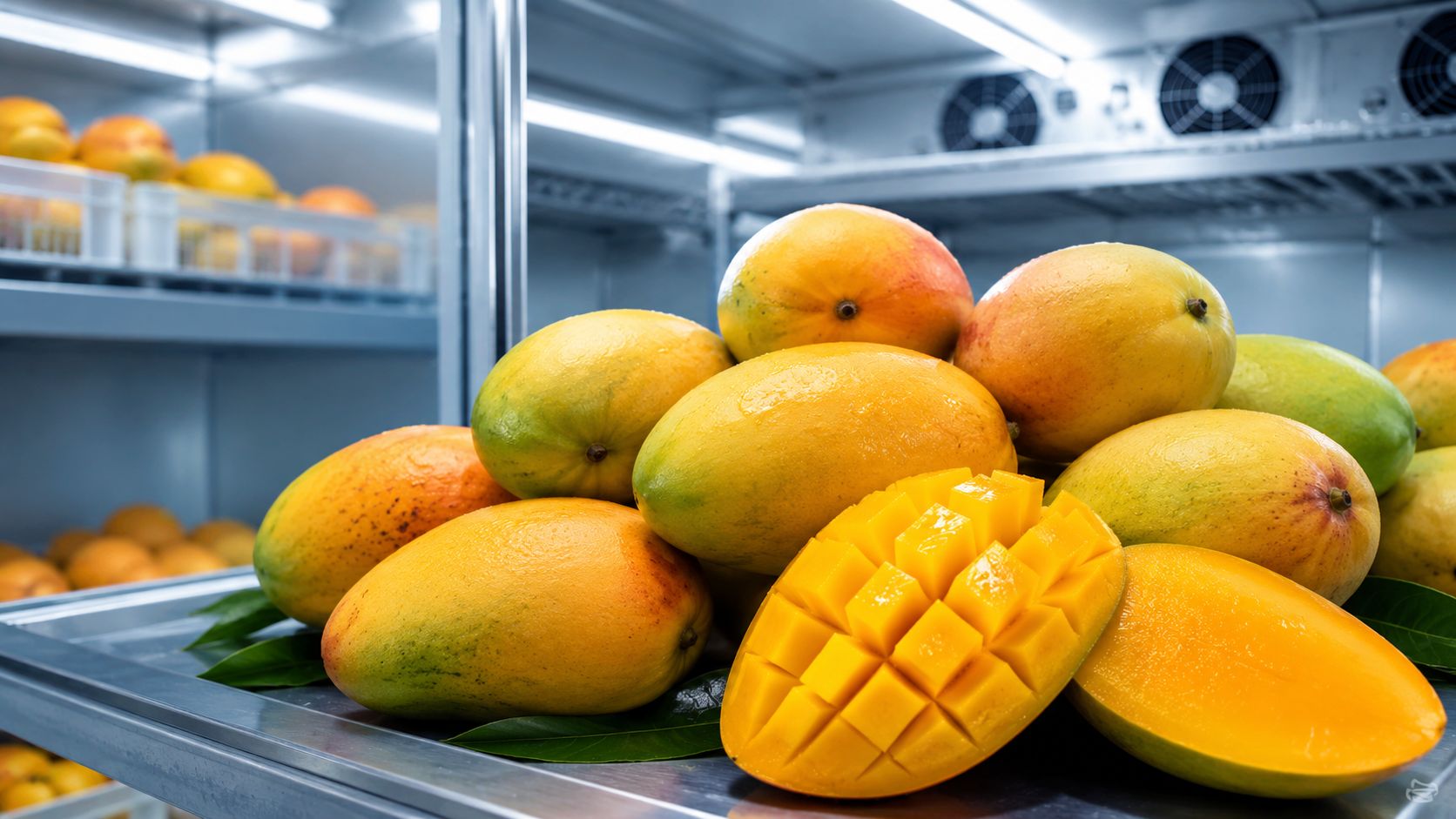

Research from Hainan University showed that storing mangoes at 12°C reduces weight loss, preserves firmness, and activates the fruit’s natural antioxidant defenses, paving the way for cold chain transport with less deterioration and more control over ripening
The temperature of 12°C can keep mangoes fresh for up to 24 days by slowing down ripening and preserving the fruit’s internal structures, a study from Hainan University showed.
Why mangoes spoil after being harvested
Mangoes continue to ripen after being harvested. This process makes the fruit sensitive to softening, moisture loss, and deterioration during storage and transport, especially in tropical regions.
In many locations, transport occurs between 26°C and 30°C. These temperatures facilitate logistics but accelerate the fruit’s respiration and make ripening faster.
-
Chinese Farmers Develop “Blanket Greenhouses” to Grow Vegetables in Extreme Winter Without Heaters

-
Centuries Before Modern Greenhouses, English Gardeners Used Horse Manure to Grow Pineapples in Cold Climates

-
Sugarcane Cultivation in India: A Symbol of Water Stress and Environmental Strain Amidst Global Demand for Sugar and Green Fuel
-
Innovative Farm in Northeastern Brazil Combats Drought with Advanced Techniques, Aiming for 10,000 Liters of Milk Daily Production


Refrigeration was already known as a way to slow down this progress. The challenge is that tropical fruits, like mangoes, can suffer cold damage when exposed to low temperatures.

Study tested mangoes at 12°C and 30°C
To understand why 12°C better preserves the “Tainong No.1” variety, researchers compared fruits stored at this temperature with others kept at 30°C for 24 days.
The team monitored color, firmness, weight loss, sugars, acidity, and respiration rate. They also evaluated molecules linked to cell damage, antioxidant compounds, and protective enzymes.
The analysis included vitamin C, phenolics, flavonoids, and enzymes such as APX, SOD, PAL, and POD. The scientists observed the expression of genes related to antioxidant defense and examined the pulp under a microscope.
Lower temperature preserved color, weight, and firmness
In the first 12 days, the visual differences between the two groups were small. From the 16th day, the mangoes at 30°C yellowed quickly, while those kept at 12°C retained their color for longer.
The study recorded a contrast in weight loss. The fruits stored at 30°C lost more than 17% of their weight, while those kept at 12°C lost less than 4%.
Firmness decreased more slowly in the refrigerated environment. Under the microscope, the mangoes at 12°C maintained cell walls and starch granules even after 24 days, unlike the fruits exposed to 30°C.
Antioxidant defense helps reduce losses
Storage at 12°C reduced the accumulation of MDA and reactive oxygen species, linked to oxidative stress and cellular deterioration.
There was also greater preservation of vitamin C, phenolics, and flavonoids. Genes such as MiAPX1, MiAPX2, MiSOD1, and MiSOD2 had activity associated with strengthening the fruit’s natural defenses.
The results indicate direct application in the cold chain. Keeping mangoes close to 12°C can favor transportation over longer distances, ripening near the final market, and less quality loss.
Mango market in Brazil
industry, exports, and job creation. Production gained strength mainly in the Northeast, where irrigated hubs like the São Francisco Valley turned the fruit into a high-value commercial product.
The production chain goes beyond cultivation. It involves field workers, agricultural technicians, irrigation companies, transportation, packaging, refrigerated storage, and export. On farms, labor is involved in stages such as pruning, management, harvesting, and fruit selection. Then, the mango goes to industrial structures known as packing houses, where it undergoes classification, cleaning, treatment, and packaging.
This process generates direct and indirect jobs, especially in cities dependent on fruit growing. International demand also requires quality standards, traceability, and phytosanitary control, which stimulates professional qualification and investments in technology.
With a growing presence in the external market, Brazilian mango strengthens the regional economy and increases the income of producers, companies, and workers. The sector shows how irrigated agriculture can create an organized production chain, capable of linking the field to the industry and bringing Brazilian fruits to demanding consumers in other countries, generating continuous local development and income.
This article was prepared based on information published by maxapress. The content was supported by AI tools in editorial organization and underwent human review before publication.